On May 1, 2021, I stopped on the auto tour road at the Sequoyah National Wildlife Refuge in Oklahoma for a deer out in Dockery Field. From that distance, I took it for a doe. It was with two does, and I could not see any antlers on it.
A Buck I First Took for a Doe
The deer kept walking in my direction while I sat stopped in the road. The closer it came, the more I could see. Short new antlers were starting on top of its head, covered in velvet.
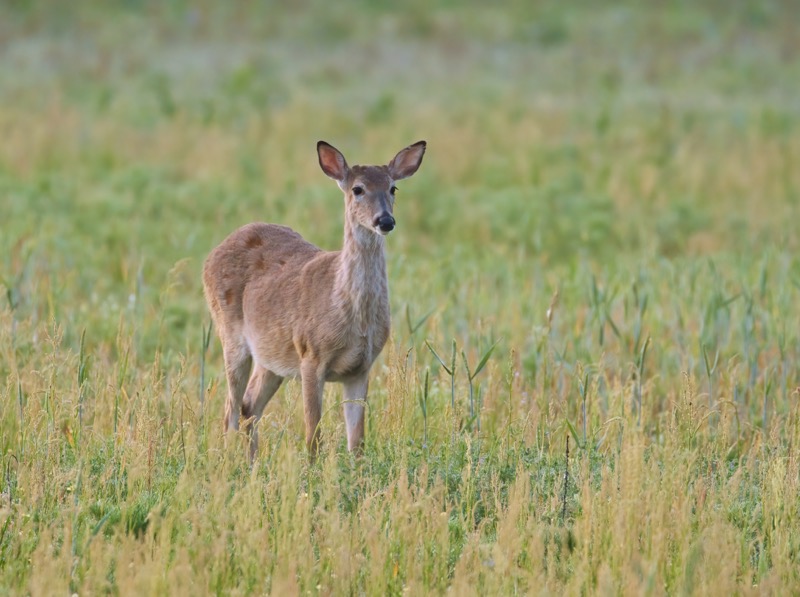
I got several photos while it crossed the field. Then it turned and left the field with the two does.

In early May, a buck’s new antlers are easy to miss. He shed the old set in late winter, and the new growth starts as short velvet-covered bumps. The velvet carries blood to the growing bone, and the antlers grow fast through spring and summer. At a distance, a buck like this one can pass for a doe until he gets close.
Photographing the Buck From My Pickup
My camera and lens were resting on a bean bag draped over the open window of my pickup. I took these photos at 6:40 in the morning.
My camera settings were:
- Camera: Fujifilm X-T3
- Lens: Canon EF 100-400mm f/4.5-5.6L IS II (Fringer EF-FX Pro adapter)
- Focal length: 400mm
- Aperture: f/5.6
- Shutter speed: 1/420 second
- ISO: 3200
- Exposure mode: Aperture Priority
- Exposure compensation: 0
- Location: Sequoyah National Wildlife Refuge, Oklahoma
- Date: May 1, 2021
Watching Deer in the Open Fields at Sequoyah
The open fields along the tour road are good deer country in the early morning. Deer feed out in them at first light, before the day warms up.
Another May buck starting over is in my post Whitetail Buck Starting New Antler Growth. This one taught me to look twice before I call a deer a doe.