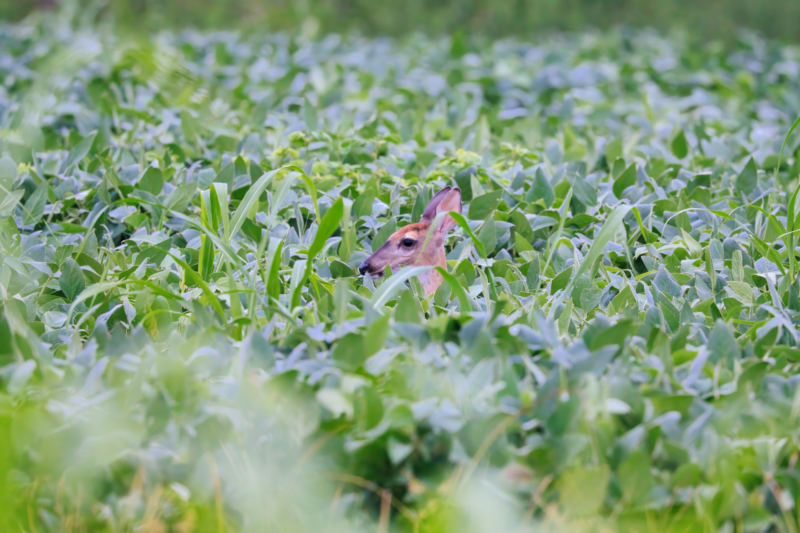
On my recent trip to the Sequoyah National Wildlife Refuge in Oklahoma, I photographed whitetail deer in a soybean field as the summer crops reached full height. This refuge always offers good wildlife opportunities, but at this time of year the dense rows of beans make deer much harder to spot. In these fields, I could usually see little more than their heads above the leaves.
On August 10th, I was able to get some shots of whitetails in one of the refuge’s soybean fields. However, as the crops mature this time of year, it becomes increasingly difficult to spot and photograph the deer. The tall rows of beans conceal all but their heads.
A Brief Glimpse of a Whitetail Fawn
The first photo shows a young whitetail fawn peeking out from the dense foliage. This was my last glimpse of the fawn before it disappeared after walking toward its mother.
The Doe Barely Visible Above the Crops
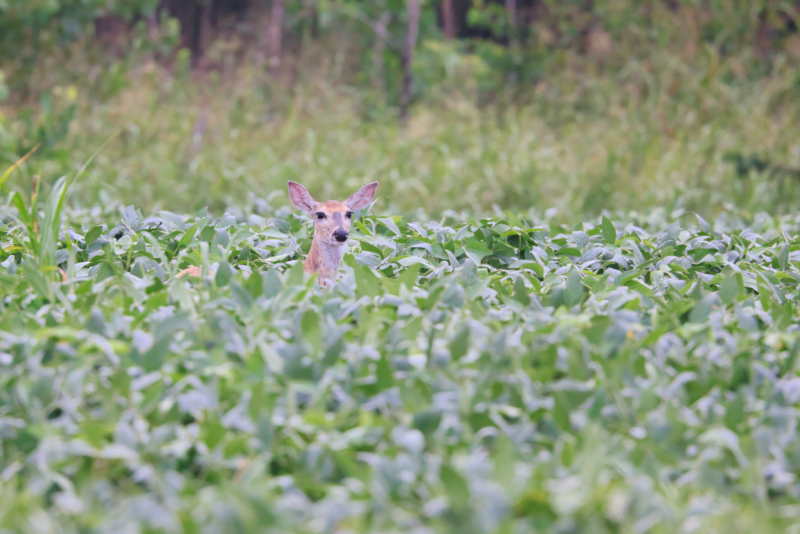
The second shot is of the doe, whose head is just barely visible above the beans. And in the third photo, you can see the doe’s head in another section of the field. I’m certain her fawn was nearby, but completely hidden by the mature soy plants.

Farming Practices That Benefit Wildlife
The refuge manages a cooperative farming program, allowing local farmers to plant crops like soybeans and corn on certain lands. This provides food sources for wildlife while also supporting the agricultural community.
The refuge has gotten some good rainfall over the past couple weeks, which has helped the crops thrive. That’s good news for the local farmers as well as the deer that feed in these agricultural fields.
While it’s a challenge to photograph the whitetails this time of year, I enjoy returning to Sequoyah each season to document the refuge’s wildlife. The diversity of habitat supports many species throughout the changes of the year. I look forward to sharing more images as the seasons progress!
Equipment Used:
- Camera: Canon EOS R5
- Lens: Canon RF 100-500 mm F4.5-7.1 L IS USM
Technical Details: First Photo
- Location: Sequoyah National Wildlife Refuge (Oklahoma)
- Date and Time Taken: August 10, 2023 (07:00 A. M.)
- Program: Manual
- Aperture: f7.1
- Shutter speed: 1/200
- ISO: 6400 (Auto)
- Exp. Comp.: +0.7
- Focal Length: 500 mm