This blog post is about searching and photographing Whitetail Deer in the soybean fields at the Sequoyah National Wildlife Refuge in Oklahoma in mid-September.
The Enchanting Mid-September Landscape
Nestled within the refuge, the mid-September landscape offers a rich scene for photography. Unharvested soybean fields stretch to the horizon, while nearby cornfields that have already been cut create a varied mix of habitats that draw in local wildlife.
Seeking Hidden Treasures in the Soybean Fields
I follow the auto tour road as it winds through the refuge, watching the soybean fields the whole way. The plants stand tall, their leaves moving with the breeze. This is where I usually find the action. Deer often slip through the rows, feeding as they move and staying just hidden enough to miss if you are not paying attention.
The Challenge of Cornfields
However, the cornfields, with their dense and towering stalks, present a different challenge. They conceal any potential wildlife inhabitants, keeping their secrets well-guarded.
A Glimpse of the Elusive Whitetail Fawn
For those unfamiliar with the terrain, picture a whitetail fawn I photographed back on September 15, 2017. In the photograph, the fawn is nearly hidden by the thickets of soybean plants. To spot these elusive creatures, I have to navigate the auto tour road with utmost care, scanning every section for any sign of deer. Even with diligence, some deer remain undiscovered amidst the lush vegetation.
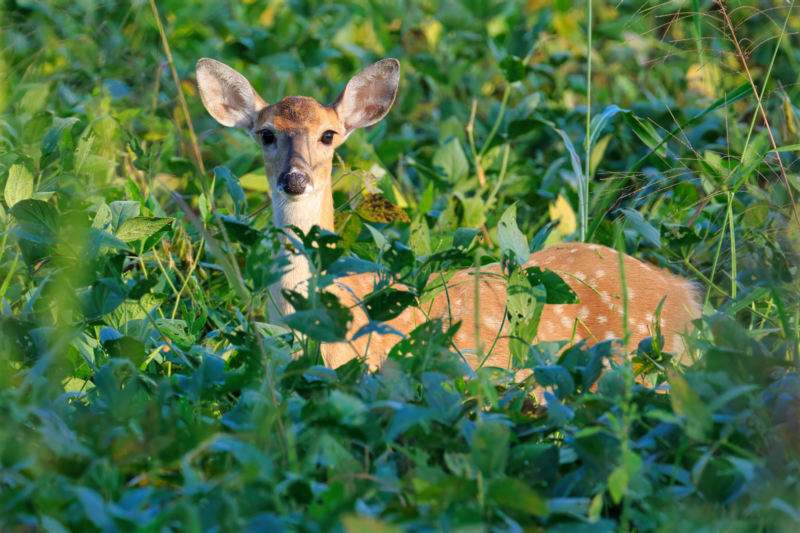
Nature’s Blend: Soybeans and Weeds
What’s intriguing about these soybean fields is that they’re not just a sea of green. Nature has its own way of blending elements, and here, weeds intermingle with the soybeans. It’s a mystery whether the deer are dining on the soybean plants themselves at this stage of growth or if they prefer the tender greens of the weeds. Regardless, these fields offer splendid opportunities for wildlife photography, provided you can spot the deer hidden within the vegetation.
Q: At what stage do deer eat soybeans?
A: Deer eat soybeans at various stages of growth, depending on their availability and nutritional value. Here are the different stages at which deer may consume soybeans:
Emerging stage: From the time soybeans pop out of the ground, they are a tender, green treat that deer and other wildlife love to eat. In areas of high deer density, newly emerging soybeans, especially in small food plots, may be eaten up during the first 30 to 45 days.
Vegetative stage: During the vegetative stage, soybeans continue to provide abundant forage for deer. This stage typically lasts from the time the plants have three to four fully developed leaves until they begin to flower.
Reproductive stage: When soybeans start to flower, they become less attractive to deer as the plants focus their energy on reproduction rather than leaf and stem growth.
Maturity stage: Once soybean pods have reached full maturity and turn brown, they offer a nutritious seed that deer may still consume. The yellow phase, which occurs before the pods turn brown, lasts about one to two weeks and may also be a time when deer feed on soybeans.
Late Summer and early Winter: The hot times for soybean use by deer are late Summer and early Winter. During these periods, soybeans can provide a valuable food source for deer.
Embracing the Element of Surprise
One of the most exhilarating aspects of wildlife photography is the element of surprise. Every visit to Sequoyah National Wildlife Refuge is a new adventure, and I never know when I’ll stumble upon deer. Yet, I’m always prepared, with my camera at the ready and my senses finely tuned. The soybean fields remain one of my favorite places to explore and test my photographic skills. With unwavering persistence and patience, you can unlock a world of hidden moments just waiting to be captured through your lens. In this refuge, the possibilities are endless, and the next remarkable shot is always just around the corner.
Steve Creek, Wildlife Photographer