If you spend any time at Sequoyah National Wildlife Refuge, you know how fast mid-day light can wreck a water shot. Once the sun climbs high, places like Sally Jones Lake and Reeve’s Slough can turn into a sparkling mess of glare that wipes out detail. The water loses all tone and texture, the contrast goes through the roof, and the scene stops looking natural.
And honestly, when it looks like that, I usually don’t photograph the bird.
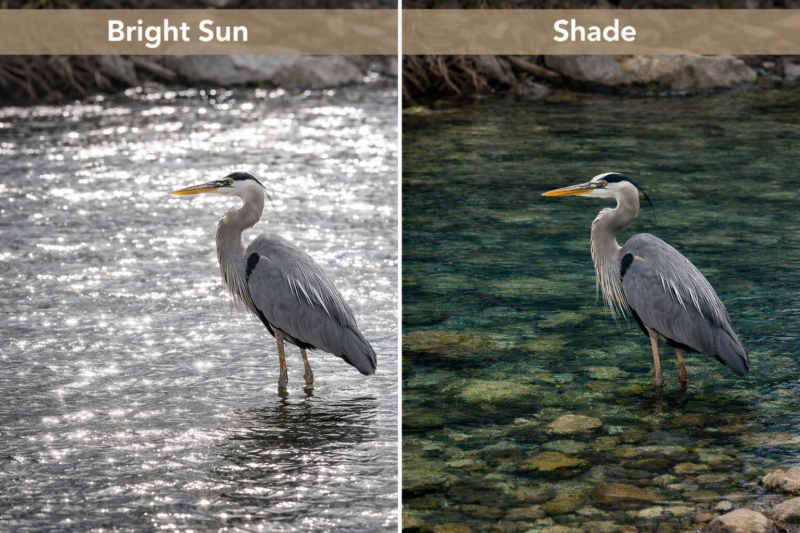
When the water turns into a sparkling mess, I pass on the shot
I’ve learned the hard way that I’m not a fan of shooting birds in these conditions. The glare creates so many sparkles that the water loses tone and texture. Even if the bird is sharp, the photo still feels harsh and blown out.
So instead of trying to force it, I make a simple call:
- If the water is covered in bright sparkles and the bird is fully lit, I don’t shoot.
- If I think the bird is about to move into shade, I’ll get ready and wait.
That one decision saves me from bringing home a lot of frustrating files.
What I’m watching for: the bird moving into shade
There are times when I’ll stick with a subject, but it depends on what I think is about to happen.
If a heron is working a bank with trees nearby, or ducks are drifting toward a shaded edge, I’ll stay on them and be ready. I’m not trying to “fix” the glare. I’m waiting for the scene to change.
Here’s what I look for:
- The bird moving toward shaded shoreline
- The bird stepping behind vegetation or overhanging branches
- Waterfowl drifting into a shadow line
- Any moment where the harsh sparkle disappears and the tones settle down
When that happens, everything gets easier. The water calms down, the feathers look better, and I’m not fighting blown highlights.
What I do instead when the light is bad
When the surface is covered in bright sparkles and I know it’s not going to improve, I don’t waste time trying to make it work. I’ll do one of these instead:
- Change locations and look for a slough or stretch of shoreline that has shade
- Focus on non-water subjects (woodpeckers, deer, anything not surrounded by reflective water)
- Use the time as scouting and come back when the light is better. I’ve written more about how I approach natural light in wildlife photography here: Wildlife Photography Lighting: Master Natural Light
Mid-day can still be useful at Sequoyah, just not always for the water shots I actually want.
The payoff of waiting
For me, the best Sequoyah waterfowl images happen when the light is cooperative. When the sparkles are gone, the water has tone again, the feathers have depth, and the background is not blown out, the photo finally matches what I saw in the field.
So if the water is a sparkling mess, I don’t force it. I wait for shade, or I move on.
Thank you, that is great information. I have spent too much time trying edit photos taken in those conditions with the results seldom what I was trying for.