The chicks in my backyard birdhouse hatched three days ago. Since then, I have been watching both bluebird parents feeding nestlings from first light to dark. I can see the whole operation from my deck.
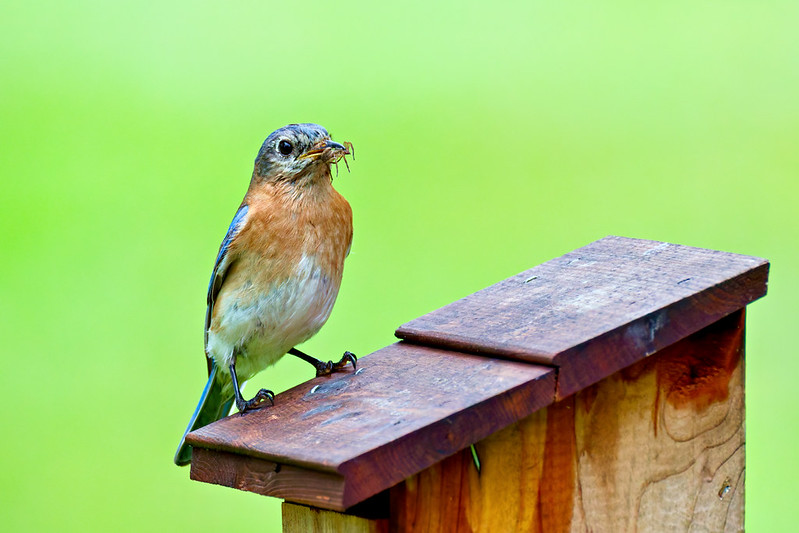
Bluebird Parents Feeding Nestlings Just Three Days In
Eastern Bluebird chicks are altricial, meaning they hatch helpless and depend completely on their parents for food and warmth. At three days old, they are blind, mostly naked, and very hungry. Both parents respond by making constant feeding runs from dawn to dusk.
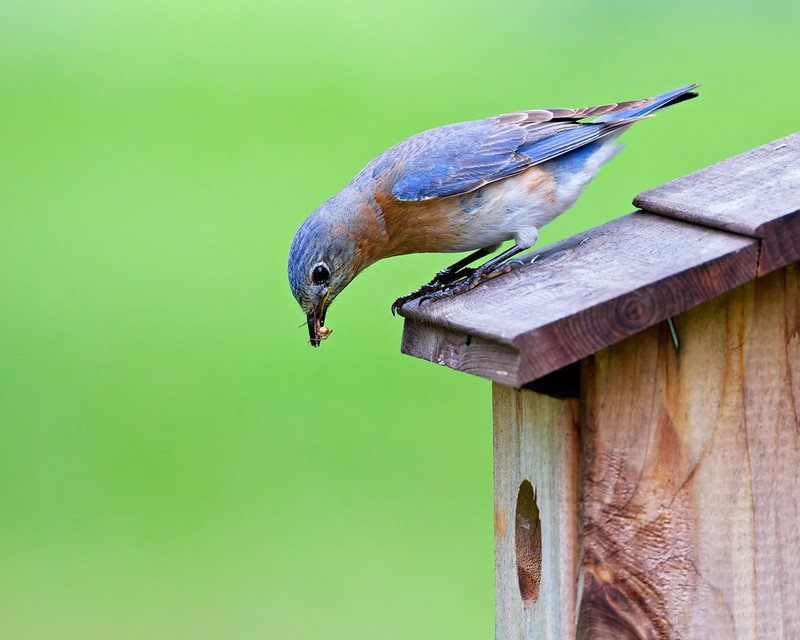
The female does most of the brooding in the early days, keeping the chicks warm between feeding trips. But the male pulls his weight too. In my yard, I watched him make trip after trip, usually landing on the roof of the box before ducking in or delivering food at the entrance hole.
We have had a stretch of rainy weather here in Arkansas, and that has not slowed either parent down at all. If anything, it seemed like they were working harder. Rain or shine, those chicks need feeding.
What Bluebird Parents Bring Back for Their Nestlings
The number one food item I am seeing is spiders. I wrote a post about why bluebirds rely so heavily on spiders, especially for young chicks. You can read it here: Why Eastern Bluebirds Feed Spiders To Their Chicks. The short answer is that spiders are soft, easy to swallow, and packed with protein and taurine, a nutrient important for early development.
In addition to spiders, I spotted the parents bringing in what appeared to be small caterpillars and other soft-bodied insects. Both adults take turns. The female tends to pause on the roof of the box before entering. The male often goes straight to the entrance hole.
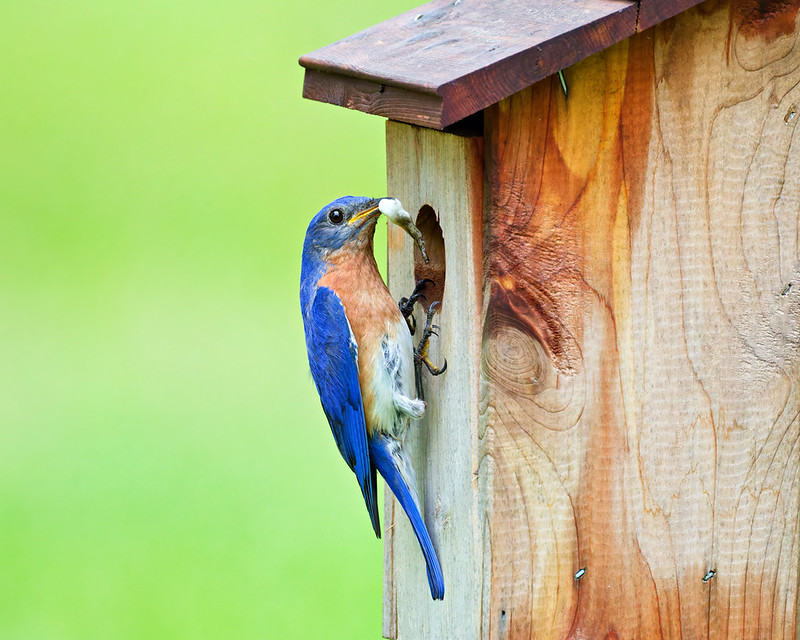
One behavior worth watching for is fecal sac removal. Nestlings produce their waste in a tidy mucous membrane that the parents carry out of the box. It keeps the nest clean and reduces the risk of disease and predators picking up on the scent. In one of my photos, you can clearly see the male at the entrance hole with a white fecal sac in his beak, ready to carry it off. I have a full post on that behavior if you want to dig into it: Eastern Bluebird Fecal Sac Removal Explained.
Photographing the Nest Box From My Deck in Wet Weather
My shooting position was my deck, which puts me about level with the birdhouse at a comfortable working distance. I used a tripod for stability since I was parked in one spot for an extended session.
The green background in these photos comes from the yard behind the box. It creates a clean, uncluttered look that I try to use whenever I can. The overcast light from the rainy weather actually helped here. It softened the shadows and kept the color even.
Camera settings for the first photo:
- Camera: Canon EOS R5 Mark II
- Lens: Canon RF 200-800mm F6.3-9 IS USM
- Focal length: 800mm
- Aperture: f/9
- Shutter speed: 1/250 sec
- ISO: 2500
- Exposure compensation: 0
- Support: Tripod from deck
At 800mm, the bird fills the frame nicely even from the deck. I let the camera work at ISO 2500 under the overcast sky and got clean results.
The hardest part of this kind of shoot is patience. You set up, wait, and let the birds settle into their routine before you start working seriously. Once they do, the action is almost constant.