I recently spent some time at the Sequoyah National Wildlife Refuge in Oklahoma. While driving the tour loop, I came across a young Red-tailed Hawk perched on a low limb.

I stopped to watch the hawk for a while. It suddenly began to act very strange. It focused all its attention on a specific spot on the branch and started jumping and grabbing at the bark with its talons.
Wildlife Notes
This juvenile hawk was likely practicing its hunting skills. Young raptors often engage in “mock attacks” on inanimate objects like sticks, clumps of grass, or tree limbs. This behavior helps them develop the coordination they need to catch live prey later.
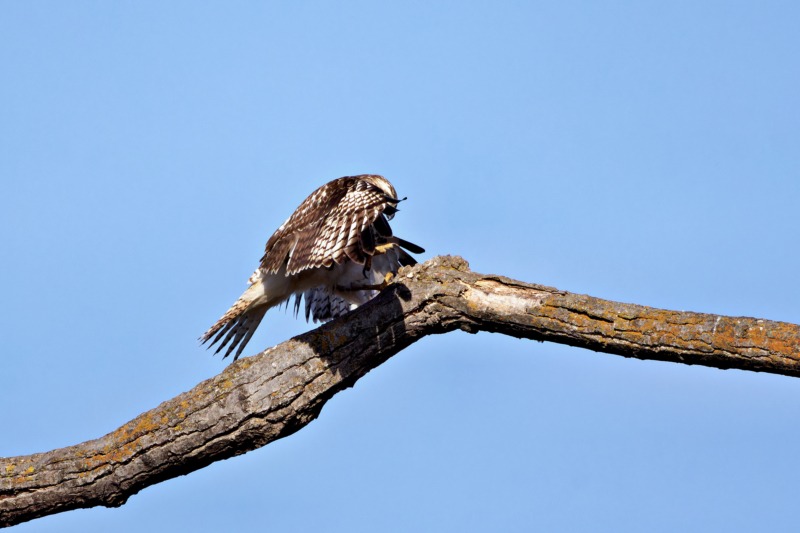
This could also be a form of investigative behavior. Young birds are naturally curious about their environment. If a piece of bark looked different or moved in the wind, the hawk might have felt the need to check it out. It could also be a display of early territorial instincts. Even at a young age, these hawks may react to anything they perceive as a threat in their immediate space.

Although Red-tailed Hawks are skilled predators that usually hunt for sustenance, rather than for amusement or practice, young hawks may still engage in playful behavior to learn and develop their hunting skills.
Witnessing the immature Red-tailed Hawk’s behavior was a fascinating experience that provided a glimpse into the complexities of avian life. It serves as a reminder that even the most skilled predators start as curious and playful youngsters, learning and honing their abilities through exploration and practice. This encounter at the Sequoyah National Wildlife Refuge will remain a memorable highlight of my wildlife photography adventures.
Wonderful photos and information, Creek!