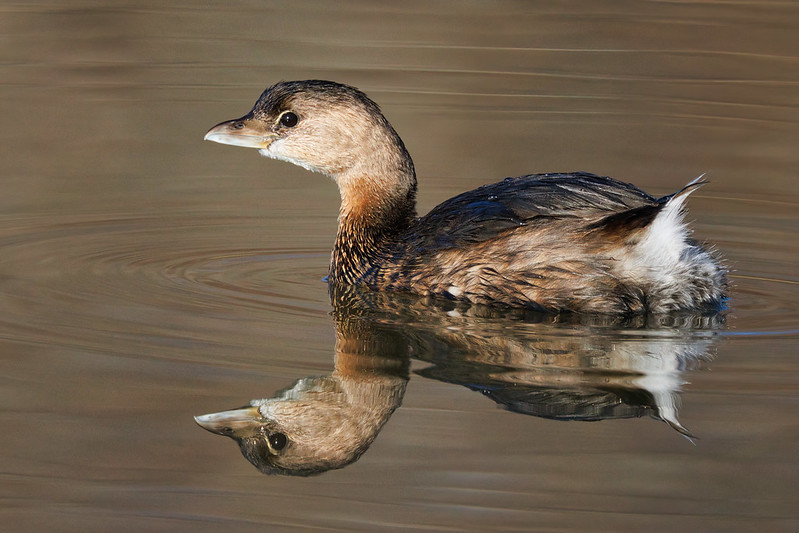
I recently spent some time at Charleston City Lake in Arkansas. I was lucky enough to find a Pied-billed Grebe drifting in very calm water. The light was just right to catch a clear reflection of this unique little bird.
Wildlife Notes: The Pied-billed Grebe’s Unique Adaptations
The Pied-billed Grebe is a small bird that stands out because of its bill. This bill looks like a flat wedge with a wide tip. When the bird sits still, the bill creates a fascinating shape in the water. This tool helps the bird dive for food and groom its feathers.
These birds are built for life in the water. Their legs sit far back on their body. This position gives them great power when they swim or dive. When they go under, they tuck their head and neck back. This creates a streamlined shape that helps them hide from predators. They can stay underwater for a long time, which makes them very efficient hunters.
Photography Notes: Capturing the Reflection
I used my Canon EOS R7 for this shot. I paired it with the RF 800mm F11 IS STM lens. This lens is very light and easy to move quickly. The water at Charleston Lake was quite still during my visit. This allowed me to focus on the symmetry of the bird and its reflection.
I chose a fast shutter speed of 1/2500 to keep the image sharp. I also used a slight negative exposure compensation. This helped me keep the details in the lighter parts of the bird. If you want to improve your own shots of birds in water, you can check out my post on Bird Reflection Photography Tips.
Gear and Settings:
- Camera: Canon EOS R7
- Lens: RF 800mm F11 IS STM
- Aperture: f11
- Shutter Speed: 1/2500
- ISO: 2500
- Exposure Compensation: -1/3 EV
I always enjoy watching these grebes work the shoreline. They are small, but their adaptations make them masters of their habitat.