Late October and November are great times to photograph the whitetail deer rut at Sequoyah National Wildlife Refuge. The bucks shift from pre-rut to full rut behavior, moving more often and checking does, which creates strong chances to catch them in the open.
Understanding the Whitetail Deer Rut Cycle
During the pre-rut, bucks start moving away from their bachelor groups. They roam more often, checking for does that might soon come into estrus. The does, however, stay in their usual routines. They feed and bed down without much change. This makes it easier to observe the bucks because they begin showing more activity while still staying cautious.
When the rut starts, everything changes. Bucks focus completely on breeding. They leave their cover and move with less caution in search of females. This phase makes it easier to spot and photograph them, as they are less concerned about hiding.
Timing the Whitetail Deer Rut at Sequoyah
In my experience, the peak rut usually starts in the second week of November at Sequoyah. Bucks become more active and bachelor groups break up completely. Their sole focus shifts to breeding. Feeding becomes less important. Their priority is chasing and guarding does.
Keep in mind, the refuge has partial closures during hunting days. Check the Sequoyah National Wildlife Refuge website for current closure dates. Hunting activity also affects deer behavior, often pushing them into thicker areas or shifting their movements to nighttime.
Some mention a “second rut” that happens about a month after the peak. In my opinion, this is likely just late-born fawns maturing or does that did not conceive the first time coming back into estrus.
This Year’s Whitetail Deer Rut Observations
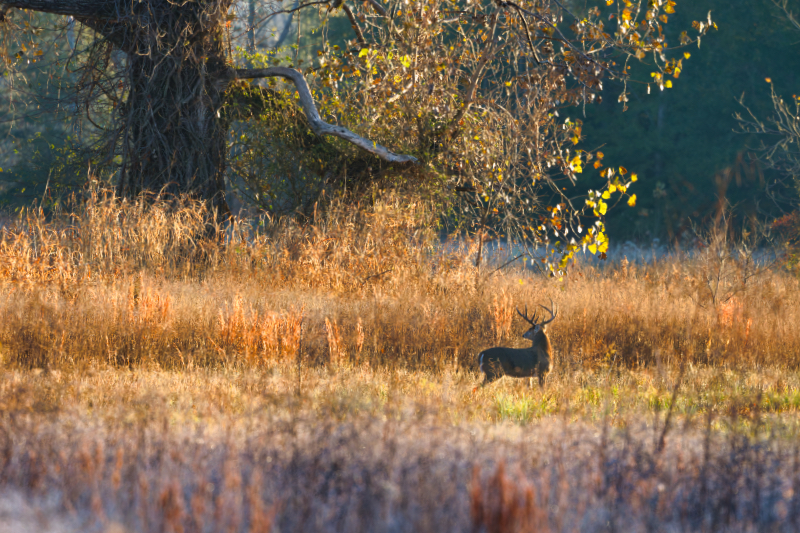
This year, I haven’t noticed the usual pre-rut buck activity at the refuge. Not sure why. The photo I’m sharing is from November last year, during a more typical pre-rut week. The buck stepped out of the thicket to check a nearby trail for does. Moments like this make it worthwhile to keep coming back to document these behaviors.
Photography Notes
I photographed this buck using my Canon EOS R5 with the Canon RF 100-500mm lens at 500mm. The aperture was f/7.1, which gave me enough depth of field to keep the buck sharp while softening the background. Shutter speed was 1/800 sec at ISO 1000. The morning light was perfect, warm and directional, lighting up the dried grasses and creating natural separation between the deer and the darker background.
I was shooting from my pickup using a beanbag for support. This setup keeps me low-profile and steady, which is critical when bucks are moving unpredictably during the rut. The key is patience. Bucks will often pause to scent-check or survey an area before moving on, and that’s when you get the shot.
Camera Settings:
- Focal Length: 500mm
- Date: November 22, 2022
- Time: 08:40 A.M.
- Aperture: f/7.1
- Shutter Speed: 1/800 sec
- ISO: 1000
Closing Thoughts
Photographing the whitetail deer rut at Sequoyah is one of my favorite parts of the season. The bucks stay active, the light is good, and the behaviors are worth following. I’ll keep returning as the rut shifts, since each visit shows something new. If you have recent whitetail deer rut sightings, I’d like to hear about them.
Steve, I feel like I could walk right into this photo. I feel like I am ‘there’ and that is an excellent way for someone viewing this great image to feel.
Thanks my friend! I’m glad this photo helped you feel that way. That makes my day!
Thanks for posting this beautiful photograph and for the information on pre-rut and rut behaviors of Whitetail deer. I appreciate this blog and found it it via Mia McPherson’s blog.
Thanks Kathy and thanks for the visit to my blog.