A report about a monarch Gulf crossing brought me back to my September stay at Black Mesa State Park. I had watched groups of monarchs moving through the Oklahoma Panhandle. Now, I was reading about three tagged butterflies that may have crossed hundreds of miles of open water.
Tracking a Monarch Gulf Crossing
According to The Weather Channel, researchers detected three tagged monarchs in Louisiana on October 17, within minutes of each other. Taggers had fitted them with electronic transmitters in Massachusetts, Virginia, and Ontario.
After three days without detections, all three registered in Mexico on October 20, more than 800 miles away. The report describes this as an apparent first documented Gulf crossing for Project Monarch.
A cold front brought winds of roughly 25 to 37 miles per hour. Those winds may have helped, but researchers did not measure the butterflies’ flight altitudes.
The detection gap matters. Researchers have locations before and after the apparent crossing, rather than a continuous record over the water.
Two more tagged monarchs made similar reported journeys from Florida a few days later. You can read The Weather Channel’s report and view the route maps.
Photographing a Feeding Monarch at Black Mesa
On September 22, I photographed this monarch feeding on small yellow flowers beside my campsite at Black Mesa State Park. My photograph shows its orange wings, black veins, and white spots against the flowers and dry ground.
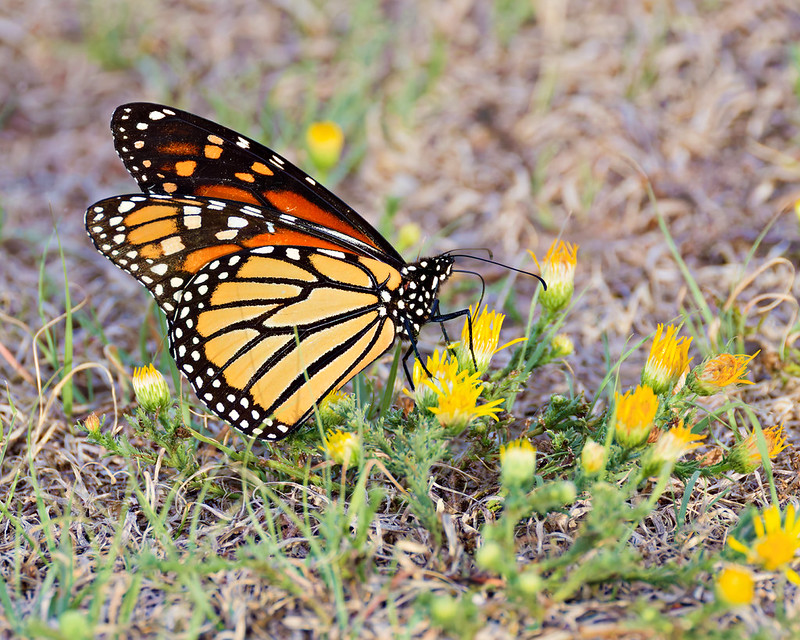
This was one of many monarchs I watched that week. Some flew together in groups, something I had never seen before. I wrote about those Monarch Butterflies Flying in Groups at Black Mesa in an earlier post.
The feeding butterfly gave me a different view of that week’s activity. Instead of watching a group move through, I could photograph one monarch at the flowers beside my campsite.
Where Will These Butterflies Spend Winter?
The report leaves a question open: will the tagged butterflies reach the wintering forests in Michoacán?
I cannot connect my Black Mesa sightings to the Gulf crossings. I do not know where the monarch in my photograph went after that feeding stop.
Still, I want to follow what researchers learn about these tagged travelers. After watching so many monarchs at Black Mesa, I have more questions about where they go once they leave my view.
Beautiful photo that teaches us about the lives and travels of this butterfly species. Thank you so much