Most people expect to see Great Egrets catching fish or stalking through shallow water. During one spring morning at Miner’s Cove in Sequoyah National Wildlife Refuge, I witnessed something far less common. Two Great Egrets were regurgitating the indigestible remains of crayfish they had eaten earlier, giving me the chance to photograph a behavior many bird watchers never see.
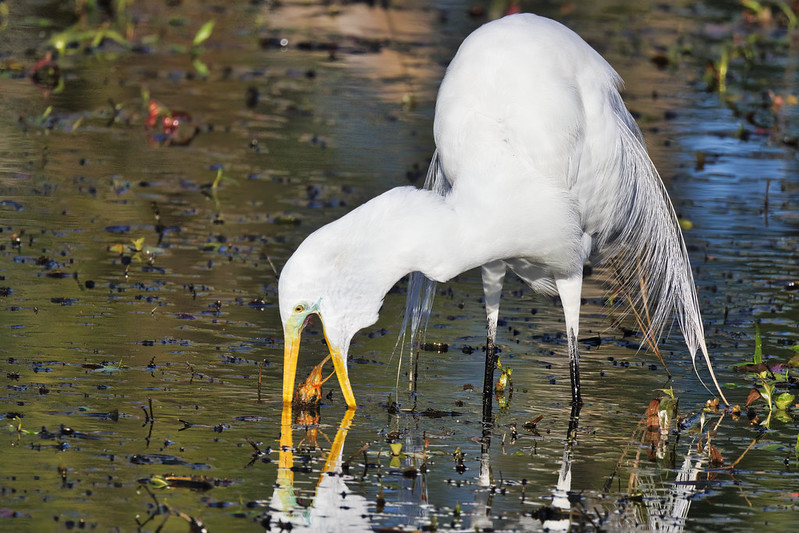
Great Egret Regurgitating Crayfish at Miner’s Cove
Miner’s Cove has been especially productive whenever crayfish are abundant. The shallow water attracts a variety of birds that take advantage of the easy meals, and Great Egrets are among the most successful hunters in the area. On this visit, I watched two birds pause after feeding and begin regurgitating material they could not digest. It was a fascinating reminder that wildlife photography often reveals behaviors hidden from casual observers.
The hard exoskeleton of a crayfish cannot be fully digested. After extracting the nutritious parts, the birds eventually expel the remaining shell fragments along with other indigestible material. Although the process may look unusual, it is a normal part of a Great Egret’s digestive system.
If you enjoy seeing birds display this type of behavior, you may also like Capturing a Heron Regurgitating a Pellet, where I photographed another species expelling an indigestible pellet.
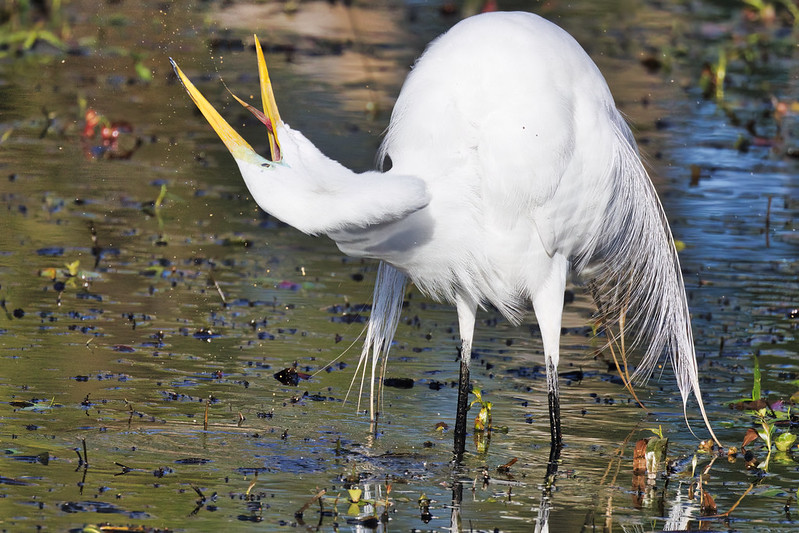
Photographing an Unusual Great Egret Behavior
I arrived well before daylight so I could get into position without disturbing the birds. My pickup truck served as a portable blind, allowing the egrets to continue feeding naturally while I remained unnoticed. This approach often gives me opportunities to photograph natural behavior that might otherwise stop if I approached on foot.
My camera rested on a beanbag over the open truck window for stability. Once everything was in place, all I had to do was wait. Wildlife photography frequently rewards patience, and this encounter proved it once again. Rather than focusing only on birds catching prey, I was able to document another important part of their feeding cycle.

Why Great Egrets Regurgitate Crayfish Pellets
Great Egrets feed on fish, frogs, insects, snakes, crayfish, and many other small animals. While the soft tissues are easily digested, harder materials such as shells, bones, and similar remains cannot pass through the digestive system in the same way. The birds package this material into pellets and regurgitate them, helping keep their digestive tract clear and functioning efficiently.
Watching these two Great Egrets reminded me that every wildlife encounter tells a larger story. Sometimes the most memorable photographs are not dramatic hunts or action shots. Instead, they capture everyday behaviors that reveal how wildlife survives in its natural environment. Encounters like this are one of the reasons I keep returning to Sequoyah National Wildlife Refuge each spring.
Note: The first photo above was used in a book “A Feathered Honor: My Photo in Ed Drewitt’s Book!”
Brilliant Photo’s Thanks for sharing. !!