
I photographed these white-tailed bucks at Sequoyah National Wildlife Refuge in Oklahoma during a quiet winter morning in mid-February. This refuge protects large sections of native habitat, and it consistently offers some of the best deer encounters I experience each year.
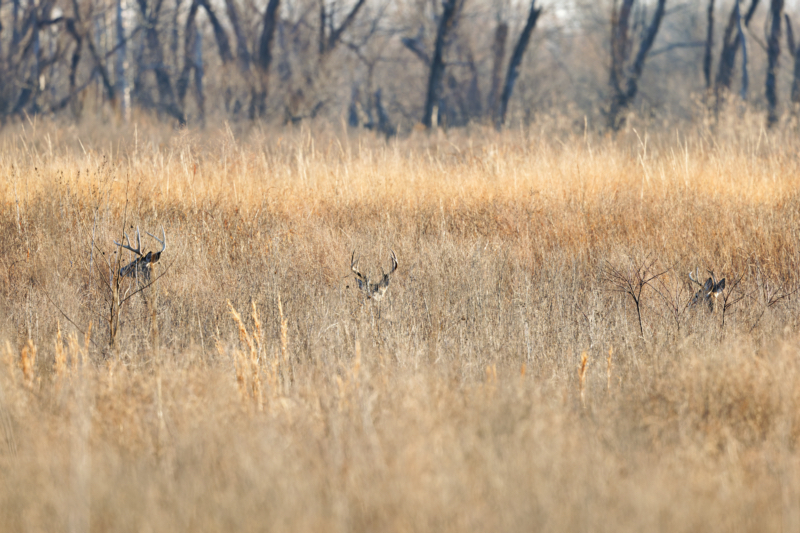
This part of the refuge remains undisturbed for most of the season. As a result, deer use the tall grass and brush for both feeding and bedding. The setting creates excellent natural cover and makes encounters like this one possible if you move slowly and stay alert.
In the photo I took on February 15, 2024, three white-tailed bucks are standing deep in the tall grass. At first glance, they are easy to miss. However, once your eyes adjust, their shapes and antlers begin to separate from the vegetation. This shows how whitetails use tall grass as visual cover even when they are fully upright and alert.
Even after years of photographing at Sequoyah, moments like this still stop me in my tracks. They serve as a reminder of why protected land matters and why patience in the field always pays off.
Wildlife Notes: White-tailed Bucks at Sequoyah in Winter
During winter, white-tailed bucks conserve energy as much as possible. Bedding in thick grass helps shield them from wind and cold temperatures. It also gives them a wide field of view while keeping their bodies hidden.
Small bachelor groups often remain together after the rut. These bucks typically feed in nearby open areas and return to dense cover to rest through the morning hours. Their ability to remain motionless makes them difficult to detect, even at close range.
Photography Notes: Photographing Standing White-tailed Bucks in Tall Grass
Spotting bedded deer requires slow scanning and patience. I usually search for horizontal lines, ear tips, and antler curves rather than full body shapes. Once I locate an animal, I stay still and wait for natural movement.
On this morning, the light was soft and even. That helped separate the bucks from the background without harsh contrast. I photographed this scene from inside my truck to avoid disturbing them.
Image Information:
- Date: 02/15/24
- Time: 7:52 AM
- Camera: Canon EOS R5
- Lens: Canon RF 100-500mm F4.5-7.1 L IS USM
- ISO: 1000
- Aperture: 8
- Shutter: 1/800
- Exposure Compensation: +0.3
- Lens (mm): 500