During my stay at Black Mesa State Park in Oklahoma, I photographed mule deer antlers at two stages of development. The encounters came seven days apart, during the shift from summer to fall.
Two Encounters Around Black Mesa
On September 17, I photographed two bucks still in velvet inside the park. Two does accompanied them. I shared that encounter in my post about mule deer at the Black Mesa campground.
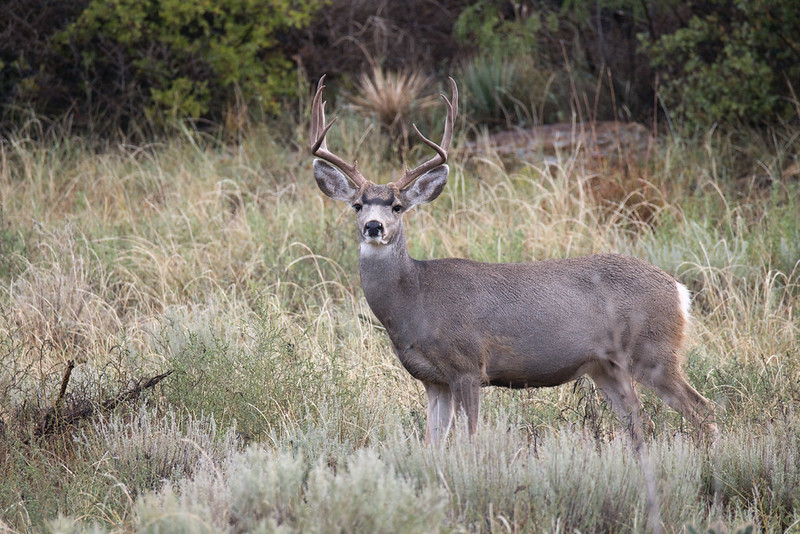
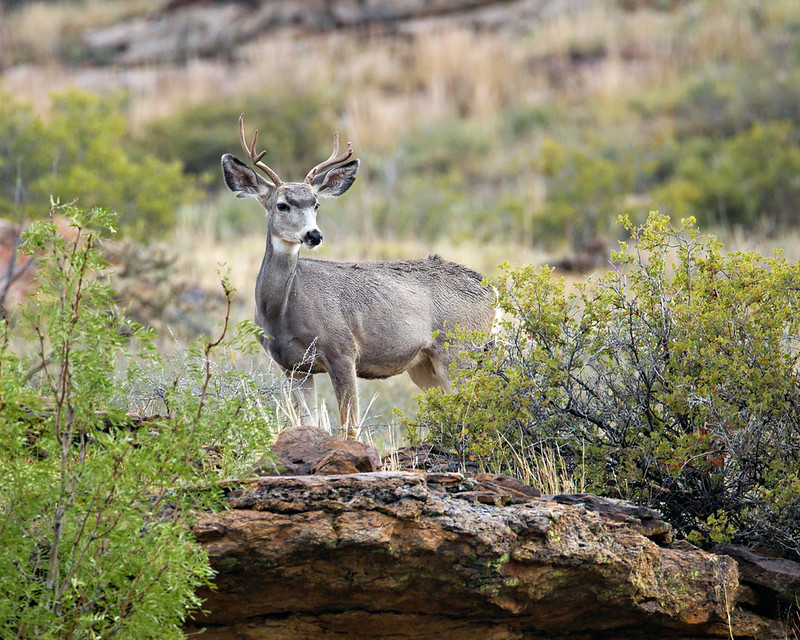
On September 24, I found a group of bucks several miles outside the park with hard, exposed antlers. I could tell from their antlers that these were different deer from the pair in the campground.
How Mule Deer Antlers Lose Their Velvet
This timing is normal. Mule deer grow new antlers through spring and summer beneath velvet, a living skin rich in blood vessels. That blood supply delivers nutrients to the developing bone.
By late August and September, the antlers harden and the velvet loses its blood supply. Bucks rub the drying velvet away on brush and small trees.
Each buck follows its own schedule. Age, health, nutrition, and genetics influence antler development. During this transition, a photographer may encounter one buck still in velvet while another nearby has shed it.
Hard Antlers Ahead of the Rut
Shedding velvet does not mean the peak rut has begun. Bucks can remain in small bachelor groups during early fall, like the group I encountered outside the park.
As breeding season approaches, they use their antlers in dominance displays and competition with other males. Rutting activity builds later in fall, with November an important period in many mule deer populations. The timing varies by region.
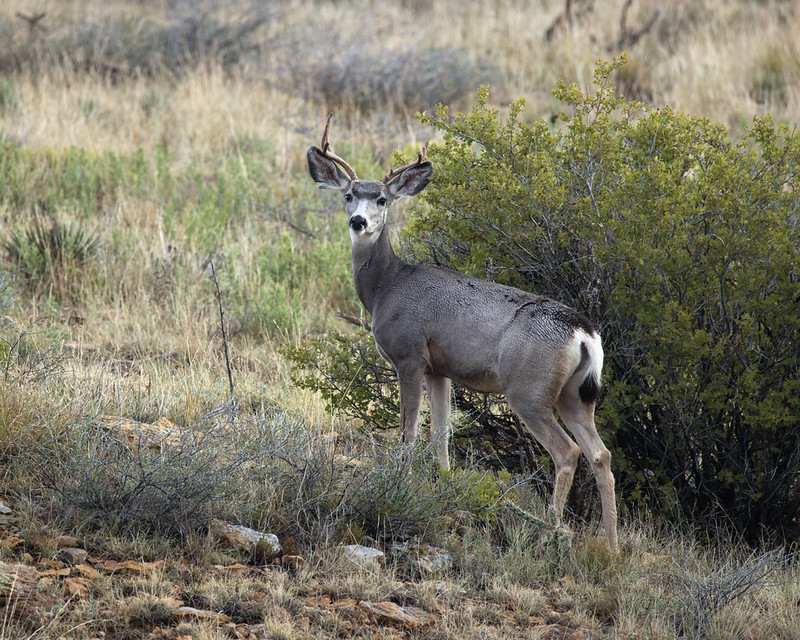
I enjoy having enough time in an area to notice these seasonal changes. On this trip, looking beyond the campground gave me another part of the story.
Absolutely wonderful photos and educational comments. Thank you so much for sharing such great photos and knowledge of God’s creational creatures
Thank you, Cindy!