Two Black Mesa whitetail fawns became familiar sights during my first week camping at the state park in Oklahoma. I kept seeing them near the south entrance, with no adult doe in sight. During my second week, I haven’t seen either one.
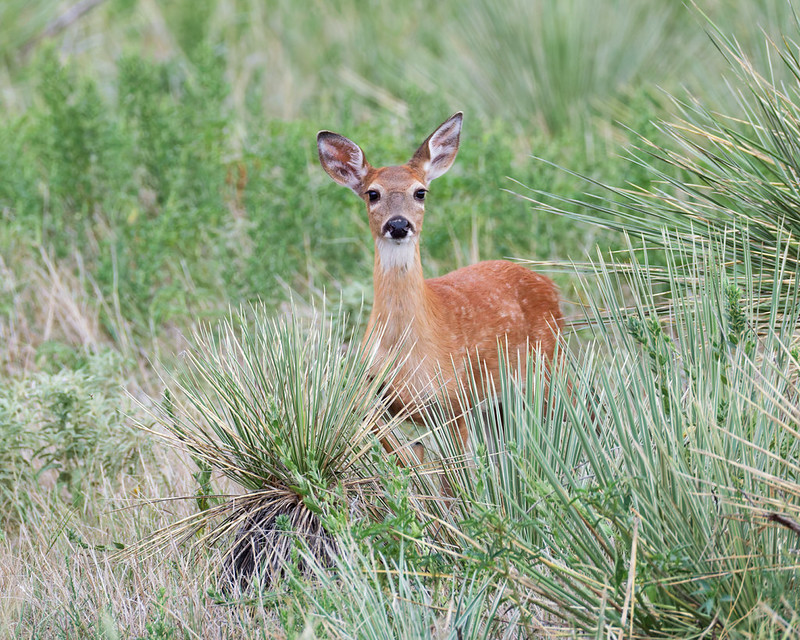
Black Mesa whitetail fawns during my first week
I first spotted the pair within a couple of days of arriving. Throughout that first week, I continued seeing them in the same area.
Each time, the fawns were on their own as far as I could see. That leaves me wondering where their mother was, but I can’t tell from those encounters. A doe could have been nearby without coming into view.
I saw one adult white-tailed doe alone in that area on one occasion. I don’t know whether she had any connection to these fawns. So far, I haven’t seen a white-tailed buck during this stay.
I’ve photographed whitetails in the Black Mesa area before. I shared a doe and fawn encounter in Day 2 Wildlife Photography at Black Mesa State Park, from my 2024 visit.
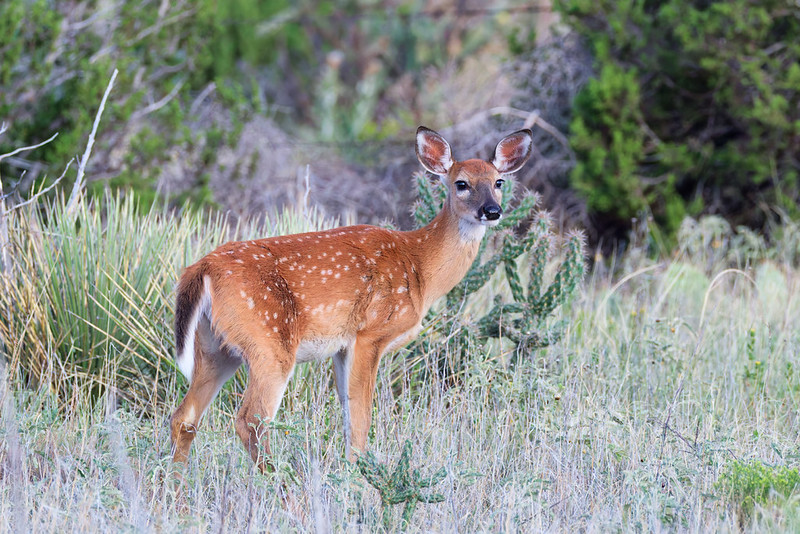
Could mule deer affect the whitetails?
With mule deer now showing up in the park, I wondered whether their presence could explain the change.
The two species can compete, but that doesn’t mean one drives the other out whenever they share an area. The Western Association of Fish and Wildlife Agencies discusses this in its deer interactions fact sheet. Differences in habitat use can reduce competition between mule deer and whitetails.
A 2021 study in northeastern Washington offers another useful example. Researchers used 312 camera sites to study both species during summer. They found different terrain preferences, but no evidence of ongoing avoidance where the deer shared habitat.
That study took place in a different landscape from Black Mesa. It doesn’t settle what happened here, but it cautions against blaming the mule deer based on timing alone.
Watching the south entrance for another sighting
My first thought was that the fawns had moved to another location. That’s possible, though they could still be nearby and outside my view when I pass through.
I would like to see them again before this camping trip ends. For now, I can document the change in my sightings, but I can’t explain what caused it.