One morning, I found myself stationed near Miner’s Cove at the Sequoyah National Wildlife Refuge in Oklahoma, patiently waiting in my truck with my camera poised. My goal was to capture some photographs of a pair of Pied-billed Grebes. Suddenly, a loud screech shattered the tranquil silence as a flash of red streaked overhead. It was a Red-shouldered Hawk, soaring away from my truck and deeper into the cove.
Instinctively, I grabbed my camera, hoping to get a photo of the majestic bird. To my surprise, the hawk’s flight was not yet over. In its talons, I could barely make out a clump of what appeared to be sticks and leaves. Initially, I didn’t manage to capture any pictures, but then, a twist of luck unfolded. The hawk unexpectedly circled back towards me and landed on a nearby tree!
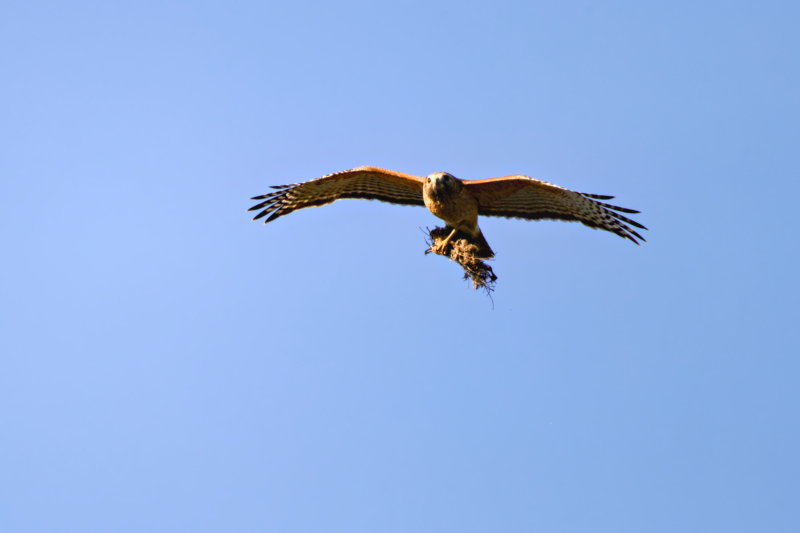
I had been waiting for this exact moment. I furiously clicked away with my camera as the hawk perched proudly, its prize, nesting material, firmly grasped in its talons. After a few triumphant screeches, it took off once more, disappearing into the trees.
A Close Look at Nest Building Behavior
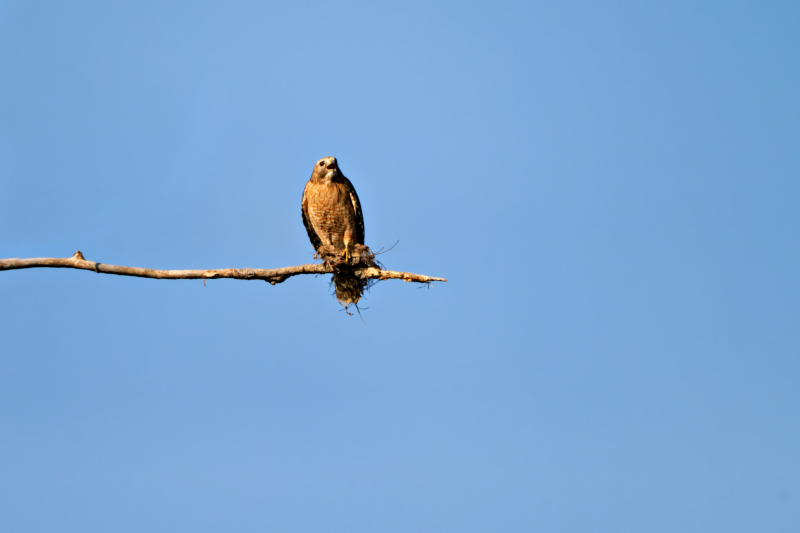
This chance encounter gave me a fascinating glimpse into the world of Red-shouldered Hawks and their nest-building habits. Here’s what I learned about these incredible birds:
Teamwork: While I couldn’t tell whether the hawk was male or female, it’s likely that both the male and female participate in nest construction.
Resourceful Recyclers: Red-shouldered Hawks are known to reuse nests from previous years, refurbishing them with fresh materials like the sticks I observed the hawk carrying.
Strategic Nesters: These hawks prefer to build their nests in the crooks of broad-leaved trees, often positioned below the forest canopy but near the top. They often build their nests near water sources like the cove where I was parked.
A Memorable Wildlife Photography Moment
This lucky encounter left me with a newfound appreciation for Red-shouldered Hawks and their dedication to raising their young. It serves as a reminder to keep our eyes peeled (and cameras ready!) whenever we’re out in nature, as there’s always a chance to witness something truly amazing.