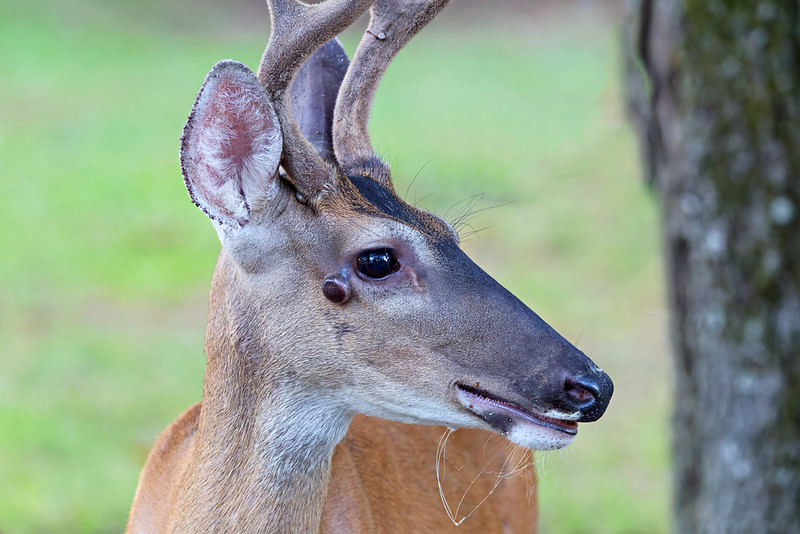
A White-tailed Deer Fibroma may explain the growth below this buck’s eye. I photographed the buck at Mount Nebo State Park in Arkansas.
The small, dark nodule immediately caught my attention. It stood out clearly against the short hair on the buck’s face.
What Is a White-tailed Deer Fibroma?
The growth looks consistent with a cutaneous fibroma, commonly called a deer wart. It appears smooth, dark, hairless, and attached by a narrow base.
A photograph alone cannot confirm a diagnosis. Still, the growth has several features commonly associated with deer fibromas.
A deer-specific papillomavirus usually causes these skin growths. They often appear on the head, neck, shoulders, and forelegs. A deer may have only one growth or develop several.
Most fibromas remain confined to the skin. They often cause little trouble and may eventually disappear without treatment.
Problems can develop when a growth blocks the deer’s vision or affects its ability to eat, breathe, or move. This one appeared small and localized. The buck’s eye remained open and unobstructed when I photographed it.
The virus is specific to deer and does not infect people, pets, or livestock. The Kentucky Department of Fish and Wildlife Resources provides more information about the condition and its effects.
I photographed a similar case several years ago at Sequoyah National Wildlife Refuge in Oklahoma. That encounter involved a White-tailed doe with an odd growth.
A Close Look at the Mount Nebo Buck
I noticed the growth while watching the buck, so I took this close-up portrait to document it.
The profile view clearly shows the nodule below his eye. His velvet-covered antlers and alert expression also add interest to the portrait.
The soft green background keeps attention on the buck’s face and the unusual detail that first caught my eye.
One More Detail From a Memorable Morning
This buck was one of several White-tailed Deer I photographed at Mount Nebo State Park. His unusual facial growth made this portrait different from the others.
The growth did not appear to interfere with his eye at that moment. I hope it remains harmless and eventually regresses on its own.