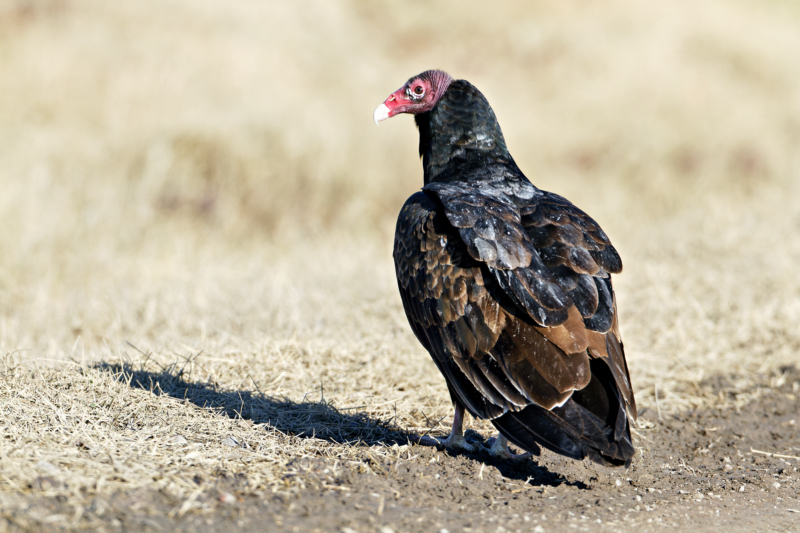
Turkey vulture behavior is full of practical adaptations that help these birds survive heat, predators, and constant exposure to decay. While photographing Turkey Vultures, I have watched them use strategies that may look strange at first. Those behaviors make sense once you understand how these birds live. From cooling their bodies to defending themselves, these adaptations show just how well suited Turkey Vultures are to their environment.
Turkey Vulture Behavior as a Defense Strategy
When threatened, Turkey Vultures have a unique way of deterring predators. They vomit. Their stomach acid is strong, and the smell of partially digested meat can repel many attackers. This works especially well against predators with a strong sense of smell, such as canines or larger carnivores. It is an effective deterrent and highlights their resourcefulness.
Cooling Strategies in Hot Conditions
Their feces do more than cool their bodies, particularly in hot, arid conditions where evaporative cooling is most effective, a process known as urohidrosis. The acidic digestive juices act as a natural antiseptic and help kill bacteria on their legs and feet. This matters because Turkey Vultures often walk on decomposing carcasses while scavenging. The process reduces the risk of infection from harmful microbes and shows how efficient their adaptations are.
Observing Turkey Vulture Behavior in the Field
While exploring a service road at Sequoyah National Wildlife Refuge, I spotted a Turkey Vulture with white marks on its back feathers. I wondered if the bird had been defecated on by another vulture. Given their urohydrosis habit, this is fairly common and part of their thermoregulation strategy. Moments like this remind me how strange and fascinating wildlife behavior can be.
Turkey Vultures might not have the elegance of some birds, but their adaptations, like urohydrosis, their vomiting defense, and their natural antiseptic waste, make them remarkable survivors. Their innovative strategies for cooling and self-defense are just some of the traits that make them so interesting to observe.