I was out on a nature walk near Tuff Pond at the Sequoyah National Wildlife Refuge in Oklahoma when I noticed something I did not expect. Among the green tree frogs perched on reeds and grasses, one looked like it still had a long tail.

Long-Tailed Green Tree Frog Along the Edge of Tuff Pond
I carry my camera when I walk the maintenance roads near Tuff Pond. There is always something worth watching there, and green tree frogs are common along the water’s edge.
That day, I photographed several frogs sitting on reeds and grasses near the wetland. Most looked normal at a glance. Then one frog caught my eye.
It looked like a typical American Green Tree Frog, but it appeared to have an unusually long tail. That was the mystery. The frog looked well developed, yet the tail was still easy to see. That made this encounter stand out from the others I photographed that day.

The more I looked at the images later, the more curious I became. I tried to learn more after I got home, but I did not find much clear information that matched exactly what I had seen. Rather than jump to conclusions, I came away with more questions than answers.
For anyone who enjoys watching these frogs, I also wrote about whether green tree frogs are safe to touch. I always think it is best to observe them carefully and let them go about their day.
Photographing a Green Tree Frog in Wetland Light
Scenes like this are one reason I enjoy photographing amphibians in wetland habitat. The reeds, grasses, and still water create a clean setting, and small details become the whole story.
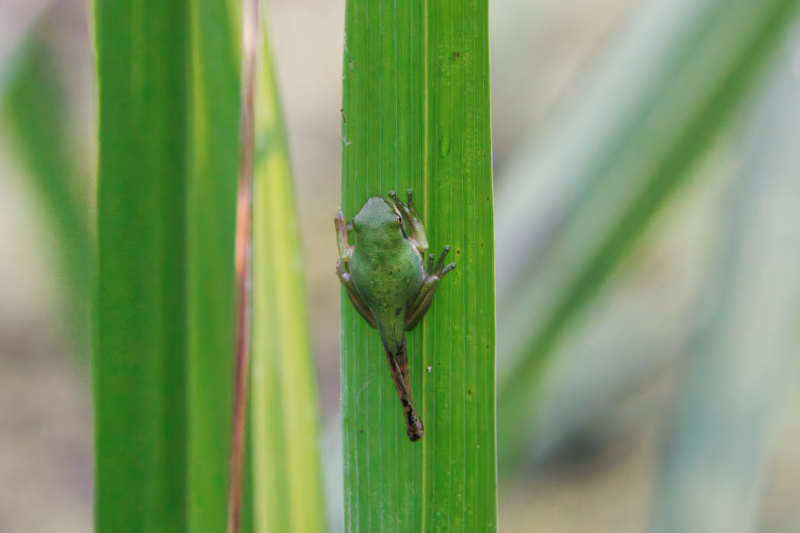
This frog did not need dramatic action to be interesting. The shape of the body, the perch, and especially the tail made the photo worth slowing down for. I like moments like that. They reward careful observation more than luck.
What mattered most here was taking time to study the subject from different angles. A side view helped show the tail clearly. A rear view added context and made the unusual shape easier to compare.
Why This Long-Tailed Frog Stayed With Me
One unusual animal can change an ordinary walk into a memorable one. That is exactly what happened here.
I returned to the refuge the next day and found another green tree frog with a much smaller tail. That second sighting made me think the first frog may have been an uncommon case rather than something I had simply overlooked before.

Even so, both frogs reminded me why I enjoy time in wild places. Every visit offers a chance to see something small, strange, and worth remembering. I may never know the full story behind that first frog, but I was glad to witness it and photograph it.
I will be watching for more on future visits to Tuff Pond. Encounters like this keep me curious, and that curiosity is a big part of why I keep coming back.