In May, I spent the morning at the Phillip Parks Memorial Fishing Pier in the Sequoyah National Wildlife Refuge in Oklahoma. I was sitting quietly on the pier with my camera resting on a bean bag draped over the rail. The lotus plants were thick across the water, and movement among the leaves caught my attention.
A muskrat slowly worked its way into view.
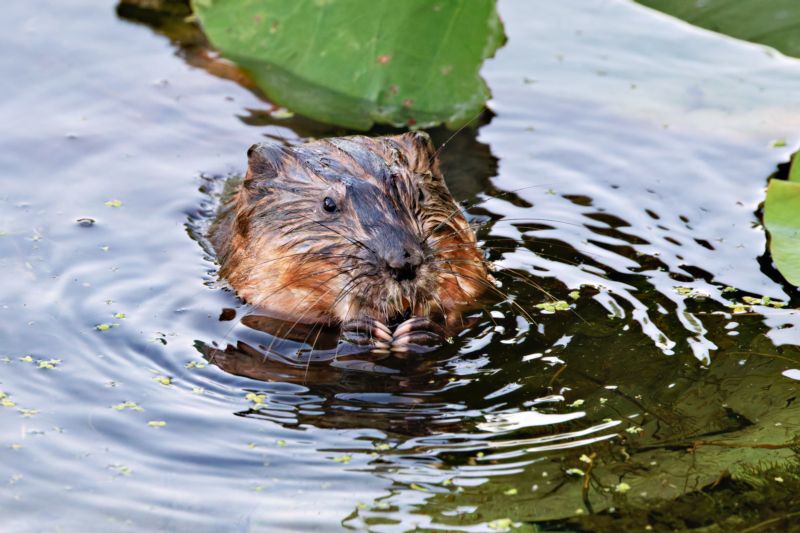
It swam toward a floating plant and climbed partly out of the water. The muskrat held the plant with its front paws and began feeding right on the surface. I could clearly see the detail in its wet fur and whiskers as it ate.
This gave me an excellent opportunity to photograph natural feeding behavior.
Muskrat Feeding Behavior in the Wild
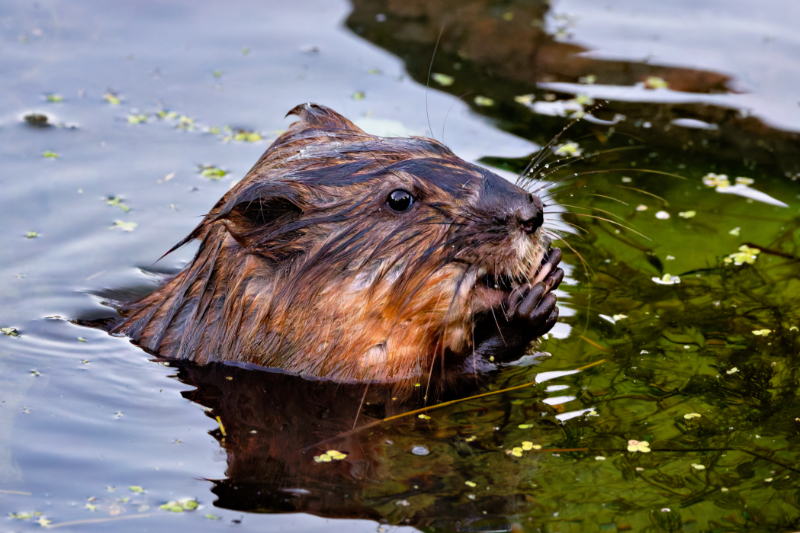
Muskrats often feed while floating in the water. I have also documented this behavior in a short video and field notes in my post, Muskrat Encounter Video and Facts. They use their front paws to hold aquatic plants and bring the food to their mouth.
At Sequoyah National Wildlife Refuge, I frequently see muskrats feeding on lotus, cattails, and other aquatic vegetation. They usually stay close to thick cover where they can quickly escape if danger appears.
This muskrat followed that same pattern. It stayed near the lotus plants and fed calmly for several minutes. Because I remained still on the pier, it never showed any alarm.
This type of feeding behavior is one of the best opportunities to photograph muskrats. When they feel secure, they focus on eating and allow close observation.
Why the Fishing Pier Is a Reliable Photography Location
The Phillip Parks Memorial Fishing Pier has become one of my most reliable locations for wildlife photography at Sequoyah National Wildlife Refuge. The elevated position allows me to photograph animals at eye level as they move through the water.
Using a bean bag on the pier rail provides solid support while allowing quick movement when wildlife changes position. This simple setup makes it possible to stay ready without carrying heavy equipment.
Many of my muskrat, otter, and beaver photos have been taken from this same pier.
Photography Notes
These photos were taken while sitting on the fishing pier with my lens supported by a bean bag. This simple support system allows sharp images without carrying a tripod.
Camera Settings
- Camera: Canon EOS R5
- Lens: Canon RF 100-500mm F4.5-7.1 L IS USM
- Focal Length: 500 mm
- Aperture: f/8
- Shutter Speed: 1/400 second
- ISO: 6400
- Exposure Compensation: 0
- Support: Bean bag on pier rail
The higher ISO was necessary because of the available light and the need to maintain a shutter speed fast enough to keep the image sharp.
A Consistent Wildlife Encounter
Encounters like this are the reason I continue to return to the Phillip Parks Memorial Fishing Pier. Muskrats are active throughout this area, and patient observation often leads to close views like this one.
Each visit offers something different. This muskrat feeding among the lotus plants was one of the highlights of that morning at Sequoyah National Wildlife Refuge.