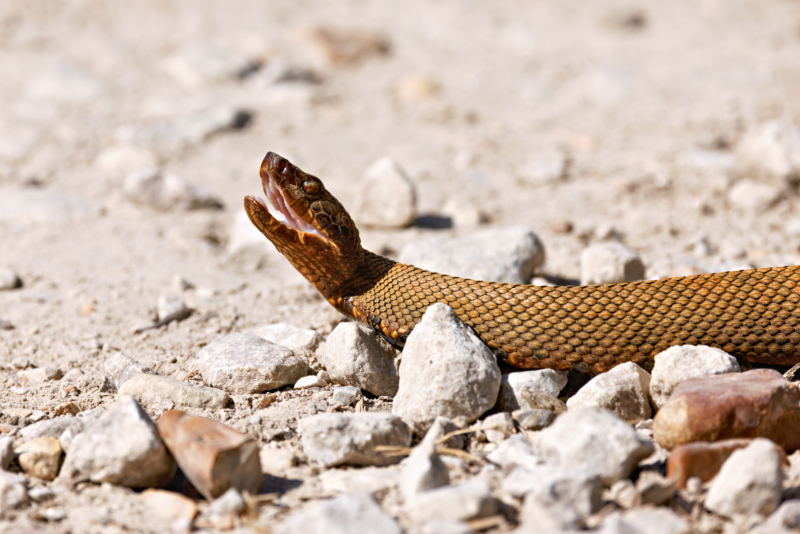
On March 14, 2024, my friend Mia and I came across a peculiar-looking Cottonmouth at the Sequoyah National Wildlife Refuge in Oklahoma. Cottonmouths are also known as Water Moccasins. This one immediately stood out. Its body had a distinct rust-colored hue. That’s a big contrast from the dark coloration we usually expect to see in these venomous pit vipers.
Natural Color Variation or Something Else?
Intrigued by its unusual appearance, I did some research. I found a discussion on the r/whatsthissnake subreddit about a similar-looking Cottonmouth. The comments offered a few possible explanations. Each one tried to explain the snake’s striking color.
One idea was that this was simply a natural color morph. In other words, a variation in the snake’s pigmentation that produced the rust-red color. A regional state biologist supported this theory. He said he had never seen a Cottonmouth quite this color before. Even so, he believed it was a natural variation. Not mud or debris covering the snake.
However, other commenters on the Reddit thread saw it differently. They believed the rusty look was more likely caused by dried mud, silt, or other natural debris coating the snake. This kind of staining is common in semi-aquatic snakes. It happens often when they come out of overwintering in early spring. The mud can wear off over time. Even so, the staining may stick around for a while.
A Closer Look at the Snake’s Appear
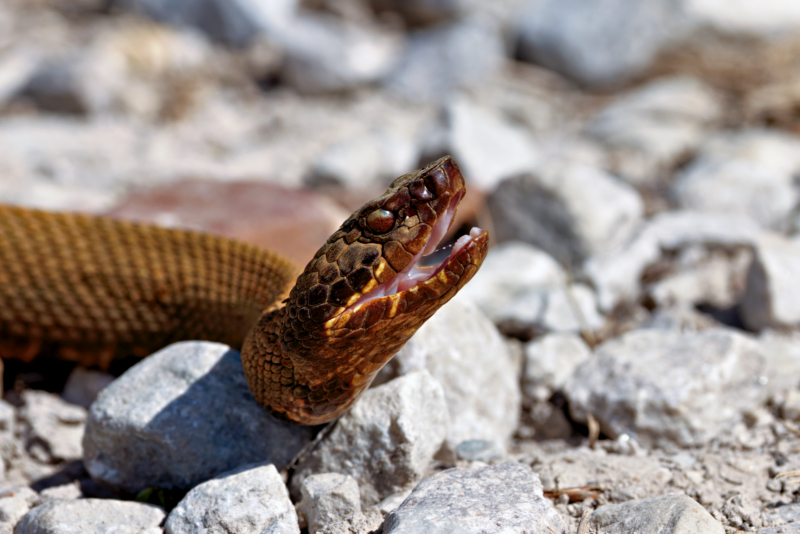
After examining the photos more closely, I’m still not sure what caused the snake’s rust-colored appearance. It could be a natural color variation. It could also be dried mud and debris. Some of the normal coloration shows through, especially on the underside. However, the scales look a bit muted and less defined. That could point to mud covering them.
I didn’t have much time to study the snake. Another vehicle was coming, and we had to move. The snake left the road safely. Without a closer look, or seeing it after a shed, I can’t say for certain what it was. A unique morph is possible. So is a very dirty Cottonmouth. For now, it remains a mystery.
Why Cottonmouths Sometimes Look Different
So while this Cottonmouth’s appearance is striking and out of the ordinary, the most likely explanation is simple. The snake is just dirty, not a unique genetic variation. Mud, silt, or debris can change how the scales look. A good shed should bring it back to its typical dark color.
Still a Mystery in the Field
The mystery of the rust-colored Cottonmouth may be solved, but it’s a good reminder that nature is full of surprises. Who knows what other strange sights await us out on the trails and in the wetlands? The only way to find out is to keep exploring and observing the natural world around us.
You can view more photos of this snake by going to Mia’s blog post: My Lifer Northern Cottonmouth/Water Moccasin Photos