Texas Longhorns are a regular part of the Wichita Mountains Wildlife Refuge for me. I have been seeing them there for years, and I always enjoy photographing them when I visit.
They are woven into the refuge experience just as much as the bison and prairie dogs. Their story also gives them a deeper place on the landscape.
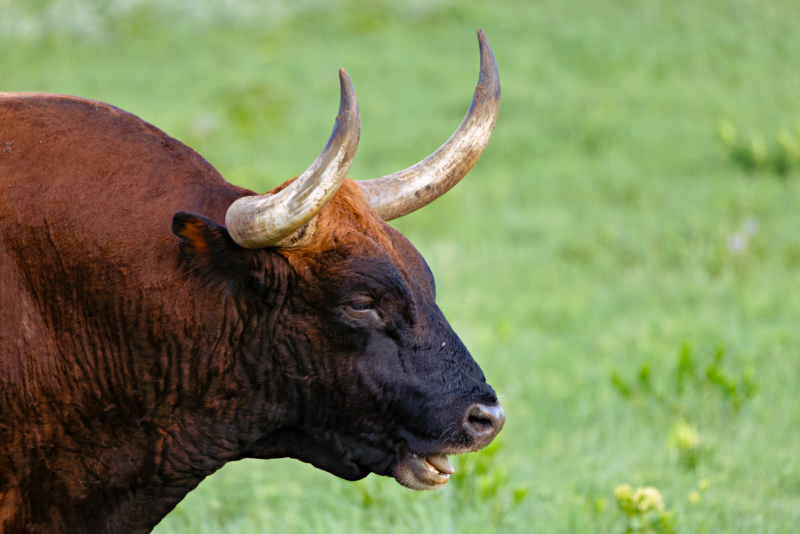
Texas Longhorns at Wichita Mountains Wildlife Refuge
When I see Texas Longhorns in the Wichitas, I do not think of them as an odd sight. They belong to the rhythm of the refuge, and I have come to expect them on my visits. That familiarity is part of why I like photographing them. They are a steady subject in a place I know well.
The history behind them makes that familiar sight even more meaningful. Purebred Texas Longhorns had declined sharply by the early 1900s because of crossbreeding. The Wichita Mountains Wildlife Refuge became part of the effort to preserve the breed. In 1907, the refuge received 15 Texas Longhorns from the New York Zoological Park. Then in 1920, another 20 longhorns were brought in from Texas to strengthen the herd.
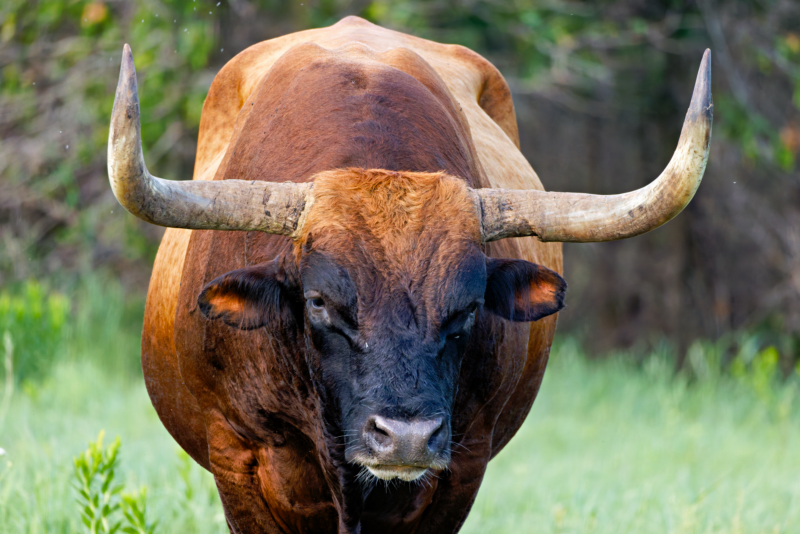
That long history is one reason these animals matter here. They are not just scenic cattle on open ground. They are part of a conservation story that has been tied to the refuge for well over a century.
The refuge also maintains a large herd across its broad landscape and uses annual auctions of excess stock to help distribute pure Texas Longhorn genetics. That ongoing management is part of what helped keep the breed going.
Texas Longhorn Photography Notes
I photographed these longhorns with a setup that worked well from the truck. The long lens let me keep my distance and still fill the frame. The beanbag gave me a stable support while keeping things simple and quick to adjust.
- Camera: Canon EOS R5
- Lens: Canon RF 800mm F11 IS STM
- Focal length: 800mm
- Aperture: f/11
- Shutter speed: 1/2000
- Shutter speed for Photo 2: 1/1250
- ISO: 6400
- Exposure compensation: 0
- Support: Beanbag on truck window
With Texas Longhorns, I usually look for a clean side profile when I want to show off the sweep of the horns and the full shape of the animal. That angle gives the viewer a better sense of the longhorn’s build and makes the horn line stand out clearly against the background.
A close front view creates a very different kind of image. It puts the focus on the face, the symmetry of the horns, and the animal’s direct presence. That angle can feel stronger and more personal, especially when the eyes are sharp and the background stays simple.
I also try to keep the background simple. At 800mm, it is easier to isolate the subject and let the longhorn stand out. Sharp eyes, clean horn lines, and even light across the face make the biggest difference for me.
Closing
I have seen Texas Longhorns many times in the Wichita Mountains Wildlife Refuge, and I never think of them as out of place. They are one of the animals that help define the refuge for me.
Knowing their history makes each sighting better. They are a familiar part of the Wichitas, and they also represent a real conservation success story.