On a calm morning at Reeves Slough in the Sequoyah National Wildlife Refuge, I watched a Muskrat swimming slowly across the surface of the water. It stopped near the fishing pier where I was sitting and began feeding on an aquatic plant it had gathered.
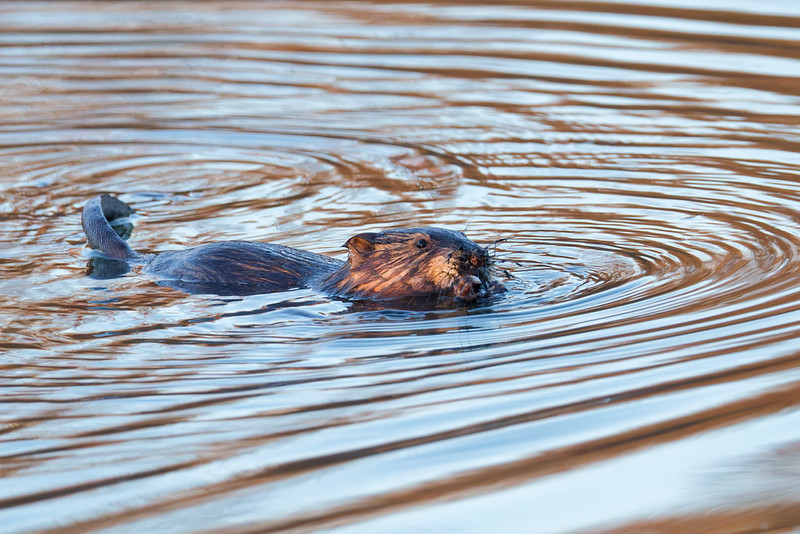
I already had my camera resting on a bean bag draped over the pier rail. This setup allowed me to stay steady and ready without holding the weight of the lens. When the Muskrat surfaced with the plant, I was in perfect position to photograph the moment.
Wildlife Notes
Muskrats spend much of their time feeding on aquatic vegetation. Plants make up the majority of their diet, especially in marshes and sloughs like Reeves Slough.
They often bring food to the surface where they can eat while floating. This behavior creates gentle ripples that spread outward in circles across the water. These ripples can make for interesting photo opportunities, adding texture and movement to the scene.
Muskrats are most active in the early morning and late afternoon. When the water is calm, their presence is often revealed by the V-shaped wake behind them as they swim.
At Sequoyah National Wildlife Refuge, Muskrats are common but not always easy to photograph this closely. Having a fixed position on the fishing pier allowed me to wait quietly without disturbing it. I have photographed them from this same location before, including this Muskrat at Parks Memorial Fishing Pier, which shows how often they use this area.
Photography Notes
Photographing from a fishing pier offers several advantages. The height of the pier provides a clear view of the water, and the rail creates a solid support for the camera.
Using a bean bag on the rail removes vibration and allows smooth tracking of moving wildlife. It also reduces fatigue, especially when using longer lenses.
Because I was already in position, I was able to photograph the Muskrat naturally as it fed. It showed no concern about my presence and continued eating for several minutes.
This type of photography is often about patience and positioning rather than movement. Staying still and letting wildlife come to you usually produces the best results.
Camera Settings
- Camera: Canon EOS R5 Mark II
- Lens: RF 200-800mm F6.3-9 IS USM
- Focal Length: 570mm
- Aperture: f/9
- Shutter Speed: 1/800 second
- ISO: 4000
- Support: Bean bag on fishing pier rail
- Location: Reeves Slough, Sequoyah National Wildlife Refuge, Oklahoma
Why Reeves Slough Is a Reliable Place to Photograph Muskrats
Reeves Slough provides excellent habitat for Muskrats. The calm water, abundant vegetation, and limited disturbance make it an ideal feeding area.
Fishing piers offer stable vantage points and allow close observation without entering the animal’s space.
Many of my best Muskrat photographs at Sequoyah National Wildlife Refuge have come from simply sitting and waiting in places like this.
Wildlife photography often rewards patience more than effort.
Watching this Muskrat eat its aquatic plant was a quiet moment that reflects the daily life of wildlife at the refuge.
Simple setups like a bean bag on a pier rail can make a big difference in capturing these natural behaviors.
Sequoyah National Wildlife Refuge continues to be one of the best places I know to photograph wildlife in Oklahoma.