Male Ruby-throated Hummingbirds visited my Arkansas yard during July. Their throats looked very different, even though I photographed them during the same month.
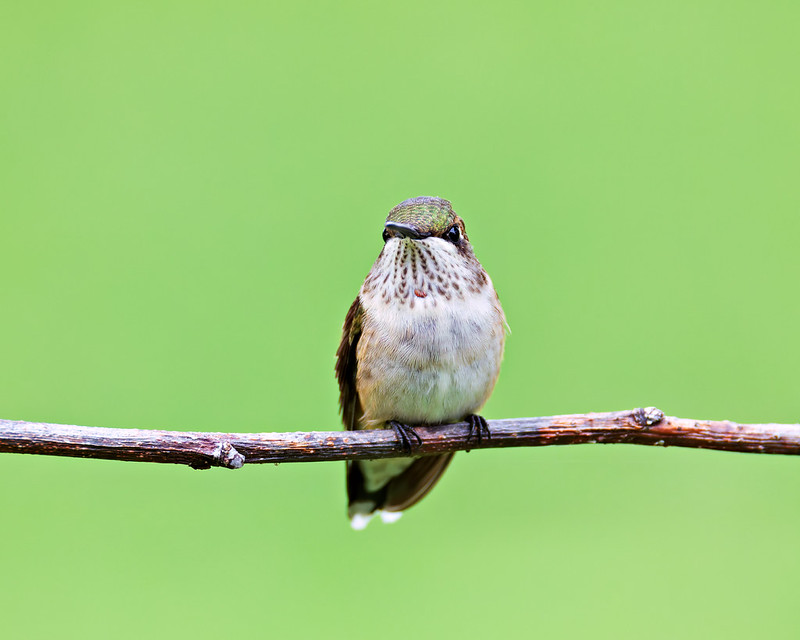
One had a single red spot. Another showed several scattered red feathers. The mature male displayed the full ruby-red throat that gives this species its name.
Male Ruby-throated Hummingbirds at Different Stages
The first two birds are immature males. Young males start with pale, streaked throats that look much like those of females. Small red gorget feathers can begin appearing during late summer.
I first wrote about the Ruby-throated Hummingbirds returning to my feeders earlier this year. That post marked their first appearance in my yard this season.
The first young male had only one tiny red feather near the center of its throat. That single spot was enough to reveal that the bird was male.
The second immature male had several bright red feathers scattered across its throat. His gorget was farther along, but it was still far from complete.
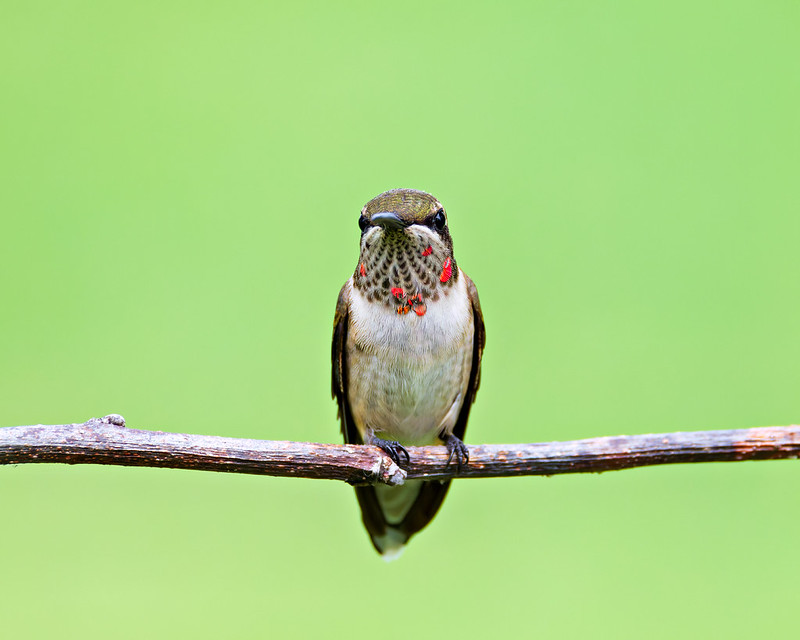
These two birds should not be viewed as exact steps on a fixed schedule. They may have hatched at different times, and feather development can vary between individuals. The amount of red does not tell me their precise ages.
What the Scattered Red Feathers Tell Me
The scattered red feathers belong to the developing gorget. A gorget is the patch of iridescent throat feathers seen on an adult male.
Young males may carry only a few red gorget feathers before fall migration. They develop the complete red throat later, following additional feather replacement during their first winter.
Light also changes what I see and photograph. These feathers reflect color at certain angles. A mature male’s throat can look red, dark red, or nearly black as he turns his head.
That lighting effect can hide red feathers, but it does not explain the pale, streaked throats in the first two photos. Their small patches of red and immature plumage set them apart from the adult.
Watching Summer Plumage Change in My Yard
The third bird was a mature male with a complete gorget. His red throat lit up beautifully as he faced me on the perch.
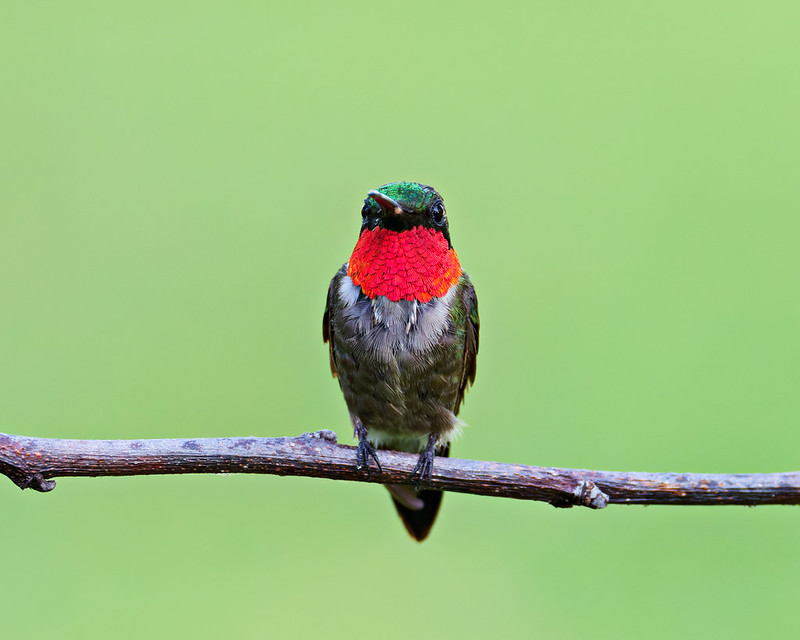
He also appears a little uneven through the breast and belly. That rough look is consistent with body molt. Adult Ruby-throated Hummingbirds can replace body feathers during summer, including while they are still on their breeding grounds.
A single photo cannot confirm every missing or growing feather. Still, his uneven lower plumage fits what a molting adult can look like in July.
Seeing all three males in my yard gave me a useful side-by-side comparison. One showed the first hint of red, another had a scattered patch, and the adult wore a full gorget.
These photographs capture more than three different birds. They show how much age, feather growth, molt, light, and viewing angle can change the way a male Ruby-throated Hummingbird looks.