I photographed this Great Blue Heron as it dropped low into the water while hunting fish at Sequoyah National Wildlife Refuge in Oklahoma. The bird lowered its body almost flat against the surface, using a slow, deliberate approach before striking. This behavior is easy to miss if you are not watching closely, but it often leads to a successful catch.


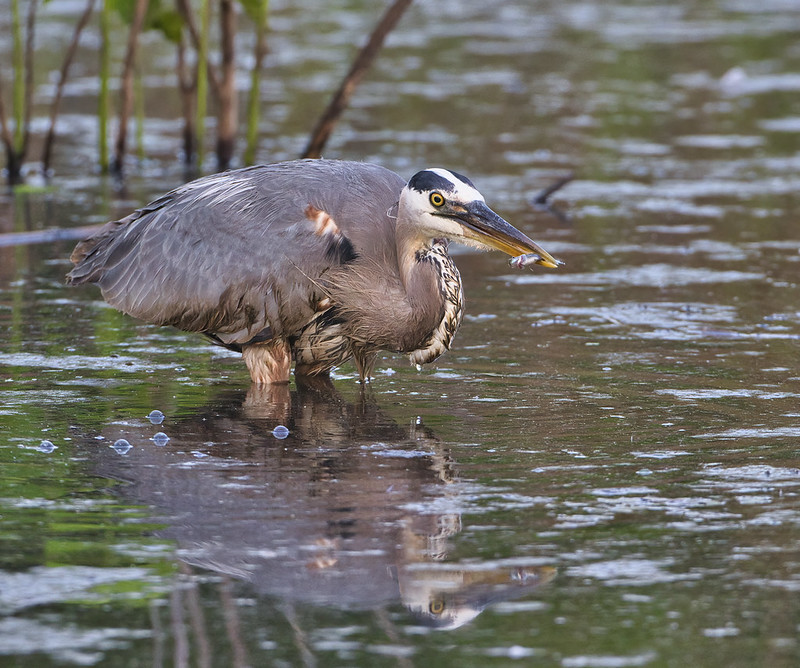
I was parked near Lower Scarborough, north of the four-corners intersection and past Minor’s Cove. From that spot, I could see the heron move from shallow cover into open water. As it advanced, the bird kept its head level and its body low, reducing both glare and its visible profile to nearby fish.
The photos show the heron’s patience paying off. After several careful steps, it struck and came up with a small fish. Moments like this highlight why Great Blue Herons are such efficient hunters in shallow wetlands and calm backwaters.
Wildlife Notes: Great Blue Heron Hunting Behavior
Great Blue Herons often crouch low when hunting in shallow water. This posture helps reduce reflections on the water’s surface and keeps the bird less visible to fish below. They rely on slow movement and precise timing rather than speed.
At Sequoyah National Wildlife Refuge, herons frequently hunt along gradual shorelines and flooded vegetation. Calm mornings and light wind make it easier for them to spot prey. When conditions are right, they may hold this low stance for several minutes before striking.
Photography Notes: Capturing a Low Hunting Stance
I photographed this heron from my truck using it as a mobile blind. I rested my camera on a bean bag draped over the window, which provided solid support without disturbing the bird.
Shooting from vehicle level helped me stay close to the waterline. That angle emphasized the heron’s low posture and kept the background clean. I watched the bird’s movement carefully and waited until it stepped into open water before shooting.
Fast enough shutter speed was critical to freeze the strike, while a moderate aperture kept the bird sharp without distracting from the scene. Patience mattered more than settings in this situation. Once the heron committed to the hunt, the moment unfolded quickly.
Location and Camera Settings
Location: Sequoyah National Wildlife Refuge, Oklahoma
Date Taken: June 9, 2020
Camera: Canon EOS 7D Mark II
Lens: Canon EF 500mm f/4L IS USM
Focal Length: 500mm
Aperture: f/5.6
Shutter Speed: 1/400 second
ISO: 2000
I have photographed other Great Blue Heron hunting techniques as well, including a unique fishing method that shows how adaptable these birds can be in different conditions.