Grasshoppers in Oklahoma are a regular part of summer. Still, the numbers I saw at Sequoyah National Wildlife Refuge made me take a closer look.
In my earlier post, Grasshopper Explosion At The Sequoyah National Wildlife Refuge, I wondered if the large number of grasshoppers I was seeing could be called an infestation. After doing more reading, I wanted to follow up with a better answer.
Grasshoppers in Oklahoma and the Outbreak Question
Grasshoppers are common in grassland habitats, prairies, pastures, roadsides, and rangeland. They are part of the summer scene in Oklahoma.
But high numbers can cause trouble.
When grasshopper numbers build up, they can damage crops and rangeland. Oklahoma State University Extension explains that grasshoppers can become a problem in rangeland, pastures, field crops, and gardens.
That helps put my refuge observation in context.
I was not looking at a field survey. I was walking service roads and watching what jumped up with each step. The number of grasshoppers stood out because I have walked those roads for years.
OSU Extension notes that grasshopper problems can appear in isolated pockets across Oklahoma, then subside later. Weather, rainfall timing, disease, predators, and parasites can all affect how many young grasshoppers survive.
That fits what I was wondering in the field.
Were these grasshoppers part of a broader outbreak? Or was I seeing a local pocket where conditions were just right?
Based on the information I found, it sounds like localized high numbers do not always mean a regional outbreak. It does mean the area is worth watching.
Photographing a Grasshopper in July Light
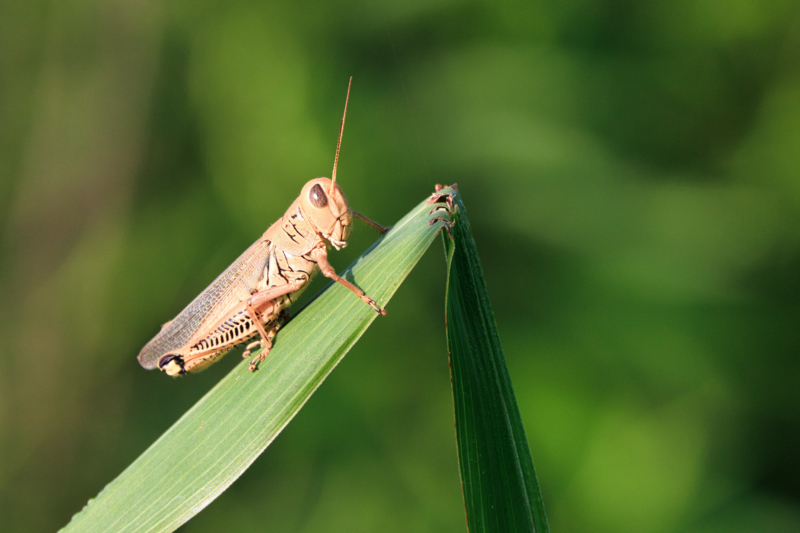
I photographed this grasshopper at Sequoyah National Wildlife Refuge in Oklahoma on July 18, 2023. It was perched on a grass blade, which gave the image a clean and simple look.
I like these small scenes because they slow me down.
A grasshopper may not draw attention like a deer, bobcat, or owl. But when the refuge is full of them, they become part of the larger wildlife story.
For this photo, I used a long lens. That gave me working distance and helped keep the background soft.
Camera settings:
- Location: Sequoyah National Wildlife Refuge, Oklahoma
- Date and Time Taken: July 18, 2023, 08:19 A.M.
- Camera: Canon EOS R5
- Lens: Canon RF 100-500mm F4.5-7.1 L IS USM
- Aperture: f/8
- Shutter Speed: 1/800
- ISO: 640, Auto
- Exposure Compensation: 0
- Focal Length: 500mm
What These Grasshopper Numbers Made Me Notice
This follow-up helped me separate a field impression from a confirmed outbreak.
What I saw was a noticeable jump in grasshopper numbers at the refuge. What I found was that grasshopper populations can rise in local areas without reaching outbreak levels across a wider region.
That is one reason I enjoy wildlife photography.
The camera gets me outside. The questions keep me learning.
Sometimes the subject is a large animal moving through open habitat. Sometimes it is a grasshopper on a grass blade, reminding me to pay attention to the smaller signs of change.