While exploring the Sequoyah National Wildlife Refuge in Oklahoma a few days ago, I spotted something unexpected, a Horsefly (Tabanus spp.) resting on the hood of my pickup truck. Most people see these insects as annoying biters, but this one gave me a unique photo opportunity I couldn’t resist.
Up close, the Horsefly’s eyes revealed a stunning metallic shimmer. Their structure and color fascinated me far more than I expected from such a notorious insect.
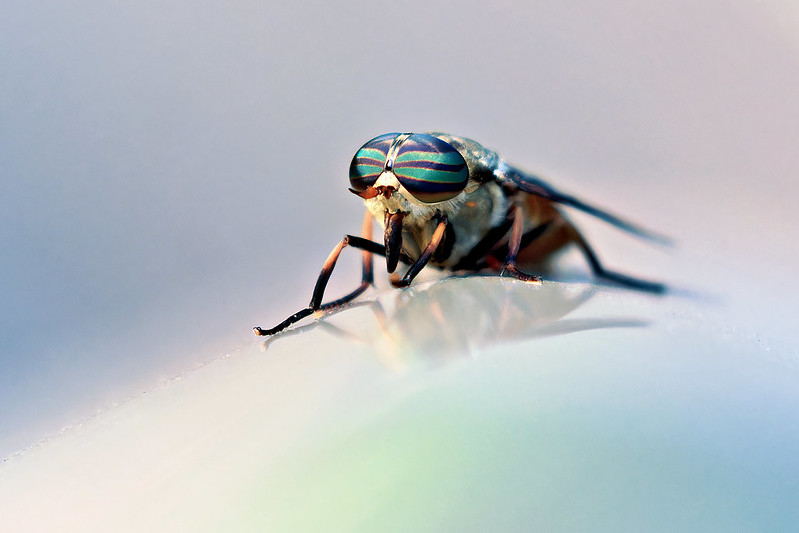
A Closer Look at Horsefly Eyes
As I reviewed my photos, I noticed the eyes were extremely close together. That detail suggested this was a male. In Horseflies, males have eyes that nearly touch, while females have widely spaced eyes. It’s a fascinating difference that makes identifying the sex of these flies possible with a good close-up.
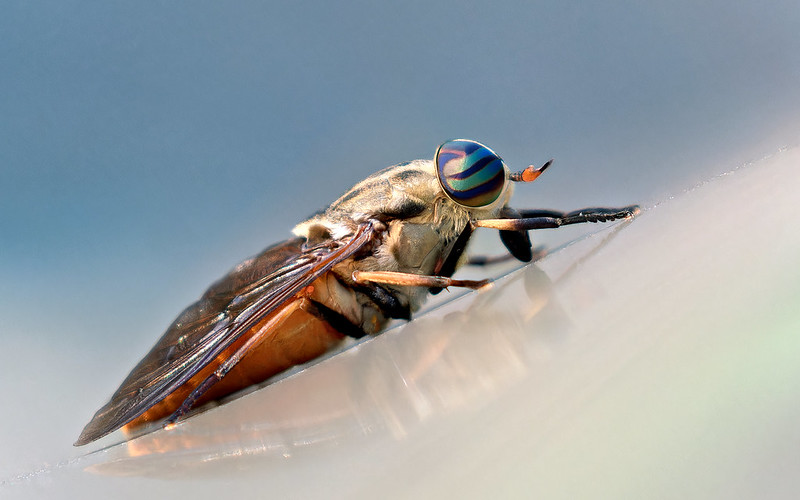
Female Horseflies Need Blood
Unlike males, female Horseflies seek blood. They rely on protein from blood meals to produce eggs. Although they usually feed on nectar and plant juices, they’ll go after horses, cattle, and even humans when the need arises.
Their bite isn’t just painful, it’s sharp and persistent. If you’ve ever been bitten by one, you probably remember the red lump it leaves behind.
When Horseflies Won’t Quit
If you try to swat a female Horsefly, be prepared for a chase. They don’t give up easily. Many will follow you or your vehicle until they get what they want. Their persistence makes them one of the more frustrating insects to encounter outdoors.
Males Are After Mates, Not Blood
Thankfully, the one I photographed was likely a male. Male Horseflies don’t bite because they don’t need blood. They survive on nectar and plant juices. This one was probably just pausing to rest before continuing his search for a mate.
Beauty in the Smallest Details
This moment reminded me that beauty and wonder exist even in creatures we often overlook or swat away. The iridescent eyes of this Horsefly gleamed like tiny jewels in the morning light. Getting a macro shot of him was a highlight of my day.
If you’re curious about another encounter I had, check out Spotting a Horsefly at the Wildlife Refuge.
Takeaway
Even common insects can offer surprising photo opportunities. With patience and curiosity, we can uncover unexpected beauty in nature’s smallest creatures. Encounters like this keep me returning to places like Sequoyah, camera in hand.