After weeks of anticipation fueled by social media reports, I finally photographed a night heron eating a dragonfly at Sequoyah National Wildlife Refuge in Oklahoma. This elusive bird had been evading my lens until last week when I spotted one at the back of Dockery Slough, south of Sally Jones Causeway.
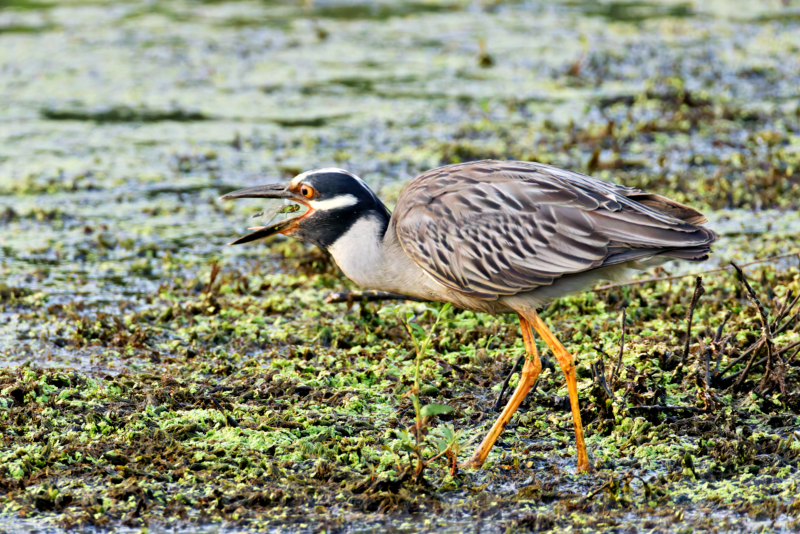
On July 28th, luck was on my side when I finally photographed this impressive bird. The image I am sharing today shows an adult Yellow-crowned Night Heron swallowing a large dragonfly, a clear example of the species’ varied diet and skilled hunting behavior.
Decline of Yellow-crowned Night Herons at Sequoyah Refuge
However, this exciting sighting comes with a bittersweet realization. Over the past few years, I’ve noticed a decline in the number of these birds at the refuge. While the Yellow-crowned Night Heron is not considered globally threatened (listed as “Least Concern” by the IUCN), the local population seems to have dwindled.
The turning point appears to be the major flood that hit the refuge in 2019. This catastrophic event had far-reaching consequences for the local ecosystem:
- Habitat Destruction: The flood damaged critical infrastructure and altered the landscape significantly, disrupting the wetland habitats essential for the herons’ nesting and foraging.
- Sediment Deposition: Large amounts of sediment were deposited, potentially affecting water quality and smothering vegetation. This could have impacted the availability of the herons’ prey, such as fish and crustaceans. I previously photographed a Yellow-crowned Night Heron with Crayfish at the refuge, which shows just how important these crustaceans are in their diet.
- Long-term Habitat Changes: The refuge underwent extensive restoration efforts, indicating lasting changes to the habitat structure. These alterations may have affected the availability of suitable nesting sites and foraging grounds.
The flood’s impact on the Yellow-crowned Night Heron population likely manifested in several ways:
- Nesting Disruption: Floodwaters could have destroyed nests or rendered traditional nesting sites unusable, leading to lower breeding success.
- Foraging Challenges: Changes in water quality and sediment deposition may have made it harder for the herons to find food.
- Increased Predation Risk: Habitat changes could have forced the herons to nest in less optimal locations, increasing their vulnerability to predators.
Hope for the Heron’s Recovery
While it’s disheartening to see the decline in these beautiful birds, my recent sighting offers a glimmer of hope. It suggests that the Yellow-crowned Night Herons are still present in the area, albeit in smaller numbers. As the refuge continues to recover from the 2019 flood, we can hope that these resilient birds will find ways to adapt and thrive once again in this vital ecosystem.
For now, I’ll cherish this rare encounter and continue to monitor the refuge for signs of the Yellow-crowned Night Heron’s recovery. It serves as a poignant reminder of the delicate balance in our natural world and the importance of preserving and protecting these critical habitats for future generations.
Great photo and information on the yellow crowned night heron, Steve.
Your photo on April 11 of the Yellow-crowned Night-Heron on the log is calming and peaceful. Thanks for sharing.