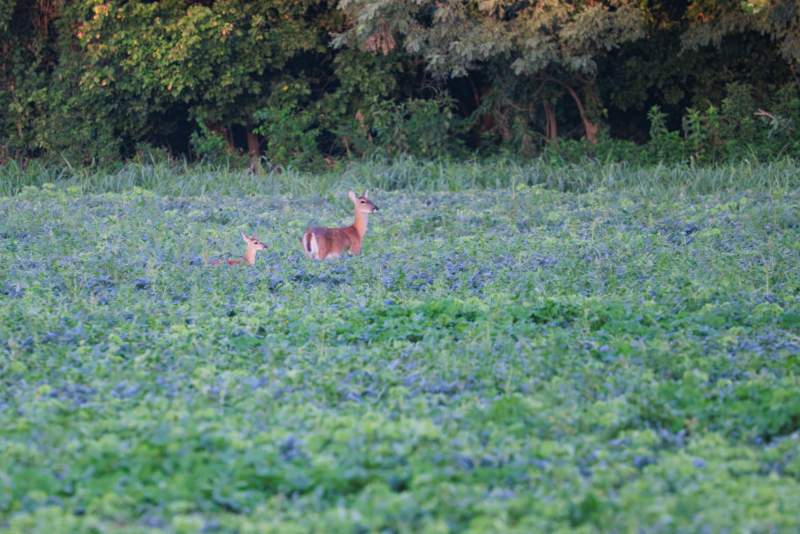
I recently photographed several white-tailed deer at Sequoyah National Wildlife Refuge in Oklahoma. In these images, I stayed back far enough to show not just the deer, but the habitat around them too.
That wider view is part of the story. It shows why this area of the refuge is such a good place to find deer.
Wildlife Notes
The southwest section of Sequoyah National Wildlife Refuge has become one of my favorite places to watch and photograph wildlife. In this stretch of the refuge, I often find the kind of cover and feeding space that white-tailed deer seem to use well.
White-tailed Deer Habitat at Sequoyah Refuge
These photos show open fields, brushy edges, and scattered trees, all within the same general area. That mix matters. Deer often use field edges and nearby cover as they move, feed, and bed down. In a place like this, they can step out to feed and still stay close to shelter.
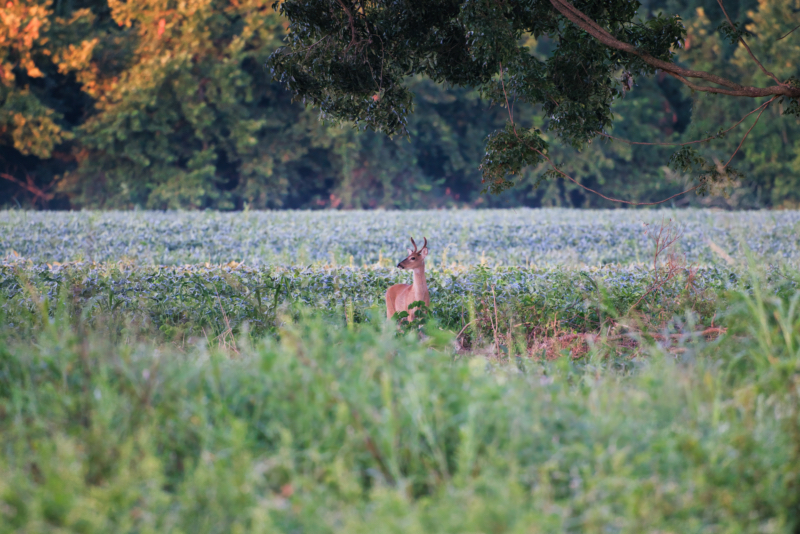
One thing I like about these scenes is how they place the deer in context. A doe with her fawn in the field, a buck under a large tree, and another buck near the field edge all help tell the same story. This refuge provides food, cover, and space, and that shows up clearly in these frames.

I spend a lot of time at Sequoyah National Wildlife Refuge, and every visit gives me a better feel for the landscape. It is a place with a lot of beauty, but it also takes a lot of work to keep it going. I wrote more about that in my post, Challenges I’ve Witnessed Keeping a Refuge Running.
Photography Notes
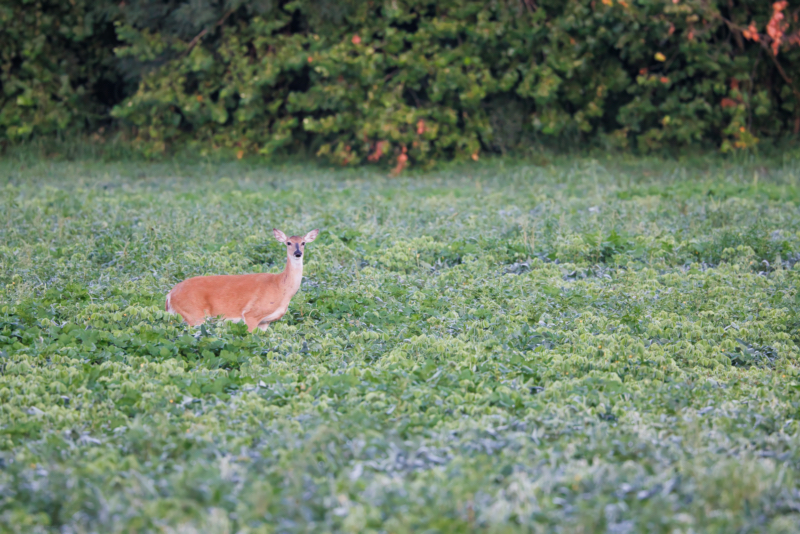
All four of these deer photos were taken from my truck. That setup let me work from a respectful distance and include more of the surrounding habitat in the frame.
I wanted these images to do more than show deer portraits. I wanted them to show where the deer were, how they related to the landscape, and why this part of the refuge keeps producing good wildlife sightings.
Light also played a big part. Early morning light helped keep the scene natural and soft, while still giving me enough shutter speed for a sharp frame.
Camera settings for the first image:
- Location: Sequoyah National Wildlife Refuge, Oklahoma
- Date: August 15, 2023
- Time: 6:57:43 AM
- Camera: Canon EOS R5
- Lens: Canon RF 100-500mm F4.5-7.1 L IS USM
- ISO: 6400
- Aperture: f/7.1
- Shutter speed: 1/800 sec
- Exposure compensation: +0.3
Final Thoughts
These white-tailed deer photos gave me a good chance to show more than the animals themselves. They also show a little of what makes Sequoyah National Wildlife Refuge such a rewarding place to visit and photograph.
I always enjoy time at this refuge, and I expect I will keep returning for years to come. It remains one of my favorite places to experience wildlife in Oklahoma.