I spent a quiet morning at the Sequoyah National Wildlife Refuge on September 7. The air felt like early autumn. I was driving the north side of the auto tour road. This area is just east of the Sally Jones Causeway. I spotted a White-tailed Doe and her fawn at the edge of Dockery Field. The most striking thing was the fawn. Its famous white spots were almost completely gone.
Wildlife Notes
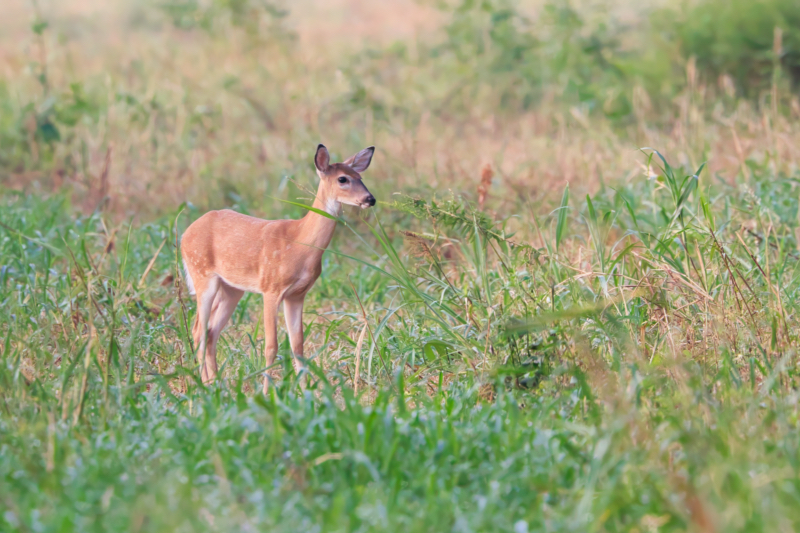
In east-central Oklahoma, fawns begin to change in September. They are born in late spring with bright white spots. These spots act as disruptive camouflage. They look like dappled sunlight on the forest floor. This protection is vital for a newborn.
By three or four months old, fawns become more independent. They no longer need to hide in the brush all day. Their reddish-brown coat shifts to a thicker, grayish-brown winter fur. The spots fade during this transition. Seeing this fawn in Dockery Field felt like watching it grow up. It was healthy and alert. It moved with confidence alongside the doe.
Photography Notes

The light was soft but low during this early morning encounter. I used my vehicle as a mobile blind to get close without spooking them.
Camera Settings:
- Camera: Canon EOS R5
- Lens: Canon RF 100-500 mm F4.5-7.1 L IS USM
- Mode: Manual
- Aperture: f/7.1
- Shutter Speed: 1/640
- ISO: 6400 (Auto)
- Exposure Compensation: +0.7
- Focal Length: 500 mm
I chose a higher ISO to maintain a fast shutter speed. This ensured the fawn’s movements stayed sharp. I added positive exposure compensation to pull detail from the deer’s coat against the darker field edge.
Final Thoughts
It is amazing how fast these animals grow. Just months ago, this fawn was a tiny newborn. Now it is losing its baby camouflage. I feel lucky to document these stages of life. Have you noticed the spots fading on fawns in your area? I would love to hear your observations in the comments.