A Carolina Chickadee has been coming to my feeder here in Lavaca since August. Its legs and feet carry a thick, pale buildup that none of the other chickadees have. I have seen Carolina Chickadee scaly legs before, but this is my first time writing about them. It feeds and gets around like the rest, but I still do not know what it has.
Carolina Chickadee Scaly Legs: What It Might Be
A photo alone cannot settle a thing like this. A bird needs an exam before anyone can name the cause for sure. Three causes come up most often for crusty legs on a songbird.
Scaly leg mites are tiny mites that burrow under the scales on a bird’s legs. They raise the scales and leave pale, crusty buildup behind. One mite of this kind is on record in chickadees and other songbirds.
Avian pox is a virus spread by mosquitoes and by contact. It can put wart-like growths on the feet and legs. A third chance is a papillomavirus, or plain hyperkeratosis, where keratin builds up on the toes and legs.
The buildup on this bird has grown slowly since August. That slow pace fits the mites best. A fit is not proof, though, and I am treating it as an open question.
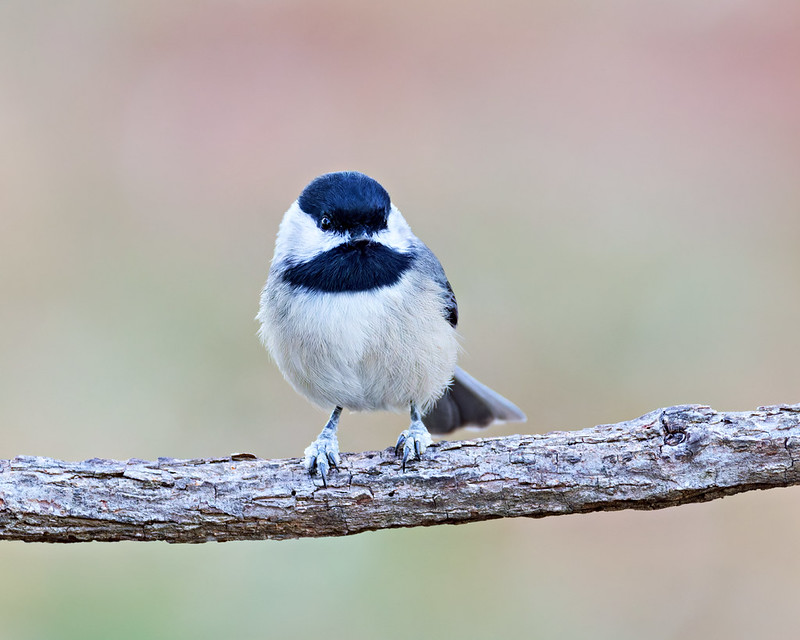
Photographing the Chickadee at My Feeder
I photograph the birds at my feeder most days, and this chickadee is one of them. I wrote before about why titmice and chickadees dominate backyard feeders, and this bird is as bold as any of them. Photos over time let me compare its legs from one month to the next. So far the bird holds its own. It grips a perch, works the feeder, and leaves with the others. If the toes start to go bad or the bird stops feeding, the photos will show the change first.
Keeping the Feeder Clean and Watching
I take my feeder down every evening and clean it before it goes back out the next morning. The birdbath gets cleaned every day too.
Cornell’s Project FeederWatch asks for one step past washing. A soak in one part bleach to nine parts water disinfects a feeder. It needs a good rinse and a full drying before it goes back out.
If other birds start showing the same crusty legs, the feeders come down for a couple of weeks. For now I keep the feeder clean and keep watching this one.
My equipment and settings for this photograph were:
- Camera: Canon EOS R5 Mark II
- Lens: RF 200-800mm F6.3-9 IS USM
- Focal Length: 800mm
- Aperture: f/10
- Shutter Speed: 1/250
- ISO: 6400
- Date and Time: October 19, 2026
Note: University of Florida extension notes that prolonged contact appears necessary for scaly-leg mites to spread between birds. A definitive diagnosis comes from identifying the small round mites in skin scrapings, not from the crusty lesions alone.