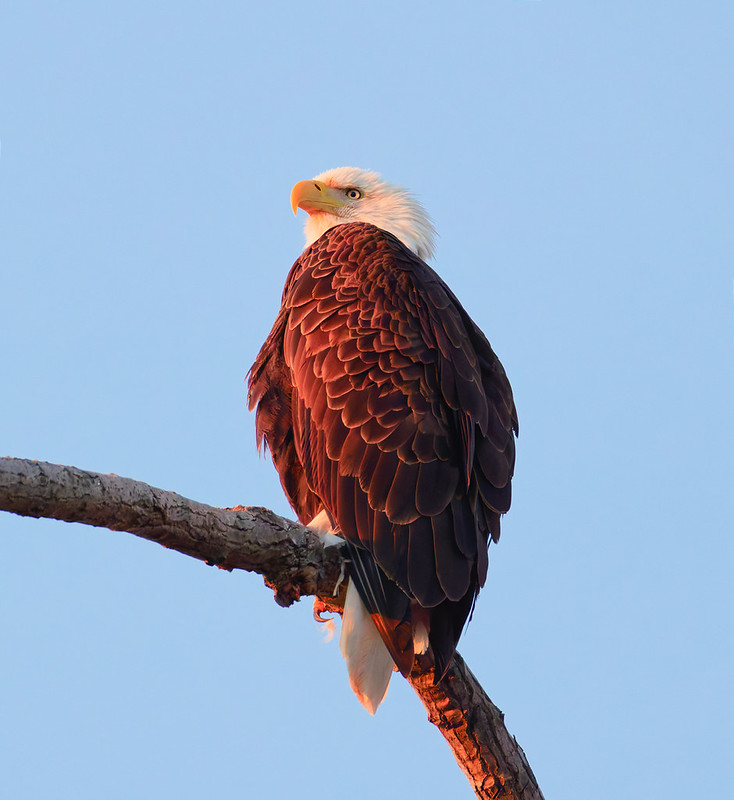
I photographed this Bald Eagle from my truck along the auto tour road at Sequoyah National Wildlife Refuge in Oklahoma. The eagle was perched high on a bare limb, calm and alert as it watched the ground below. The low angle of the early morning sun illuminated the feathers along its back, creating a warm contrast against the clear blue sky.
Wildlife Notes
Bald eagles are a regular winter presence at Sequoyah NWR. The refuge’s wetlands and open water hold fish and waterfowl, which makes it reliable foraging territory. Eagles often use exposed perches at the edges of tree lines or over water, where they have a clear view of the ground and sky below them.
This eagle was calm and alert. It tracked movement on the ground without any sign of alarm. That kind of relaxed behavior is common along the auto tour road, where birds are used to vehicles passing slowly. Staying inside my truck kept me invisible as a potential threat.
Adult bald eagles are easy to identify. The white head and tail feathers appear around age four or five, along with the yellow bill. This bird showed all the marks of a fully mature adult.
February falls in the heart of wintering season for eagles in Oklahoma. Numbers at Sequoyah often peak between December and February, when cold weather pushes birds south and concentrates them near open water. Early morning is when they tend to be most active, moving between roost trees and hunting areas.
Why Early Light Matters for Wildlife Photography
The light at 8:24 AM in early February is still low and directional, even an hour and a half past sunrise. That angle is what makes a shot like this work. The sun hits the back feathers at a shallow angle, pulling out texture and warm color that would flatten out by mid-morning.
A plain blue sky acts as a natural backdrop. It removes clutter, keeps the eye on the bird, and gives the image a clean, graphic quality. I did not have to find a special angle to get it. The eagle was just there, in the right spot, at the right time.
Staying in the truck helped on both counts. The bird stayed perched and relaxed, which gave me time to work the exposure and composition without rushing.
On another visit to Sequoyah, I photographed and listened to one calling across the wetlands. You can read more about that experience in my post, The Piercing Cries of the Bald Eagle.
Photography Notes
Location: Sequoyah National Wildlife Refuge, Oklahoma
Date: February 6, 2026
Time: 8:24 AM
Camera: Canon EOS R5 Mark II
Lens: Canon RF 200-800mm F6.3-9 IS USM
Focal Length: 800mm
Aperture: f/10
Shutter Speed: 1/1000 second
ISO: 6400
Exposure Compensation: +1/3
Using the 800mm focal length allowed me to photograph the eagle from a safe distance while filling the frame. The fast shutter speed ensured sharp detail, and the higher ISO compensated for the softer early morning sun.
Every trip to Sequoyah National Wildlife Refuge is its own thing. This one gave me calm light, a relaxed eagle, and a clean background. I will take that combination whenever it shows up.
Love the colors the early light produced!
Fantastic photo!
Thank you!