Spring came early to my backyard this year, and the food plot I planted in front of my deck had a lot to do with it. Within weeks of the red clover blooming, I had both cottontail rabbit kits feeding a few feet from where I sit. A bumblebee was working the same flowers. A fox squirrel found something worth eating on the edge of the plot too.
Sometimes the best wildlife photography happens without leaving home.
Building a Backyard Food Plot for Wildlife
Years ago I tore out an old carport and broke up the concrete slab in front of my deck. Over time I planted different things in that spot. Bird feeders went in too, and sunflowers volunteered from dropped seeds every summer. I let them grow for the birds.
Last year I decided to push things further. I bought bags of food plot seed and turned that area into something more intentional. The mix I planted was heavy on red clover, with winter rye and rapeseed mixed in. My goal was to improve the soil, attract pollinators, and do it all without chemicals.
This spring, I could see it working. The red clover bloomed fast and the insects showed up first. Then the rabbits found it. I have always had cottontails in the yard, and I had seen baby cottontail rabbits in my flower garden before. But having a pair of kits set up under the deck and feed in the clover every morning was something different.
Cottontail Rabbit Kits Take Over the Clover
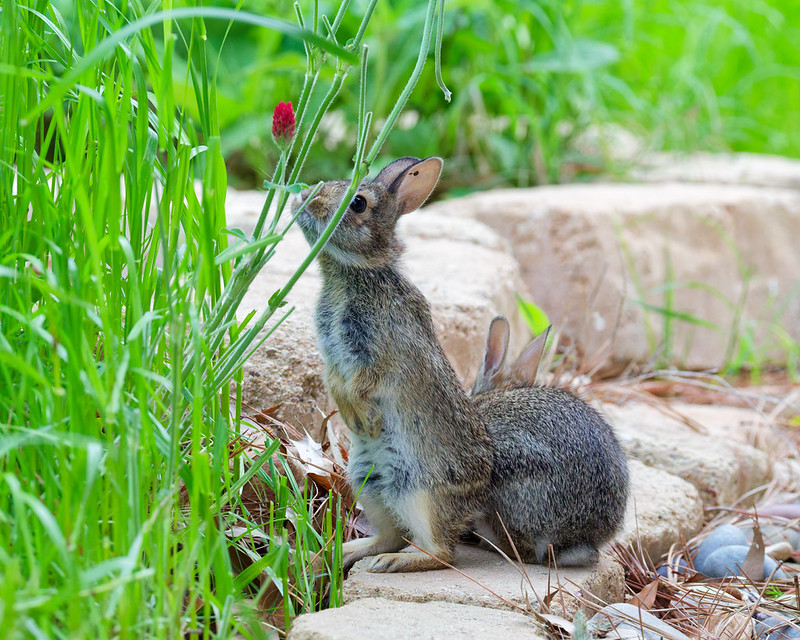
Eastern Cottontail kits this small are only a few weeks out of the nest. They move through cover low and fast most of the time. But put a red clover bloom in front of one and it will stand straight up to get to it.
That is exactly what I caught in Photo 1. One of the kits stretched up on its hind legs, nose lifted toward the flower above it. The second kit is right there beside it, staying low while its sibling went for the bloom. Seeing both of them in the same frame confirmed they were already using the food plot together.
Photo 2 shows a kit settled into the clover, eating a flower head straight on. The face-forward angle and the red bloom tucked into its mouth made for one of my favorite frames of the spring so far.
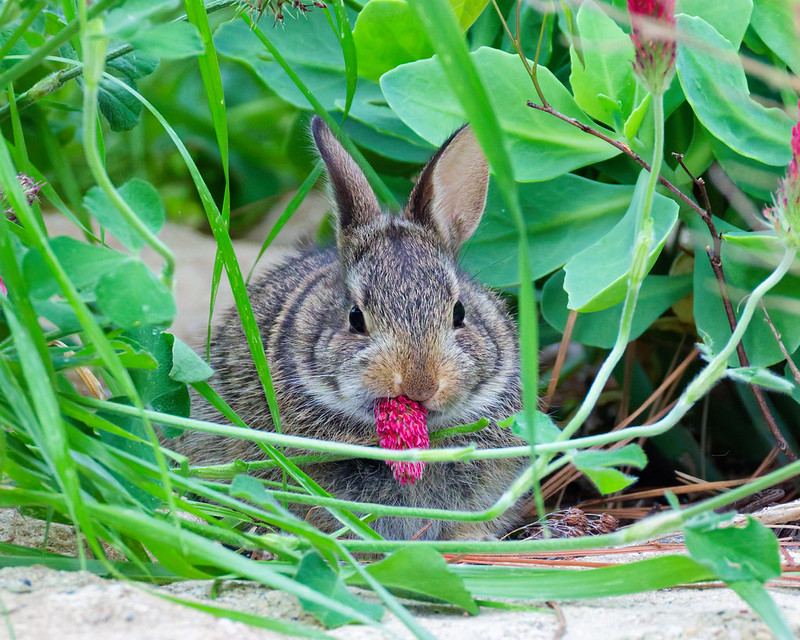
Both kits spent time in the food plot during morning hours. Cottontails are most active near dawn and dusk, and they tend to stick close to cover. The rocks along the bed and the vegetation gave them places to pause and feel safe. They showed little concern for me sitting above them on the deck.
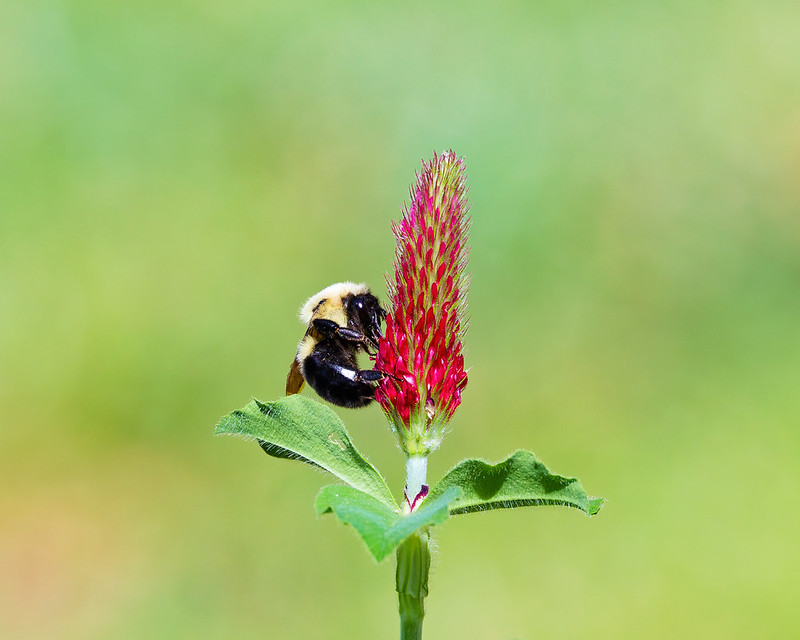
The bumblebee shot was taken a few weeks ago. The red clover was covered in pollinators on good mornings. I wanted to document that side of the food plot too, since attracting bees was part of the original goal. The clean green background helped isolate the bee against the flower spike.
Photographing It All From the Deck
Most of these shots came from the deck, which gave me a slightly elevated angle and kept me completely still.
Photo 2 was the exception. I stepped off the deck to get low and close enough for that straight-on frame of the kit eating the clover head. Getting down to the rabbit’s level made all the difference for that shot. It worked out because the kit was focused entirely on the flower and had no interest in me.
All four shots were made with the Canon EOS R5 Mark II and the Canon RF 200-800mm F6.3-9 IS USM lens. The confirmed settings for Photo 1 are below.
Photo 1 camera settings:
- Camera: Canon EOS R5 Mark II
- Lens: Canon RF 200-800mm F6.3-9 IS USM
- Focal length: 500mm
- Aperture: f/10
- Shutter speed: 1/500 sec
- ISO: 5000
- Exposure compensation: +1/3
- Support: Handheld
- Date/Time: April 21, 2026, 8:41 AM
ISO 5000 early in the morning is not unusual when you are shooting into shaded vegetation. The R5 Mark II handles that range cleanly, and the +1/3 stop of exposure compensation helped lift the shadows in the kit’s fur without blowing the clover petals.
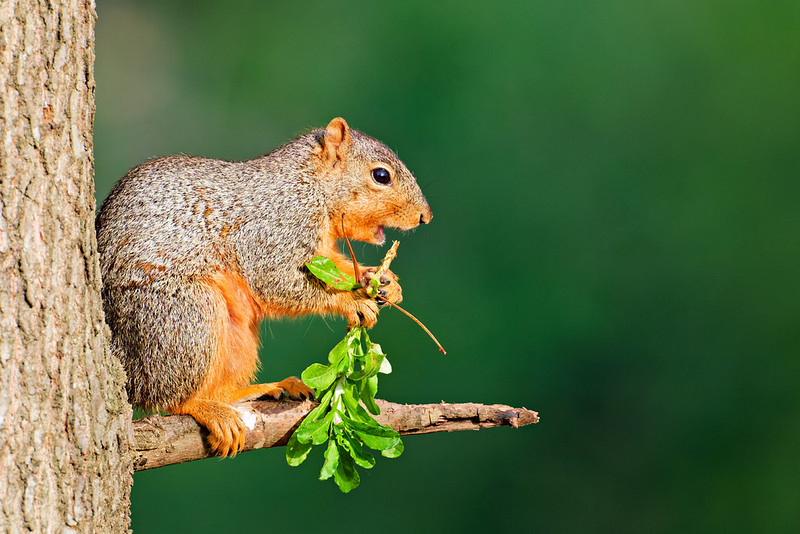
The fox squirrel showed up on its own terms. It found a plant growing right at the edge of the food plot and sat on a nearby branch to eat it. That is typical fox squirrel behavior. They are opportunists, and I have been competing with fox squirrels in the backyard for years. Watching one benefit from the food plot was a good surprise.
The whole point of the food plot was to improve the soil and bring in more life without spraying anything. Watching it work this spring has been rewarding. Bees, rabbits, and squirrels all found it within the first growing season. It makes me think about what else might show up as the clover fills in more. If you have a spot in your yard where nothing useful is growing, a small food plot mix is worth trying. The results can happen faster than you expect.
Just an observation that Red Clover is not native to the U.S.
I did not know that. Thanks!
So wonderful for the natural wildlife to feel safe on your property.
And they are really fun to watch and photograph!!! A win-win!!