
Today I am sharing two images that capture pelican landing behavior on the waters of Sally Jones Lake. This American White Pelican touched down inside Sequoyah National Wildlife Refuge along the auto tour road. For a wildlife photographer, it has been an exciting stretch of days.

I watched this pelican approach from the shoreline. As it dropped lower, it spread its massive wings wide and eased down toward the water in a smooth, controlled glide. Moments like this are why I keep going back to the refuge.
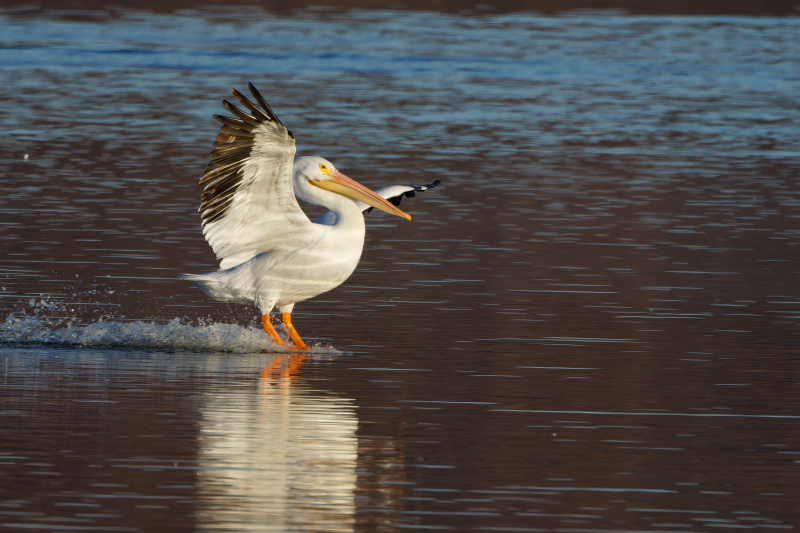
Pelican Landing Behavior on Water
American White Pelicans have a very distinct way of landing on water. As they approach the surface, they slow their descent by stretching their wings outward and forward. Then they touch down feet first and slide across the surface before coming to a stop.
This technique helps them maintain balance while protecting their large bodies and long wings from impact. Seeing this maneuver up close always reminds me just how well adapted these birds are for life on open water.
A Productive Week at Sally Jones Lake
Over the past week, I have spent a lot of time observing this flock. In one recent post, “American White Pelicans in Flight at Sally Jones Lake,” I shared images of them gliding over the calm morning water. In another post, “American White Pelican’s Unexpected Pastime,” I documented a young pelican playing with a small root ball and tossing it in the air. I also featured their unusual fishing method in “An American White Pelican in Action,” showing how they scoop prey into their expandable pouch.
Together, these encounters have given me a well rounded look at how these pelicans move, feed, and interact while stopping over at the refuge.
Why This Pelican Landing Behavior Stood Out
Although I have watched many pelicans land over the years, this sequence stood out because of how clean and controlled it was. The bird stayed level, kept its wings fully extended, and touched down without a splash. The light was just right, and the background stayed clean, which made the movement easy to isolate in the frame.
These are the moments that make wildlife photography feel rewarding. You get to witness something natural and fleeting, and with a little luck, you bring it home as a lasting image.
Photography Notes
I photographed this pelican from the auto tour road using my Canon EOS R7 and a Canon RF 800mm F11 lens. I stayed inside my truck to avoid disturbing the bird and to keep a stable shooting position.
The fast shutter speed helped freeze the motion of the wings while still showing a sense of movement in the landing sequence.
Image Information: First Image
• Date: 11/28/23
• Time: 10:08 AM
• Camera: Canon EOS R7
• Lens: Canon RF 800mm F11
• ISO: 1250
• Aperture: f/11
• Shutter: 1/2000
• Exposure Compensation: -0.7
• Focal Length: 800mm
It has been an incredible few weeks watching these pelicans along the Sally Jones Causeway before they continue their migration. Every sighting feels special, but this landing sequence made my week. I will keep watching the refuge closely because there is always something new waiting along the water’s edge.