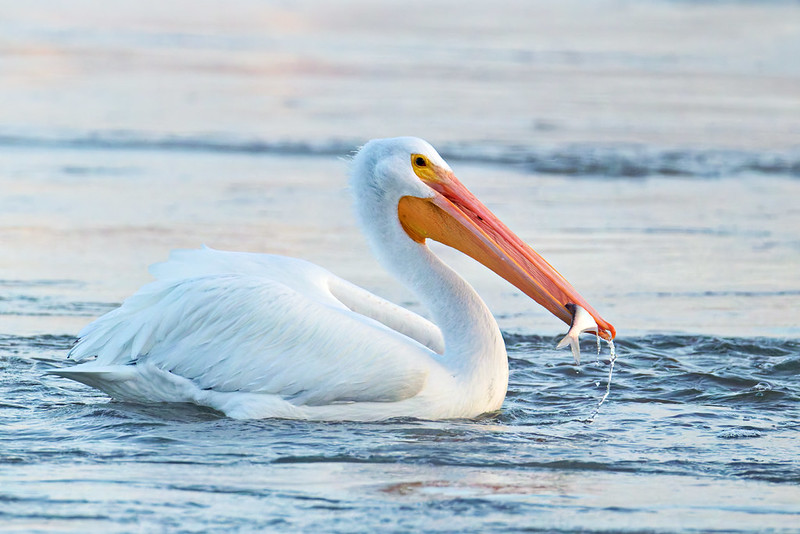
Some wildlife moments look calm until you notice the struggle. I watched this American White Pelican turn what looked like an easy catch into a careful, step-by-step process.
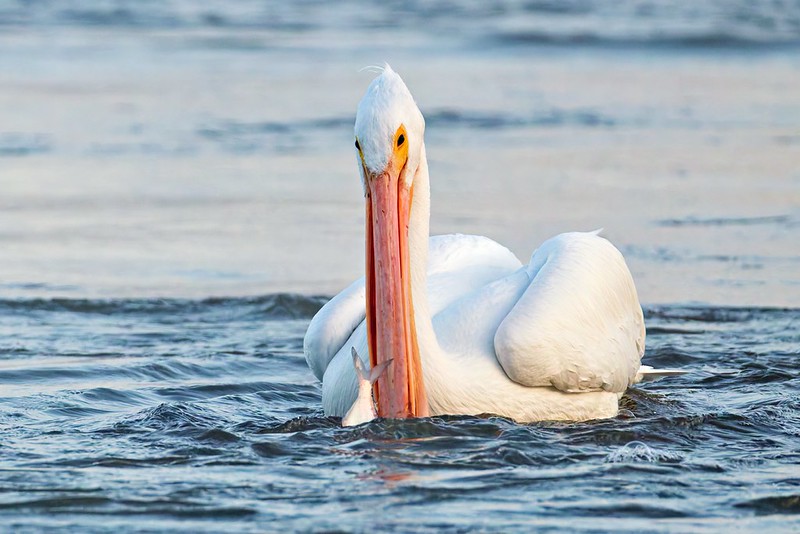
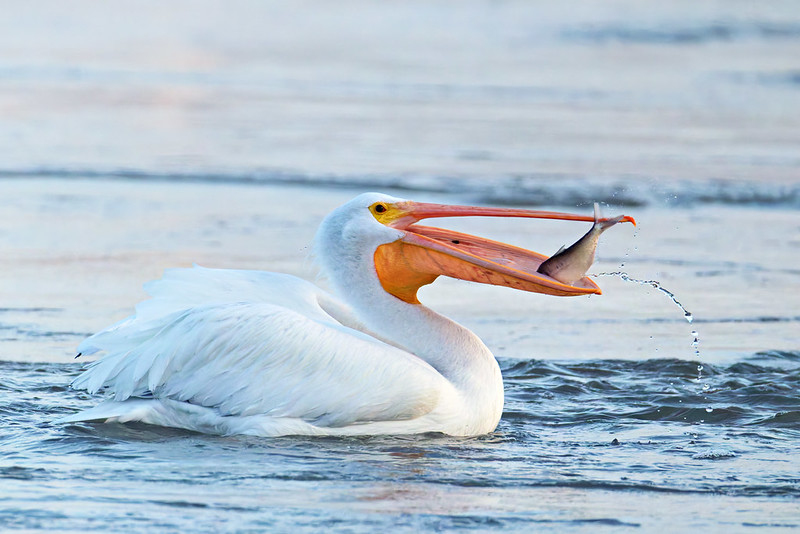
American White Pelicans do not just grab fish and swallow them. They use their large bill and gular pouch to control, reposition, and line the fish up so it goes down head-first. That positioning helps prevent the fish’s fins from catching and makes swallowing safer and easier.
I photographed this sequence at the Robert S. Kerr Lock and Dam in Oklahoma. The pelican stayed low in the water while handling a fish at the surface, using its pouch and small head movements to keep control of the catch.
Why pelicans reposition fish before swallowing
Fish are slippery, strong, and built to escape. If swallowed in the wrong position, the fins can spread and create resistance. That can slow the swallow or even cause the bird to lose its grip. I have seen how flexible that pouch can be during a pelican gular pouch stretch on the Arkansas River, and that same flexibility helps the bird control fish like this.
This pelican kept adjusting the fish instead of rushing. Each time the fish twisted, the bird opened its pouch slightly and reset its hold. The pouch acted like a flexible holding area where the pelican could control the fish without losing it.
These small adjustments made a big difference. The pelican used careful head angles and short bill movements to turn the fish into the correct position.
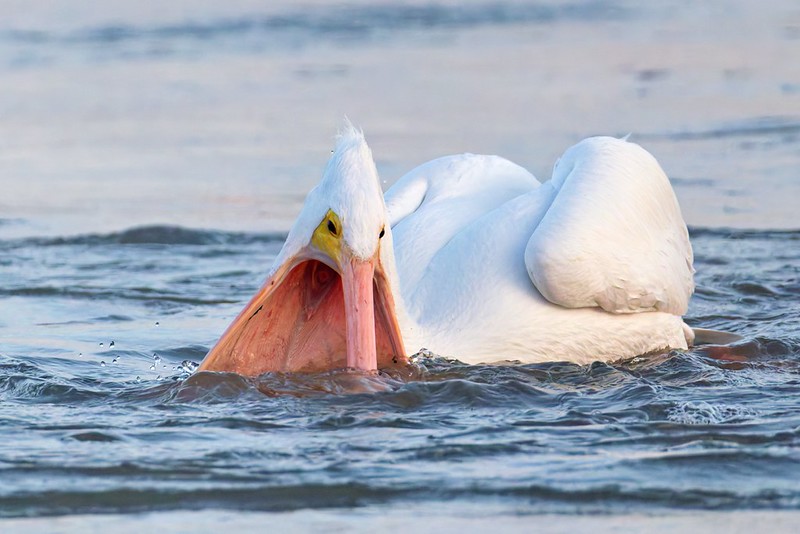
The moment the fish finally lined up
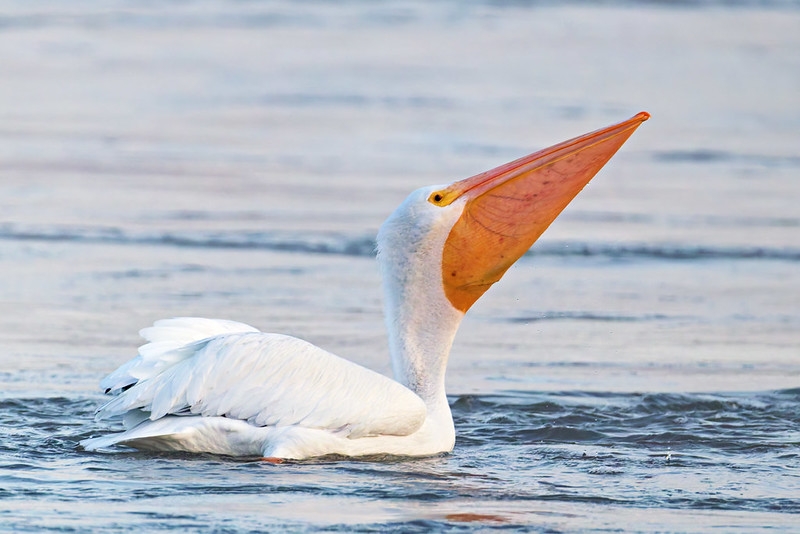
Once the fish rotated head-first, the pelican’s behavior changed. The quick corrections stopped, and the bird became more deliberate. It lifted its bill slightly and made a smooth swallowing motion.
A quick head flip helped move the fish deeper into the pouch. Water streamed off the fish as it disappeared from view.
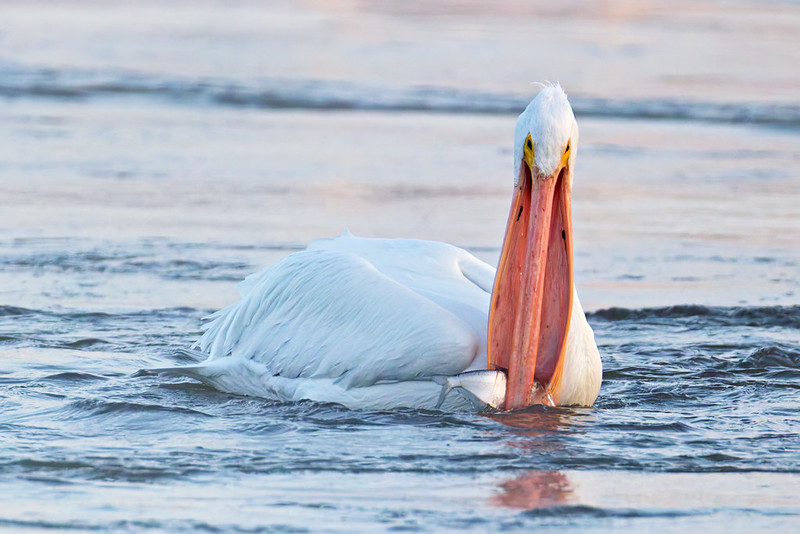
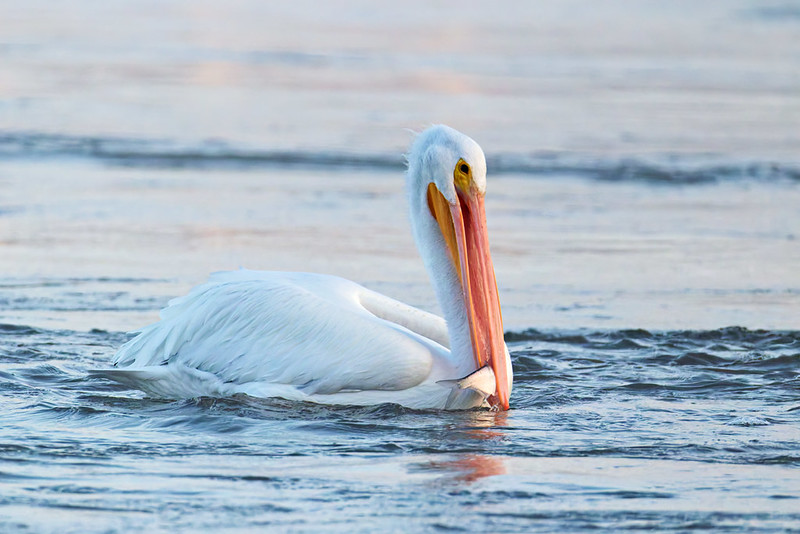
Even after the fish was swallowed, its outline was still visible for a moment at the bottom of the pouch before it moved down.
Wildlife Notes
Species: American White Pelican
Behavior shown: Fish handling and repositioning before swallowing. The pelican used its gular pouch to control the fish and align it head-first.
What I noticed: The pelican stayed patient. It never rushed the swallow and kept adjusting until the fish was positioned correctly.
Photography Notes
This sequence was all about speed and reach.
- Camera: Canon EOS R5 Mark II
- Lens: Canon RF 200-800mm F6.3-9 IS USM
- Settings: f/9, 1/3200 sec, ISO 6400, 800 mm, +1/3 EV
That 1/3200 sec shutter speed froze the splashes and the quick head movements. ISO 6400 is a lot, but it is the trade I will take every time when the action is fast. The +1/3 EV helped keep the pelican’s white feathers bright without looking dull.
At 800 mm, framing gets tight in a hurry. I tried to keep the bird’s eye sharp and leave just enough room for the bill and the water action.
Closing
Watching this pelican handle its catch showed how much control goes into what looks like a simple meal. The bird worked the fish into position step by step, using its pouch and bill with precision.
This kind of behavior is easy to miss if you only see the final swallow. The real story happens in the small adjustments that make the swallow possible.
Great sequence!
Good job, Steve!
Sue
Thanks, Sue!
Very interesting behavior and images.
Thank you for sharing.