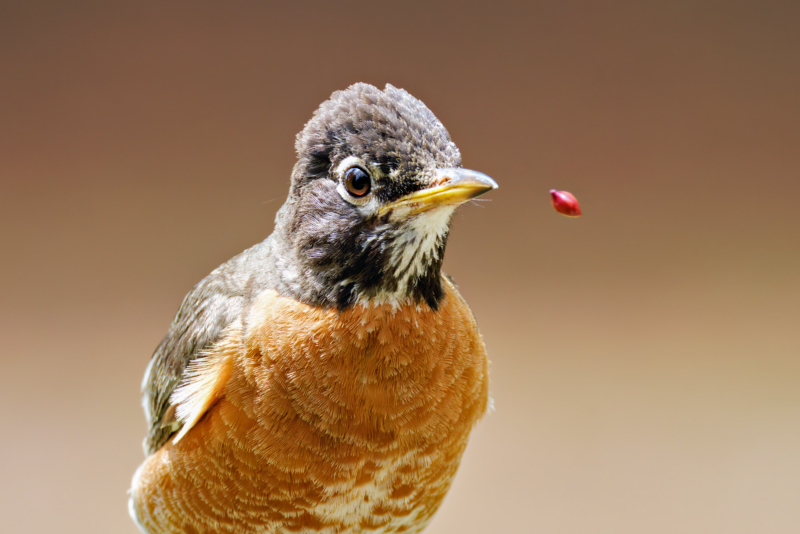
I spend a lot of time watching my backyard birds, because the small moments are often the best ones. This time, at my deck birdbath, I caught something I did not expect: an American Robin regurgitating what looked like a seed.
It looked strange at first. Once I thought it through, it made perfect sense.

Wildlife Notes
Why robin regurgitation happens
Robins eat a lot more than worms. Their diet shifts with the season, and fruit plays a big role. In fact, fruits can make up a large share of what they eat over the year, even when insects are plentiful.
The pulp is the prize. The problem is the seed.
Some fruits come with seeds that are too large or too tough for a robin to digest well. Instead of carrying that extra ballast, the bird can regurgitate the seed and get back to feeding.
In my photos, the regurgitated seed shows up as a red object at the tip of the beak. The exact size and shape will vary, depending on what fruit the robin ate.
Diet changes and everyday foraging
When I see robins in early summer, they often work open lawns. They hop, pause, then move again. That stop-and-go rhythm is a good clue they are hunting invertebrates.
Earthworms are a classic target, and robins locate them by sight, not sound. They also take snails, spiders, and plenty of other small invertebrates when they find them.
In winter, the menu changes. Insects are harder to come by, so robins lean more on fruits and berries. That is also when you might see them gathering in looser flocks and moving from one food source to the next.
Seeds are not always “waste”
Regurgitation is only part of the story. Some seeds still pass through the digestive tract and end up in droppings. That helps spread plants to new spots, especially fruiting shrubs and trees the birds visit often.
It is not glamorous, but it matters. Birds move seeds around more than most people realize.
Closing
Watching this robin at my birdbath felt like a quick peek behind the curtain. Robin regurgitation is one of those everyday adaptations you can miss unless you are paying attention.
Now when I see a robin working a berry patch or visiting the birdbath, I wonder what else I am about to learn.
Terrific shots!
Thank you Terry!