Some mornings get better with every stop.
I started out photographing a Merlin, then got a message from Mia (On The Wing Photography) that she had found an American Bittern in another part of Sequoyah National Wildlife Refuge. After I finished with the Merlin, I headed straight over, and that quick move turned into one of the best wildlife mornings I have had at the refuge in a long time.
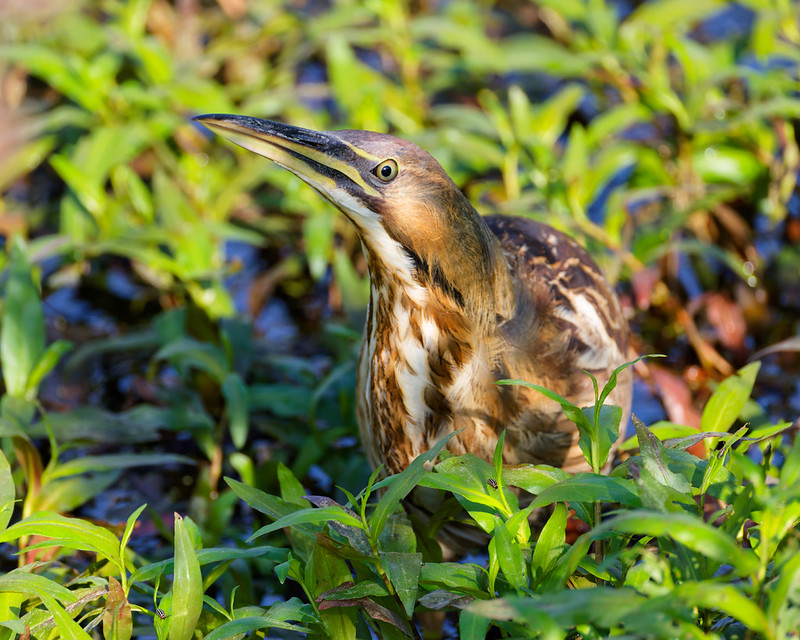
Wildlife Notes on the American Bittern
Mia told me where to park so I would not disturb the bird. After I stepped out of the truck and walked over to her, she pointed into the brush along the side of the road. It still took me a few seconds to find it.
That says a lot about this species. American Bitterns are known for disappearing into marsh vegetation, where their brown, buff, and streaked plumage blends in with reeds and wetland plants. They usually stay near shallow freshwater marshes and edges of cover instead of standing out in the open.
What stood out to me in these photos was how low and careful the bird stayed while hunting. American Bitterns often stand still for long stretches or move slowly through shallow wetlands while looking for prey such as fish, frogs, and insects. That patient, stalking behavior is part of what makes them so easy to miss even when they are close.
This is only the second American Bittern I have photographed at Sequoyah. The first one was many years ago, so seeing another one here was a real treat. Managed wetlands and wildlife refuges can be important places for wintering and migrating bitterns, which makes encounters like this feel even more special. Most American Bitterns are migrants, though some can remain in parts of the southern United States depending on season and conditions.
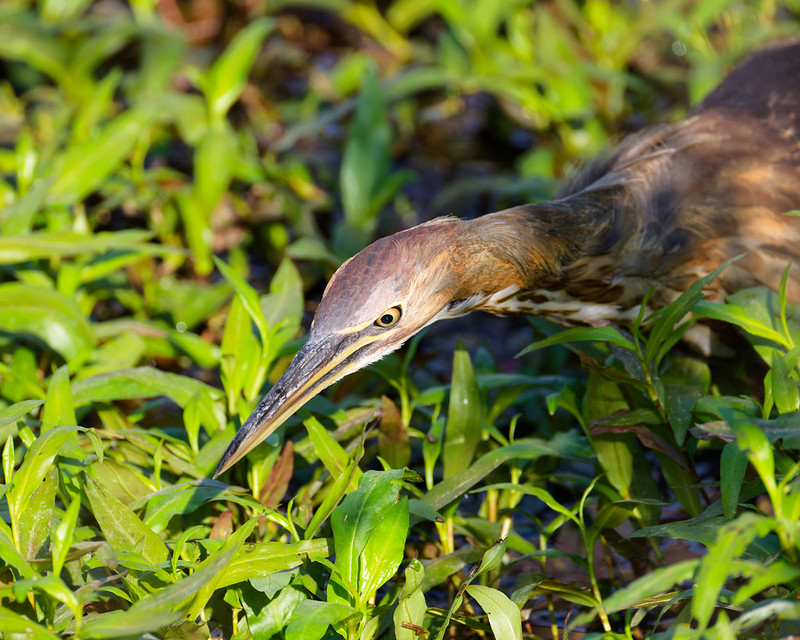
American Bittern Sighting at Sequoyah
This turned into an amazing morning for me.
I photographed a Merlin for the first time, then got to photograph an American Bittern that I had only seen one other time at this refuge. I owe this sighting to Mia. Without her message and her help on location, I likely would have missed the bird completely.
What I like most about this encounter is how it shows the value of paying attention, moving carefully, and helping each other in the field. Bitterns do not give you many second chances. When one is tucked into roadside cover and blending into wet vegetation, a small tip from another photographer can make all the difference.
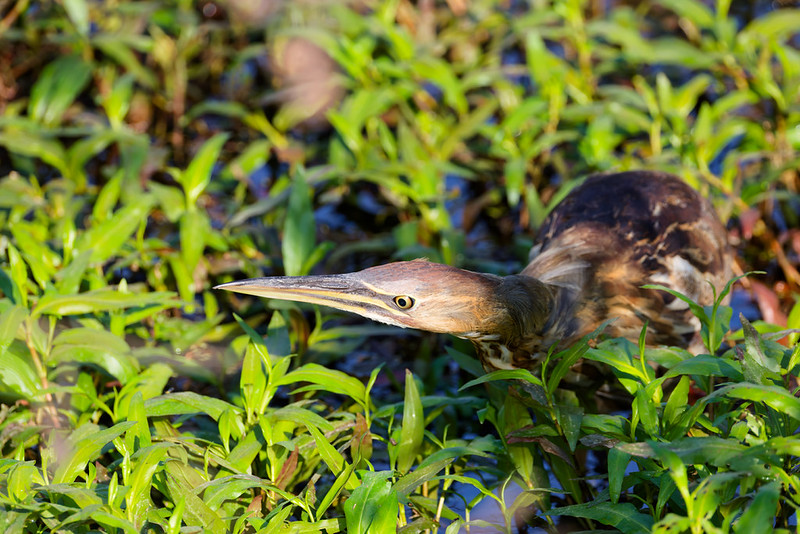
Photography Notes
These images came from a quick roadside stop after I left the Merlin. Once I got parked, I moved slowly and kept my distance. That mattered because this bird was close to the edge of the road and already relying on cover.
I was using the Canon EOS R5 Mark II with the Canon RF 200-800mm. At 800mm, I had the reach I needed without pushing closer and risking disturbance. Hand-holding also helped me stay flexible while the bird shifted through the vegetation.
The light was strong and directional, which helped bring out the detail in the face and bill. It also lit up the wet greenery around the bird, giving the scene a clean spring look. The challenge was keeping the bird separated from all that cover while still showing the habitat that made the sighting feel real.
Camera Settings for Photo 2
- Camera: Canon EOS R5 Mark II
- Lens: Canon RF 200-800mm F6.3-9 IS USM
- Focal length: 800mm
- Aperture: f/10
- Shutter speed: 1/1000 second
- ISO: 800
- Exposure compensation: -1/3
- Support: Hand-held
- Date and Time: March 30, 2026, at 9:16 A.M.
Final Thoughts on This American Bittern Encounter
I do not see American Bitterns often, and that is part of what made this one so memorable.
Between the Merlin and this bittern, Sequoyah gave me a morning I will remember for a long time. I was glad to come away with a few photos, and even more glad that Mia helped me find a bird that could have disappeared without me ever seeing it.
I also recommend taking a look at Mia’s blog post from that morning, Surprise American Bittern at Sequoyah National Wildlife Refuge, to see her take on this sighting and her photos of the bird.