Every spring, I keep an eye out for one bird in particular, the Painted Bunting. When a male finally sits still long enough for a clean frame, it feels like winning a small lottery.
On this trip to Wichita Mountains Wildlife Refuge in Oklahoma, I got that chance.
Wildlife Notes
Most of the time, male Painted Buntings make me work for it. When I see them at places like Sequoyah National Wildlife Refuge, they usually stick to thick, brushy cover. I will spot a flash of color, then they slip back into the tangle.
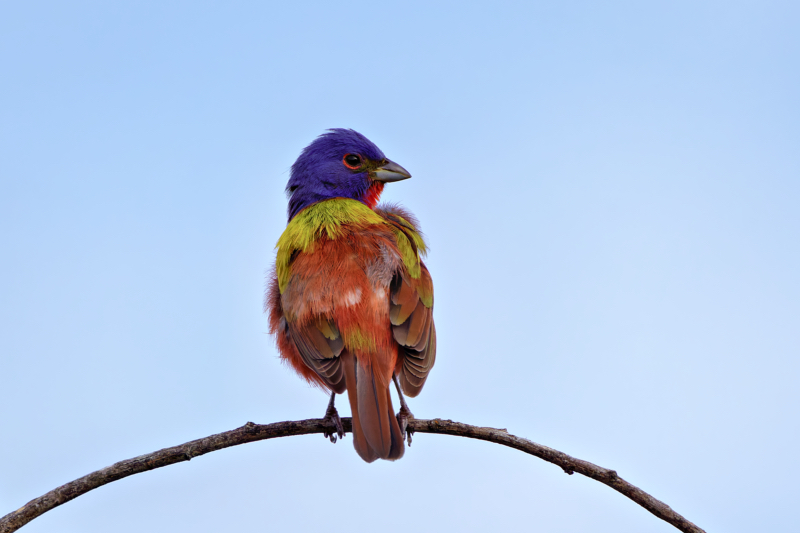
That’s why this moment at Wichita Mountains felt special. A male popped up on an exposed branch and held still long enough for a few frames. He was not at perfect eye level, but he was out in the open, and I will take that opportunity every time.
The male’s colors are the whole story. The deep blue head, green back, and red underparts are hard to miss. It’s also why Painted Buntings earned the nickname “nonpareil,” meaning “without equal.”
Painted Buntings breed in the southeastern and south-central United States, then move south for winter. During the warmer months they eat a lot of insects, and they lean more on seeds in winter. Males also do not show their full rainbow look until their second year, which helps explain why you might see greener birds that still look “bunting-like.”
Photography Notes
This painted bunting photo came together because the bird gave me a clear perch and a simple background. I shot from my truck window and used a bean bag for support, which kept the long lens steady without setting up a tripod.
Camera settings
- Camera: Canon EOS R7
- Lens: Canon RF 800mm F11 IS STM
- Focal length: 800mm
- Aperture: f/11
- Shutter speed: 1/1000
- ISO: 1250
- Exposure compensation: +1
- Support: Bean bag on truck window
For small, active birds, I like a shutter speed around 1/1000 when I can get it. The +1 exposure compensation helped keep the colors bright without letting the bird fall into shadow.
Closing
Whether they’re buried in brush or sitting out in the open, Painted Buntings always stop me in my tracks. This one gave me a clean perch, great light, and a quick reminder of why I keep coming back to these Oklahoma refuges.