The first time I noticed the fencing inside the Wichita Mountains Wildlife Refuge, it caught me off guard. It feels strange to see wide-open country and not be able to explore it.
If you’ve wondered about it too, here’s what I’ve learned and what I keep in mind when I visit.
The short answer: the refuge is protecting what matters most
A big reason for the closures is simple. Some places need a break from us.
Fenced areas can protect key habitat where wildlife feeds, rests, nests, and raises young. The refuge holds a mix of species, including bison, elk, deer, and many birds. When people stay out of certain spots, animals can use those areas with less stress.
Research and conservation work need quiet space
Some sections are set aside for research and conservation projects. Scientists may be studying wildlife behavior, habitat health, and long-term management. That work goes better with fewer disturbances.
I’m glad those projects have room to happen. Good data helps the refuge make better decisions.
Keeping wildlife healthier is part of it
Closures can also help limit disease spread.
When access is restricted, there’s less chance of diseases being introduced by people or domestic animals. For herd animals like bison and elk, that matters.
Safety counts, for visitors and for wildlife
Some parts of the Wichita Mountains can be rough, remote, or risky. Add large wildlife into the mix, plus ongoing management work, and it makes sense that some areas stay off-limits.
Fences and closures help the refuge keep visitors safer, and they also reduce the odds of people pushing too close to wildlife.
Protecting fragile places for the long haul
Not every part of the refuge can handle heavy foot traffic. Some habitats, plants, and natural features are easy to damage.
Limiting access helps protect those sensitive spots so they still look and function the way they should years from now.
A reminder I try to follow every time I visit
It’s always a little disappointing to hit a gate or a fence line. Still, I try to treat closures as part of the refuge’s success, not an inconvenience.
When I stay in the open areas and respect the boundaries, I’m doing my small part to keep the Wichita Mountains Wildlife Refuge wild.
How I captured the photo
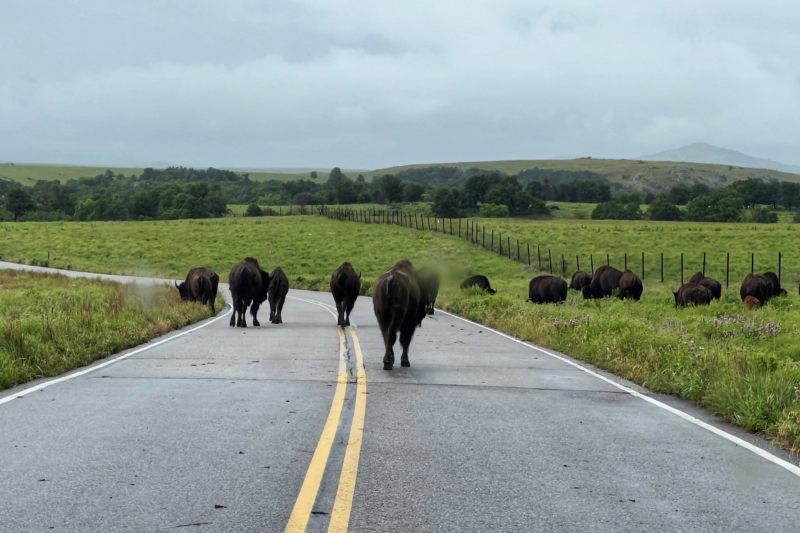
This scene came together fast, and I kept it simple. I photographed it with my phone through the windshield, which is not ideal, but it worked for documenting what I saw.
If you want the cleanest images in situations like this, I’ve found a few things help: keep the glass as clean as you can, avoid steep angles to reduce glare, and wait for a moment when the subject is calm. In busy wildlife areas, staying in the vehicle can also keep things safer for everyone.