The 2026 duck survey brought some troubling news for waterfowl numbers across North America. Mallards dropped to their lowest breeding population estimate since 1993, while other duck species showed mixed results.
When I read these numbers, I immediately thought about my upcoming photography trips to Sequoyah National Wildlife Refuge in Oklahoma. I spend plenty of time there photographing ducks during the fall and winter.
The big question for me is how these population changes, combined with drought conditions, might affect the birds I see this season.
Mallard Numbers Reach Their Lowest Point Since 1993
The 2026 Waterfowl Breeding Population and Habitat Survey estimated 33.4 million breeding ducks across its traditional survey area.
That number was similar to the 33.9 million recorded in 2025. However, it remained 6% below the long-term average.
Mallards showed a much bigger decline.
Survey crews estimated 5.9 million Mallards this spring. That represents an 11% decrease from 2025 and a 26% decline from the long-term average.
The Mallard population estimate is now at its lowest level in 33 years. These numbers come from the U.S. Fish and Wildlife Service’s annual breeding survey.
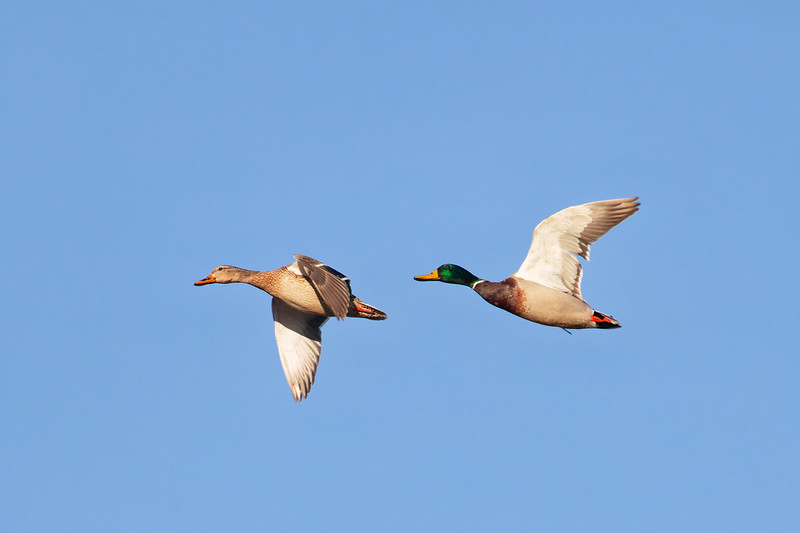
Mallards are among the ducks I photograph most often at Sequoyah. I especially enjoy photographing pairs in flight, like the male and female in my first photograph.
Seeing such a large population decline makes me wonder what the coming migration will bring.
However, the breeding survey measures spring populations across a large area. It does not tell me exactly how many Mallards will spend the winter at Sequoyah.
That will depend partly on weather, migration patterns, and available habitat.
Pintails Struggle While Northern Shovelers Increase
Mallards were not the only ducks showing declines.
Northern Pintails remain well below their long-term population average. Their estimated breeding population dropped to approximately 1.9 million birds.
That puts Pintails 48% below their long-term average.
Northern Shovelers provided more encouraging news. Their estimated population climbed to approximately 3.3 million birds, an increase of 19% from last year.
Shovelers now sit 24% above their long-term average.
I always enjoy seeing Northern Shovelers at Sequoyah. Their large, specialized bills make them interesting birds to watch and photograph.
In an earlier post, Northern Shoveler Devouring Duckweed, I photographed one feeding through a thick layer of duckweed.
Its unusual bill helps it filter small food items from the water.
2026 Waterfowl Results Compared With Long-term Averages
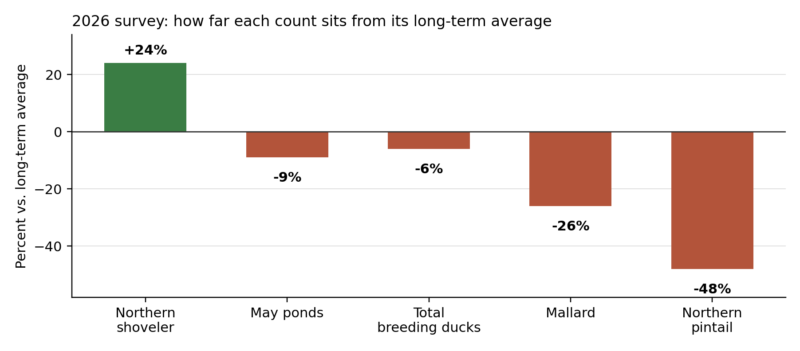
The 2026 survey also showed that Gadwall, American Wigeon, and Green-winged Teal remained above their long-term population averages.
Their estimated numbers changed little compared with 2025.
Overall, the results show that some duck populations are holding up better than others.
Improved Pond Conditions Offer Some Hope
Water conditions in the breeding areas improved compared with last year.
Survey crews counted an estimated 4.8 million ponds in May 2026. That represents a 14% increase over the previous year.
Even with that improvement, pond numbers remained 9% below their long-term average.
Conditions were especially variable across the prairie breeding regions. Prairie Canada gained water, while portions of the U.S. prairies remained dry.
These differences matter because ducks need suitable wetlands for nesting and raising young.
The improvement is encouraging, but it does not guarantee a strong fall migration.
Arkansas Drought Could Affect Fall Duck Migration
The Arkansas Game and Fish Commission published its October 7 report, Duck Numbers Similar to 2025, Waiting on Rain at Home.
The report explains that Arkansas is entering its 14th consecutive month of drought. Many wetlands and other areas that normally hold water remain unusually dry.
Waterfowl Program Coordinator Brett Leach explained that breeding populations are only part of the picture. Weather and suitable winter habitat also determine how many ducks remain in Arkansas.
The seasonal outlook suggests possible improvement from November through January. However, that rain may arrive too late to flood some areas on their usual schedule.
I’m concerned about how these conditions could affect my photography at Sequoyah National Wildlife Refuge, just across the state line in Oklahoma.
A lack of water could leave some of my favorite photography locations without many ducks. Other areas might attract larger concentrations of birds.
I won’t know what conditions are like until I start visiting the refuge.
Preparing for Winter Duck Photography at Sequoyah
I’ve photographed many species of ducks at Sequoyah over the years. Mallards are common subjects, but I also enjoy photographing Wood Ducks, teal, and other waterfowl.
One of my favorite challenges is photographing ducks in flight.
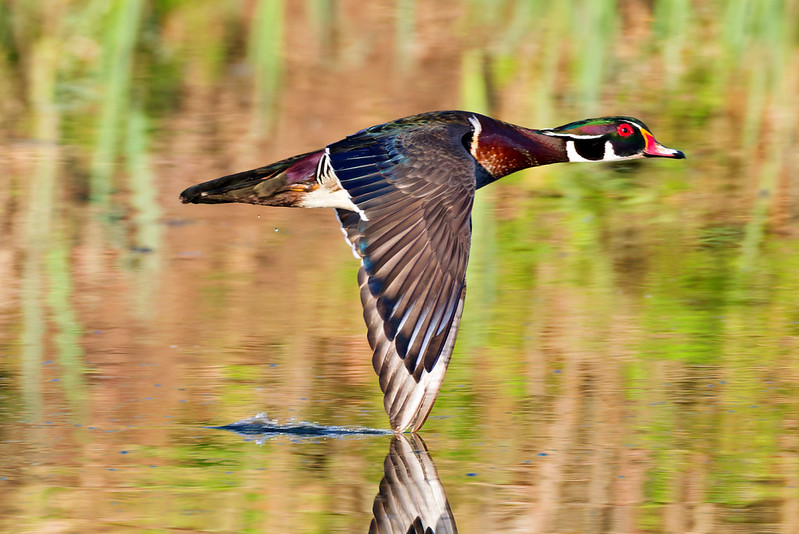
Wood Ducks are especially beautiful when sunlight catches their colorful feathers. The male in my second photograph was flying low over the water, creating an opportunity to capture its wing detail and reflection.
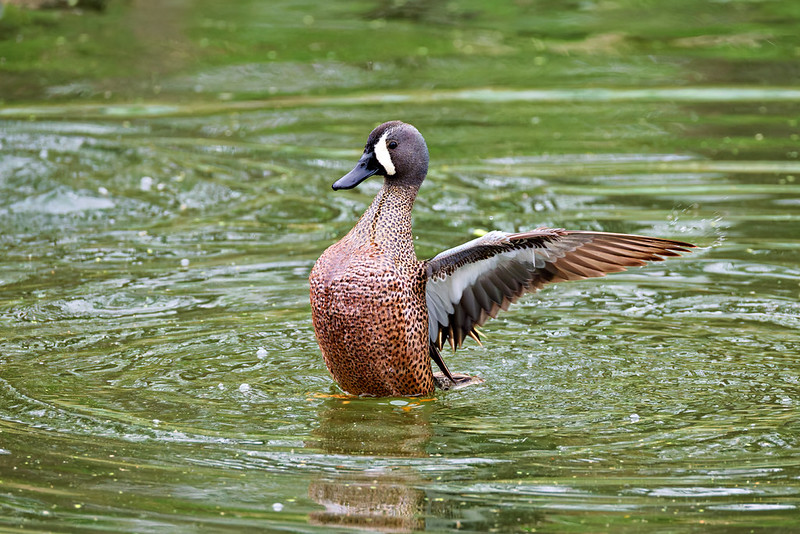
My third photograph shows a Blue-winged Teal stretching its wings while standing in the water. Moments like that can produce interesting photographs without the bird ever taking flight.
These are the kinds of opportunities I hope to find again this winter.
Planning Around Refuge Closures
Sequoyah National Wildlife Refuge has announced several temporary closures for controlled deer hunts.
The refuge’s official visitor page lists several dates when the tour road beyond Tuff Boat Ramp will be closed.
Those dates include October 16–18 and October 28–30, November 18–20, and December 2–4, 2026.
The Oklahoma Department of Wildlife Conservation also lists a November 9–13 controlled hunt closure. I’ll check with the refuge before traveling during that period.
I can review any updates on the official Sequoyah National Wildlife Refuge visitor page.
I’ll Keep Photographing Ducks Regardless of the Numbers
The 2026 duck survey gives me a reason to lower my expectations for Mallards this winter.
However, a decline in breeding numbers does not mean every visit to Sequoyah will be disappointing.
I’ll pay attention to rainfall, water levels, and the number of birds using different areas of the refuge.
December and January are usually important months for my winter wildlife photography. I’ll continue visiting whenever conditions allow.
I also enjoy photographing Snow Geese and wintering Bald Eagles at Sequoyah. Those birds give me plenty of other reasons to visit.
Even when duck numbers are lower, there are always opportunities to observe wildlife and learn something new.
That’s one of the reasons I keep returning to this refuge.
These photos are beautiful and I hope that the birds do not decrease and that you get to photo as many as you want. I love seeing your photos