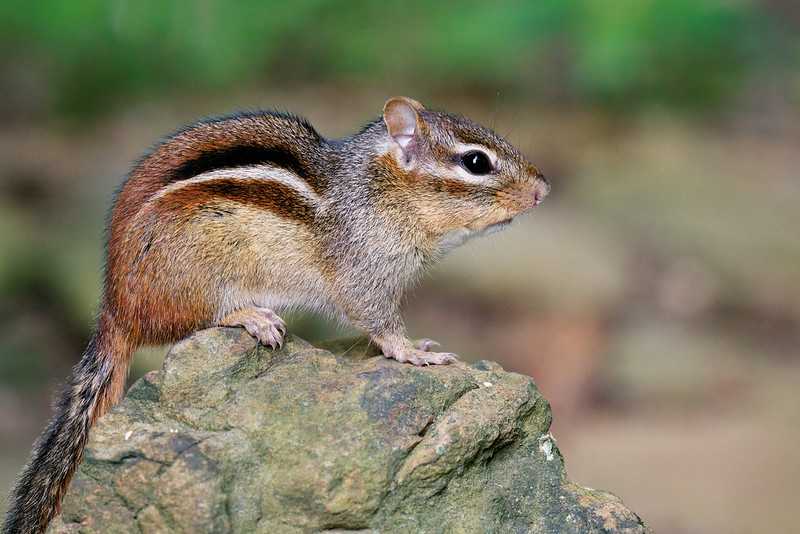
Thanks to this chipmunk for helping me to show some of the fall colors here in Arkansas.
{ 10 comments }

Thanks to this chipmunk for helping me to show some of the fall colors here in Arkansas.
{ 10 comments }

I noticed that this chipmunk had part of its tail missing. After watching it for awhile I kind of got an idea why. This chipmunk was so bold that it would get as close to the squirrels as it could before the squirrels would chase it off.
{ 3 comments }

Though they are commonly depicted with their paws up to the mouth, eating peanuts, or more famously their cheeks bulging out on either side, chipmunks eat a variety of foods. Their omnivorous diet consists of grain, nuts, birds’ eggs, fungi, worms, and insects.
{ 0 comments }

Chipmunks construct expansive burrows which can be more than 3.5 m in length with several well-concealed entrances. The sleeping quarters are kept extremely clean as shells and feces are stored in refuse tunnels.
{ 0 comments }

The Chipmunk communications by both sounds, and gestures. Their vocabulary is not large, with about thirty distinguishable combinations. These can be loud, shrill “chip-chip-chip” sounds to softer, and slower “chuck-chuck” sounds. When combined with body gestures such as tail waving, they can effectively communicate with others of their species.
{ 0 comments }