Watching young birds leave the nest is one of the most rewarding parts of wildlife photography. At Sequoyah National Wildlife Refuge in Oklahoma, I recently had the chance to photograph a young Black Vulture beginning that important stage of life.
I have followed this nesting pair for several years. This summer, I finally captured photos of the young bird both inside the nest cavity and perched in a nearby tree after leaving the nest.
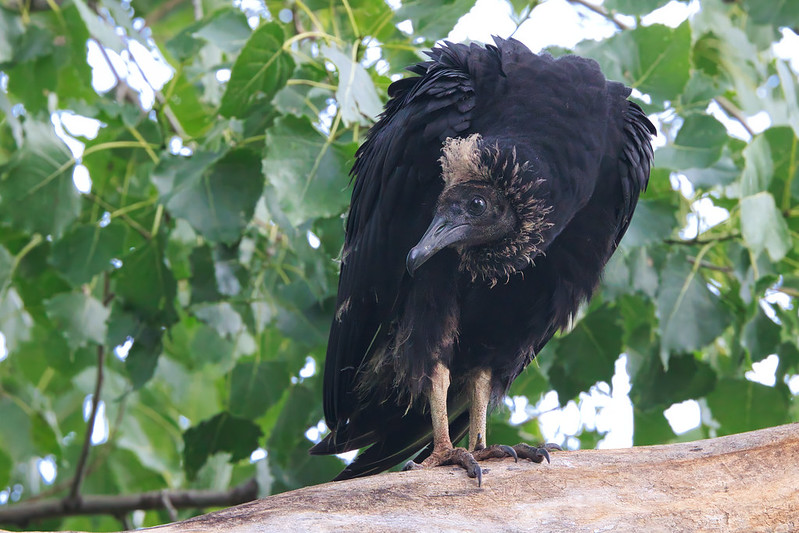
Young Black Vulture Exploring Beyond the Nest
The nesting tree sits close to the road at Sequoyah National Wildlife Refuge. The pair returns to this same location year after year, using a hollow area in the large tree as their nesting site.
When I arrived that morning, the young Black Vulture was no longer tucked safely inside the cavity. Instead, it perched in a nearby tree, watching the world around it. Moments like this show an important stage in a young vulture’s life. The bird is beginning to explore while still staying close to the protection of its parents.
Young Black Vultures spend time strengthening their wings after leaving the nest. They make short flights, practice balancing on branches, and slowly build confidence before becoming fully independent.
Their appearance also changes during this stage. Young birds often show softer feather texture and lighter coloring around the head compared to adults. Up close, their curious expressions and awkward movements reveal just how new this stage of life really is.
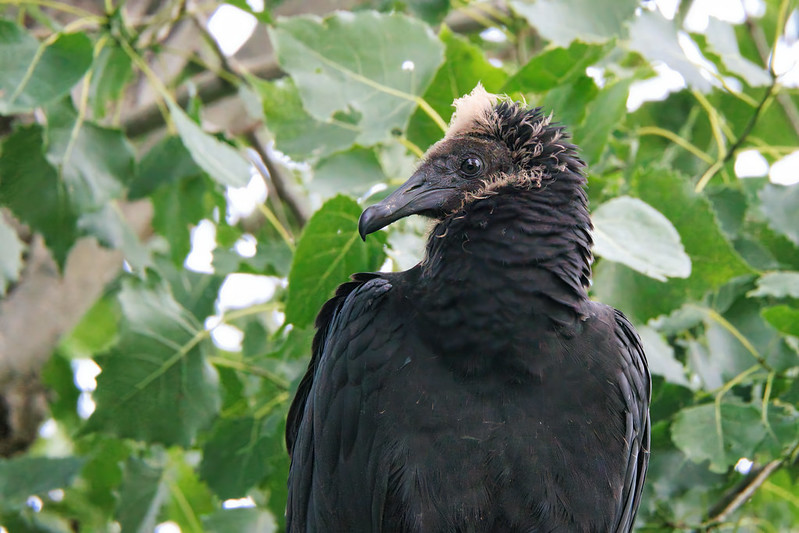
Watching a Black Vulture Fledgling Learn to Fly
Black Vultures are highly social birds. Even after fledging, young birds may remain near their parents for weeks or even months while they continue learning survival skills.
As this young vulture explored the nearby trees, it constantly watched the adults and stayed within the safety of the nesting area. These early flights help build the strength and coordination needed for soaring across the refuge landscape.
I always enjoy watching these transition moments in wildlife. The bird is no longer hidden away in the nest, but it has not fully entered adulthood either. There is a brief period where young birds still show signs of dependence while beginning to act independently.
I photographed this same bird earlier in the season while it was still much younger. You can also see my earlier post about the Young Black Vulture at SNWR.
Seeing this young Black Vulture outside the nest felt like witnessing an important milestone. It reminded me how much patience wildlife photography requires. Following these birds over several seasons finally led to the opportunity I had hoped for.
Photographing a Young Black Vulture at Sequoyah
Photographing wildlife near nesting areas requires patience and distance. I stayed far enough away to avoid disturbing the birds while using a long lens to capture natural behavior.
The morning light worked well for showing feather detail while keeping the background soft and uncluttered. I especially liked how the tree branches framed the young bird naturally as it perched above the refuge.
Camera Settings
First Photo
- Camera: Canon EOS R5
- Lens: Canon RF 100-500mm F4.5-7.1 L IS USM
- Location: Sequoyah National Wildlife Refuge, Oklahoma
- Date Taken: July 10, 2023
- Time: 8:26 A.M.
- Aperture: f/8
- Shutter Speed: 1/800
- ISO: 5000 (Auto)
- Exposure Compensation: +1.0
- Focal Length: 500mm
Moments like this are why I keep returning to Sequoyah National Wildlife Refuge. Every season brings another chance to witness part of the wildlife story unfolding there. Watching this young Black Vulture begin life outside the nest was a reminder that even familiar nesting sites can still surprise me.