I was out early at Sequoyah National Wildlife Refuge on September 10, 2023, working the auto tour road at first light. In just a few minutes, I found three bucks in three different stages of antler change, and that made this short morning drive feel special.

Wildlife Notes
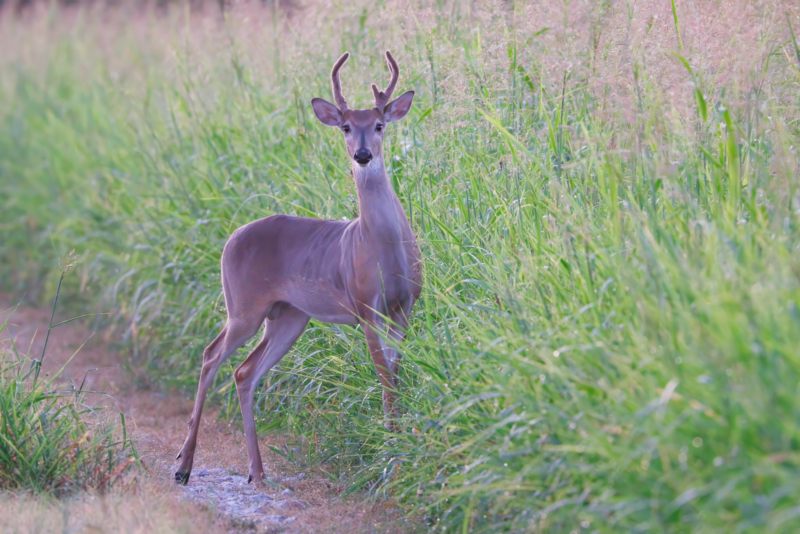
The first buck I noticed was a young white-tailed deer feeding near the road. What caught my eye right away was the velvet still covering his antlers, except for one area where it had already started to peel. That small detail told me he was close to finishing the change from soft, velvet-covered antlers to hard antlers.
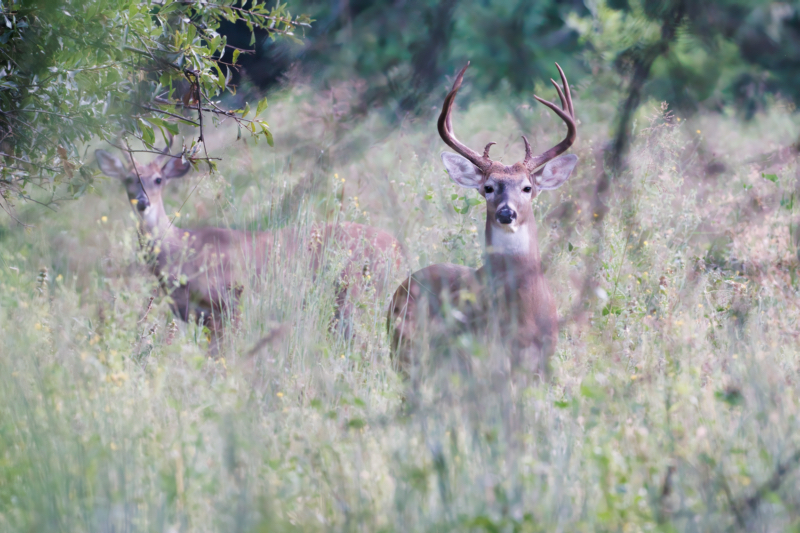
A second young buck nearby still had his velvet fully intact. Then, a few minutes later, I spotted a more mature buck deeper in the brush, and he had already shed all of his velvet. Seeing those three deer so close together gave me a nice look at a short seasonal window that does not last long.
Velvet Antlers in Early Fall
This shift usually happens from late August into September, when rising testosterone cuts off the blood supply to the velvet and the tissue begins to dry and peel away. Once the velvet is gone, the antlers are hardened, and bucks move closer to the period when rut behavior becomes more intense. In this case, the mature buck had already finished the process, while the younger bucks were still in transition.
That is part of what made this morning so interesting to me. I was not just photographing deer, I was photographing timing. One buck showed the first signs of change, one had not started yet, and one was already finished.
Habitat and Morning Conditions
All of this happened during an early morning drive at Sequoyah National Wildlife Refuge in Oklahoma. The light was just coming up, and the bucks were still active along the road and in the brush. That kind of low light can make photography tougher, but it often gives wildlife images a calmer look that fits the scene.
If you enjoy seeing bucks earlier in the antler cycle, you might also like this related post: Whitetail Buck In Velvet Feeding in Cornfield.
Photography Notes
I photographed these bucks from the auto tour road during early morning light at Sequoyah National Wildlife Refuge. For this kind of wildlife photography, I like to keep my distance and let the deer stay relaxed while I work from the road.
The first image in this post was made in low light, which explains the high ISO. Early morning conditions often call for a balance between reach, shutter speed, and noise, especially when a deer may move without warning.
Camera Settings:
- Location: Sequoyah National Wildlife Refuge, Oklahoma
- Date and time: September 10, 2023, 6:55 A.M.
- Camera mode: Manual
- Aperture: f/7.1
- Shutter speed: 1/250
- ISO: 8000 (Auto)
- Exposure compensation: 0
- Focal length: 500mm
Final Thoughts
I always enjoy finding wildlife in the middle of a seasonal change, and this was one of those mornings. Seeing one buck with peeling velvet, another still fully covered, and a mature buck already clean gave me a simple but clear look at how fast this transition can move through a local deer population.
It was a short encounter, but it said a lot about the season. That is the kind of moment I hope for every time I head out before sunrise with a camera.