Today’s featured photo is a close-up of an adult American Robin after taking a refreshing dip in my backyard birdbath. But look closer! You might notice something interesting about the way it’s using its beak after a good splash.
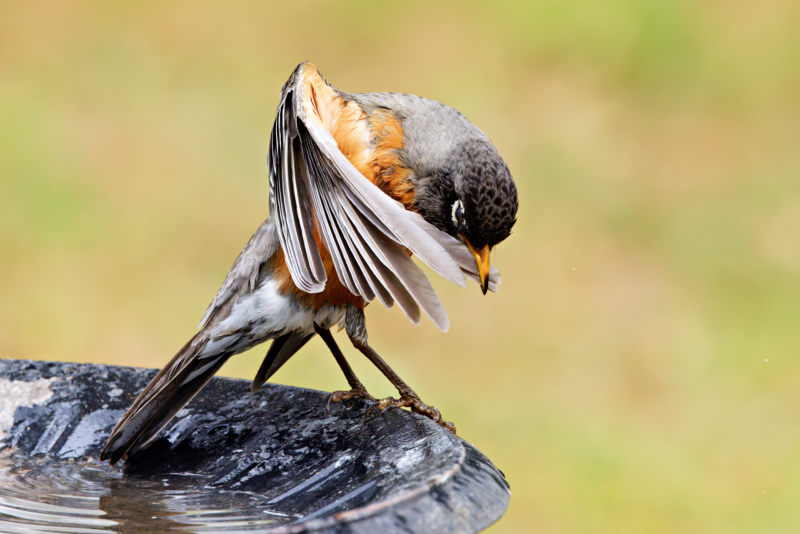
Birds have a fascinating technique for keeping their feathers in tip-top shape after a bath. Unlike us toweling off, they use their beaks for a specialized “unzipping” and “zipping” action on their feathers. This behavior is crucial for efficient flight, insulation, and waterproofing.
Each feather vane, the flat branching part of a feather, is made up of countless tiny barbs that hook together like microscopic zippers. When a bird gets wet, those barbs can loosen and pull apart.
That’s where the beak comes in. The robin in the photo uses its beak to gently comb through its feathers. It realigns the barbs and “zips” them back together. This restores the feather’s shape and brings back its waterproofing and insulation, which helps the bird stay warm and dry. Preening also spreads natural oils from the preen gland across the feathers, adding another layer of waterproofing.
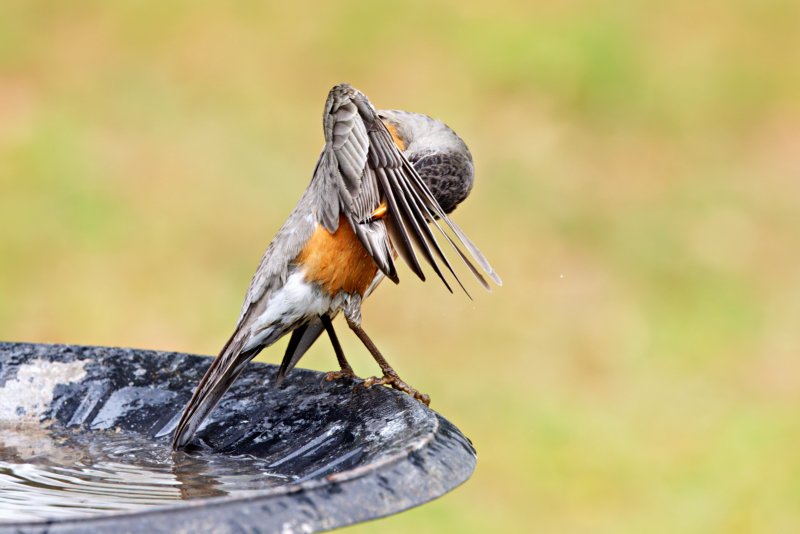
This preening behavior is more than just a zipper fix, though. It also acts like a feather cleaning service. As the robin runs its beak through its plumage, it removes any dirt, debris, or even tiny hitchhikers like parasites that might have gotten stuck during the bath.
Next time you see a bird preening, watch closely. That “unzipping” and “zipping” process is happening right in front of you. It keeps the feathers aligned, clean, and ready for flight. It also helps with insulation and waterproofing, which are critical for survival. And yes, it keeps them looking their best too.