I learn something new almost every time I’m out photographing wildlife. This discovery about spider pedipalps began when I noticed the enlarged pedipalps on the front of a Six-spotted Fishing Spider I photographed. I knew what pedipalps were, but I did not know why this spider’s were so large until I got home and started researching.
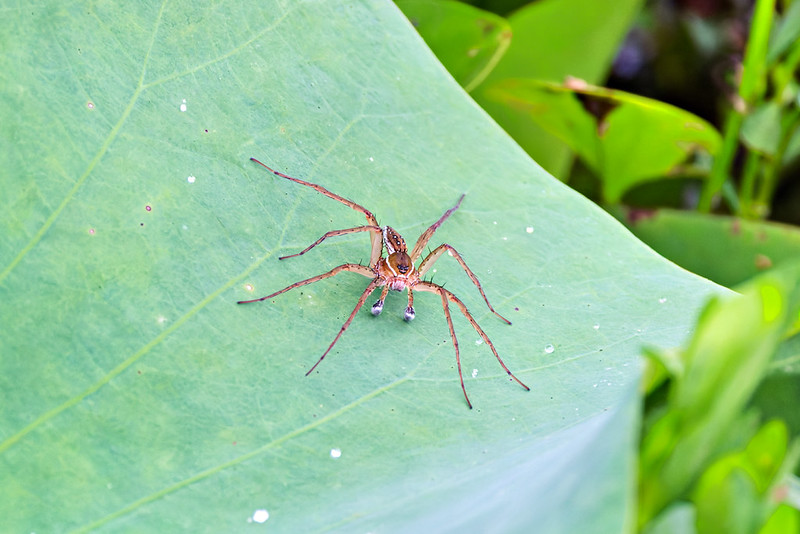
Male Fishing Spider With Enlarged Pedipalps
When I first saw this Six-spotted Fishing Spider, the two swollen structures near its mouth immediately stood out. They almost looked like tiny boxing gloves attached to the front of the spider.
After researching the photo, I learned why they were enlarged. Pedipalps are a pair of small, leg-like appendages beside a spider’s mouthparts. They help spiders sense their surroundings and handle prey. In adult males, the tips become enlarged and are specialized for reproduction.
The enlarged tips of the pedipalps identify this spider as an adult male. Mature males use these specialized structures to transfer sperm during mating.
What Are Spider Pedipalps Used For?
Pedipalps serve different purposes depending on the spider’s age and sex.
Female spiders and immature males mainly use them for touch, tasting chemicals in their environment, and helping manipulate prey.
Adult males keep those same functions, but the ends become enlarged into complex reproductive organs. Those enlarged tips were the feature that caught my attention while photographing this spider.
This wasn’t my first time photographing this species. If you’d like to see another encounter, take a look at Six-Spotted Fishing Spider at Sequoyah National Wildlife Refuge, where I photographed another of these impressive spiders in its natural habitat.
Photographing This Six-Spotted Fishing Spider
This spider was resting on a broad leaf early in the morning, giving me enough time to make several photographs before it moved. The soft morning light helped show the fine details, including the enlarged pedipalps that first caught my eye.
One of the things I enjoy most about wildlife photography is discovering details like this. Sometimes the photograph raises a question, and the answer teaches me something completely new about the animal I just photographed.
Camera Settings
- Camera: Canon EOS R5 Mark II
- Lens: Canon RF 200-800mm F6.3-9 IS USM
- Focal Length: 800 mm
- Aperture: f/9
- Shutter Speed: 1/250 second
- ISO: 12800
- Exposure Compensation: +2/3
- Support: Hand-held
- Date: June 28, 2026, at 6:23 A.M.