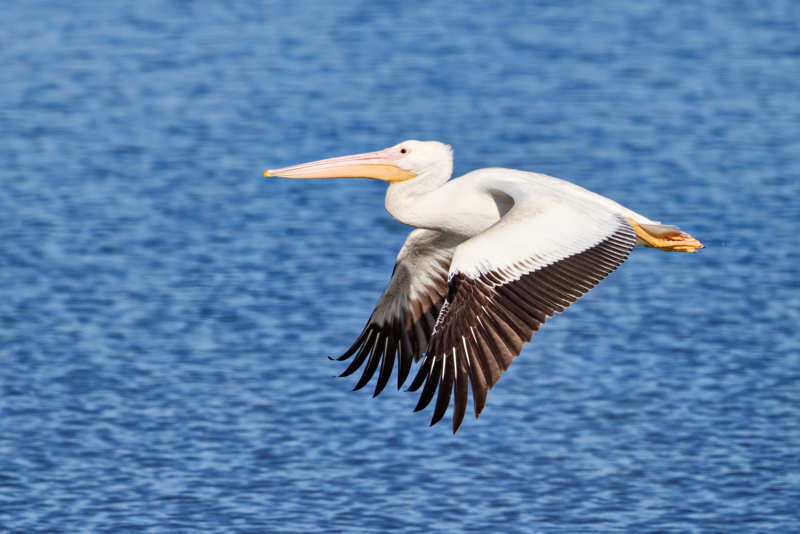
I shot this short slow-motion clip at Kerr Dam on the Arkansas River near Sallisaw, Oklahoma on a cold, cloudy December day. The video quality isn’t perfect, but it’s more than good enough to show a behavior I don’t see documented very often in casual footage.
Based on the ornithological analysis, this American White Pelican (Pelecanus erythrorhynchos) is performing a Gular Stretch (Jaw Stretch) while in flight.
What the Pelican Gular Stretch Looks Like
In the opening seconds of the clip, the pelican opens its bill wide and pulls the skin of its gular pouch tight. Because the bird is flying forward, the airflow holds the pouch fully distended for a moment, almost like a sail. Then, a split second later, it snaps the bill shut and returns to a normal, streamlined flight posture.
That quick open-and-close is the whole story, and slow motion is exactly what makes it readable.
Wildlife Notes: Why Pelicans Do a Gular Stretch in Flight
1) Pouch and Jaw Maintenance
That throat pouch is not just a loose flap of skin. It’s a working tool used for scooping, draining, and handling fish. A gular stretch functions like a quick “reset”:
- stretches jaw muscles
- keeps pouch tissue elastic
- helps maintain range of motion after rest or preening
In plain terms, it’s a maintenance stretch.
2) Cooling (Thermoregulation)
Pelicans can dump heat through the moist membranes of the throat area. By opening the bill in flight, the bird forces air across vascular tissue inside the pouch, which can cool blood before it circulates.
Photography Notes: Why “Not That Good” Footage Still Matters
This is exactly the kind of moment where a “messy” clip is still valuable. Behavior beats perfection.
A gular stretch happens fast. In normal playback it can look like nothing, or like a weird yawn. Shooting in slow motion was the right call because it:
- stretches a split-second action into something the eye can actually read
- makes the pouch inflation obvious
- gives a clear start and end to the behavior
If you ever want to improve the odds of catching something like this, what helps most is:
- keep rolling longer than you think on flybys (the behavior is random and brief)
- steady tracking over perfect sharpness
- expose for the whites so the pouch detail doesn’t blow out in flat sky
Gear Used
- Camera: Canon EOS R5 Mark II
- Lens: Canon RF 200–800mm F6.3–9 IS USM
- Location: Kerr Dam, Arkansas River near Sallisaw, Oklahoma
- Conditions: Cold, cloudy December day
- Capture: Slow-motion video
Even with average video quality, this clip does what it needs to do: it shows a real, specific behavior with a clear beginning and end. For me, that’s worth sharing every time.
Great footage, and excellent advice to keep those “not quite perfect” shots for the behaviors they reveal.