An American White Pelican is flying straight at a Double-crested Cormorant with its bill wide open. Not to say hello. It wants the fish.
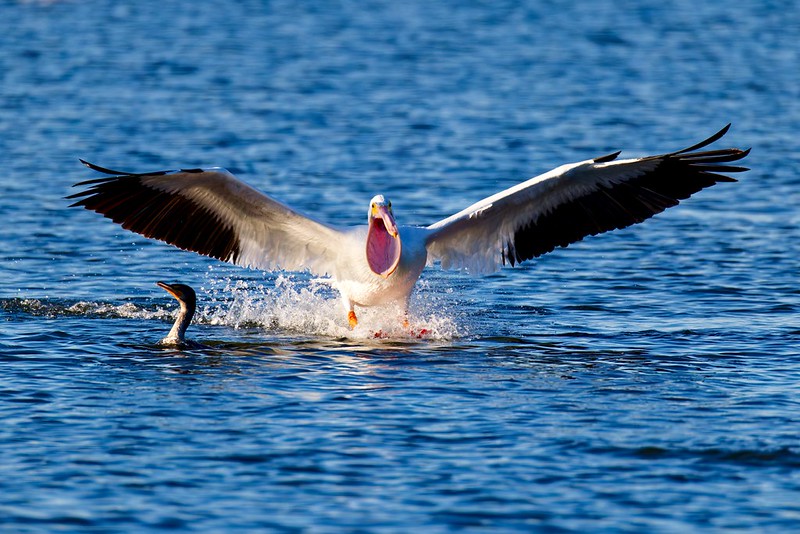
The cormorant had just caught one and was working to swallow it before the pelican could arrive. The pelican tried to steal it at the last second, but the cormorant managed to get the fish down in time. Cormorant wins, pelican loses.
On one of my visits to Charleston Lake, I photographed and wrote about the same kind of pressure and chaos when fish started showing up at the surface. This post is a follow-up from a couple days later when I came back and watched it happen again: Bald Eagles at Charleston Lake in Winter.
American White Pelicans Watch and Wait
American White Pelicans look calm most of the time. They float around like they have nowhere to be. They glide like they own the lake. But this moment shows the other side of them.
Pelicans watch what’s happening around them, especially when other birds are diving and surfacing with food. Cormorants are built to catch fish underwater, but they still have to come up to swallow their catch. That short window is the pelican’s chance to move in and try to take it.
This isn’t some rare fluke either. It’s opportunistic behavior, and it happens fast. The pelican wasn’t hunting. It was reacting. The cormorant knew exactly what was coming.
The Video Shows the Full Picture
I also recorded a short video of this flock at Charleston Lake in Charleston, Arkansas. If you look close, you’ll see several Double-crested Cormorants swimming right alongside the pelicans. At one point in the video, a cormorant surfaces with a fish and the pelicans rush in to mob it.
It happens quickly, but it matches the story this photo is showing almost perfectly. The pelicans don’t rush constantly. They wait, watch, then move all at once.
Wildlife Notes
- Species: American White Pelican and Double-crested Cormorant
- Location: Charleston Lake, Charleston, Arkansas
- Behavior: Pelican attempting to steal a fish from a cormorant
- Outcome: The cormorant swallowed the fish before the pelican reached it
- What stood out: The pelican’s open bill and direct flight toward the cormorant showed clear intent
American White Pelicans are known for this kind of opportunistic feeding. They don’t always catch their own fish. Sometimes they wait for other birds to do the work, then swoop in during the vulnerable moment when the prey is being swallowed. Double-crested Cormorants are skilled divers, but they surface to handle larger catches, and that brief window is when pelicans make their move.
Photography Notes
This was one of those moments that happened fast, but the body language made the story clear. As soon as I saw that pelican flying low with its bill open, I knew it was about to pressure the cormorant.
Image Information
- Camera: Canon EOS R5 Mark II
- Lens: Canon RF 200–800mm F6.3–9 IS USM
- Focal length: 800mm
- Aperture: f/10
- Shutter speed: 1/3200 second
- ISO: 1250
- Exposure compensation: −1
- Support: Beanbag in pickup
The fast shutter speed froze the action perfectly. The exposure compensation helped keep the white plumage from blowing out in the bright winter light. I was shooting from my pickup, which gave me a stable platform and let me stay low to the water for a better angle.
I recorded the video with my iPhone, which made it easy to capture the moment as soon as the action started. If you watch closely, you can see the cormorants mixed in before the mobbing even begins.