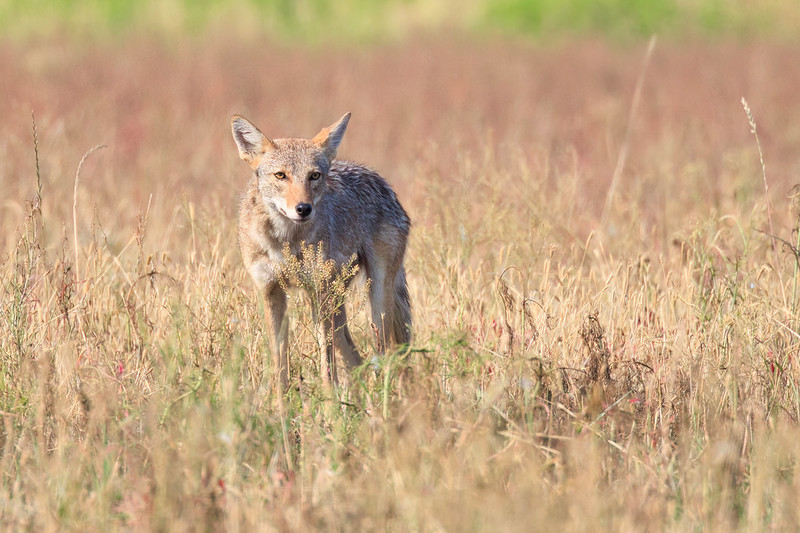
Seeing wildlife more than once is always rewarding. During May at Sequoyah National Wildlife Refuge in Oklahoma, I had the chance to spend time with what appeared to be the same young coyote on two separate mornings. Those encounters gave me a closer look at both its appearance and its behavior.
If you missed my earlier encounter, be sure to read The Incredible Coyote Pounce, where I photographed this young coyote during an energetic hunting attempt.

Young Coyote Along a Familiar Trail
A little over a week after my first sighting, I found the young coyote back in the same general area of Sequoyah National Wildlife Refuge. It was relaxed enough to allow several close-up photographs before moving on.
The closer views revealed details that are easy to miss from a distance. Its alert eyes, large ears, and still-developing features were reminders that it had not yet reached full maturity. Watching a young predator quietly explore its surroundings offered a glimpse into an important stage of its life.
Watching a Young Coyote’s Natural Behavior
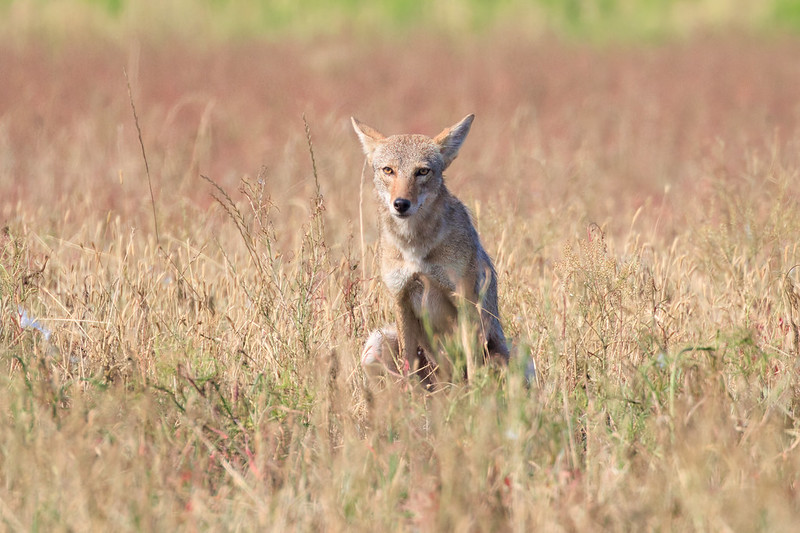
One photograph caught my attention after I reviewed it on my computer. At first, it looked as though the coyote was simply sitting. Looking more carefully, I realized it was actually urinating.
Based on that posture, I believe this individual may have been female. Identifying the sex of a young coyote in the field is not always easy, so I can only base that conclusion on what I observed during the encounter.
Young coyotes usually remain with their parents for several months before becoming more independent. During that time, they learn valuable hunting and survival skills while gradually exploring more of their surroundings.
A Memorable Morning With Oklahoma Wildlife
Every wildlife encounter has something new to teach me. Spending time with this young coyote reminded me how much can be learned by slowing down, observing carefully, and reviewing photographs after the moment has passed.
These encounters also reinforced why I enjoy returning to Sequoyah National Wildlife Refuge. Familiar places often reveal new stories, and sometimes those stories involve seeing the same wild animal grow and change over time.