Helping turtles cross roads is something I do whenever traffic and road conditions allow. September is one time when I still see turtles traveling through my area. They may be searching for food, mates, or better habitat.
Helping Turtles Cross Roads Safely
Helping turtles cross roads begins with watching which direction they are traveling. I always move a turtle across the road in that same direction.
Returning it to the starting side will not solve the problem. The turtle will likely try crossing again.
I also avoid moving turtles far from where I find them. Turtles often remain within a familiar home area. Moving one elsewhere may cause it to search for its original territory.
I only stop when I can pull completely off the road. I also check traffic before leaving my vehicle.
For a small turtle I can safely handle, I hold the sides of its shell. I keep it low and level until I reach the other side. I never lift a turtle by its tail.
I previously photographed a Red-eared Slider Crossing Road at the refuge.
Photographing a Turtle at Sequoyah Refuge
I recently found a Three-toed Box Turtle on the tour road at Sequoyah National Wildlife Refuge in Oklahoma.
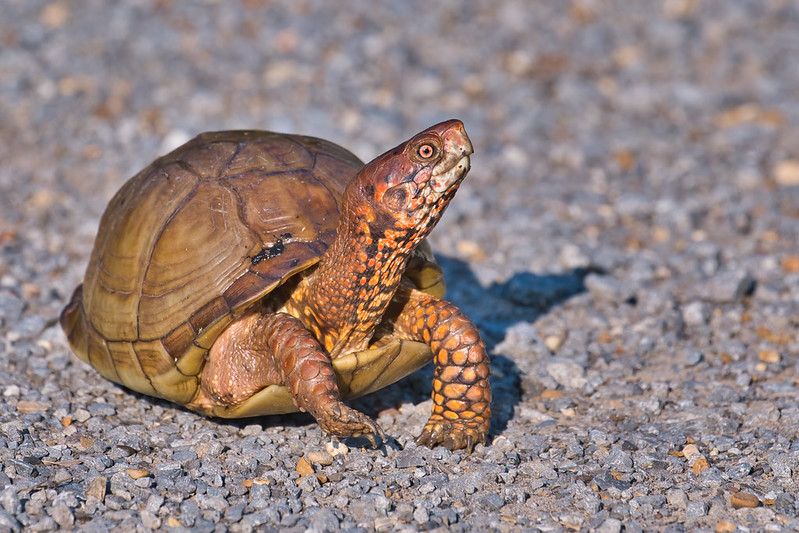
No other vehicles were nearby, so I stopped and watched from a safe distance. The turtle continued moving toward the edge of the road.
The turtle eventually reached the other side without my help.
Knowing When to Leave a Turtle Alone
I do not pick up adult Red-eared Sliders or snapping turtles. Their size and the risk of being bitten make handling them unsafe.
If I cannot stop or help safely, I leave the turtle alone. Creating another road hazard would place everyone at greater risk.
Sometimes the best help is simply giving a turtle enough room and time to finish crossing.