Finding food is one of the biggest challenges facing young birds after they leave the nest. While adult Common Grackles make hunting look effortless, juveniles are still learning which prey is worth chasing and how to handle it once they catch it.
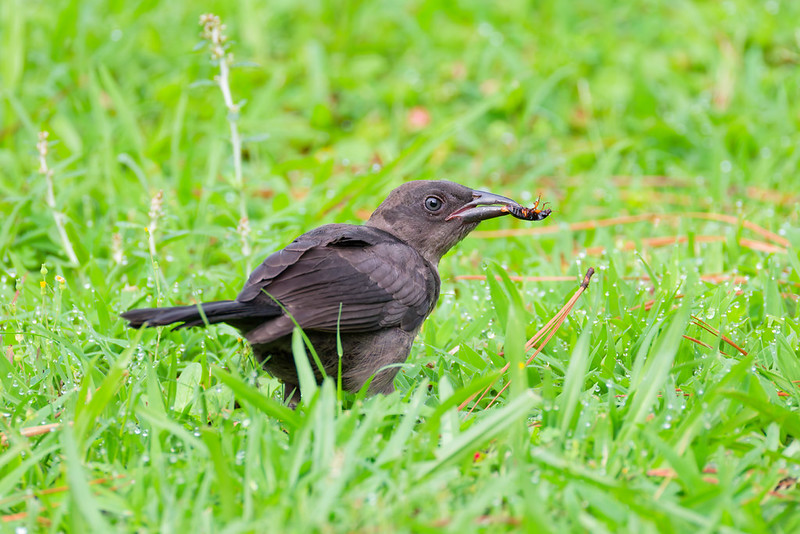
I photographed this juvenile Common Grackle in my Arkansas yard carrying what appears to be a beetle. It paused only briefly before continuing through the grass, proudly holding onto its catch. Moments like this don’t last long, and they offer a fascinating glimpse into the daily lessons young birds must master.
Common Grackles have an incredibly varied diet. They eat insects, spiders, seeds, grains, berries, small fish, frogs, and even the eggs or nestlings of other birds when the opportunity arises. During the breeding season, however, insects become especially important because they provide the protein needed for rapid growth. Beetles, grasshoppers, caterpillars, and other invertebrates make up a large portion of a young grackle’s meals.
Although this bird had already left the nest, it was still developing the skills needed to survive on its own. If you’d like to see another young grackle I photographed last June, take a look at Common Grackle Fledgling: A Real Looker in My Yard. Juveniles often spend several weeks refining their hunting techniques while remaining close to their parents, who may continue feeding them occasionally. Every successful capture builds confidence and improves their ability to recognize and catch prey.
The lush grass in my yard creates excellent habitat for insects, making it a productive hunting ground for birds like this young grackle. Watching them search methodically through the lawn reminds me that even an ordinary backyard can support a surprising amount of wildlife activity.
Photographing these everyday moments is one of the things I enjoy most about wildlife photography. Dramatic action is exciting, but quiet scenes like this tell an equally important story about the challenges young birds face as they learn to survive on their own.
Camera Settings
- Camera: Canon EOS R5 Mark II
- Lens: Canon RF 200-800mm F6.3-9 IS USM
- Focal Length: 800mm
- Aperture: f/10
- Shutter Speed: 1/1000 second
- ISO: 4000
- Date Taken: June 25, 2026
- Location: Arkansas