On a June morning at Sequoyah National Wildlife Refuge in Oklahoma, I watched a great egret work the shallows and pull shad out of the water, one after another. I had my camera already up on the guard rail, so I was ready when the action started.
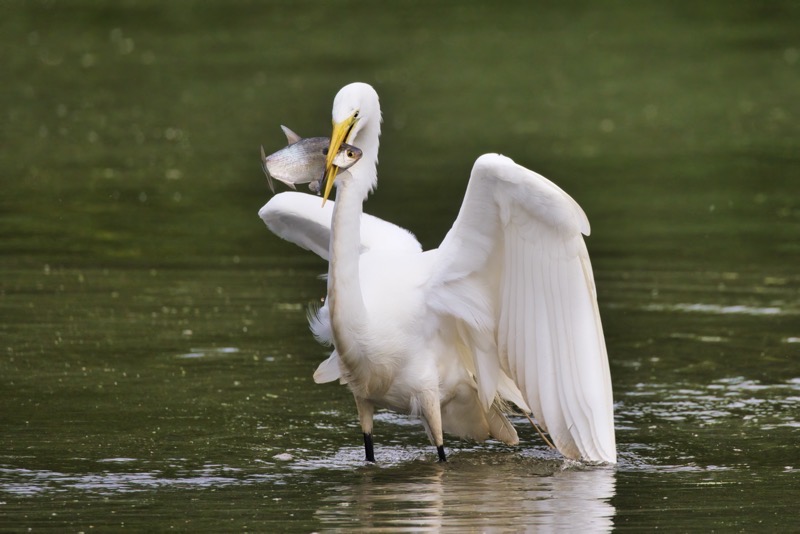
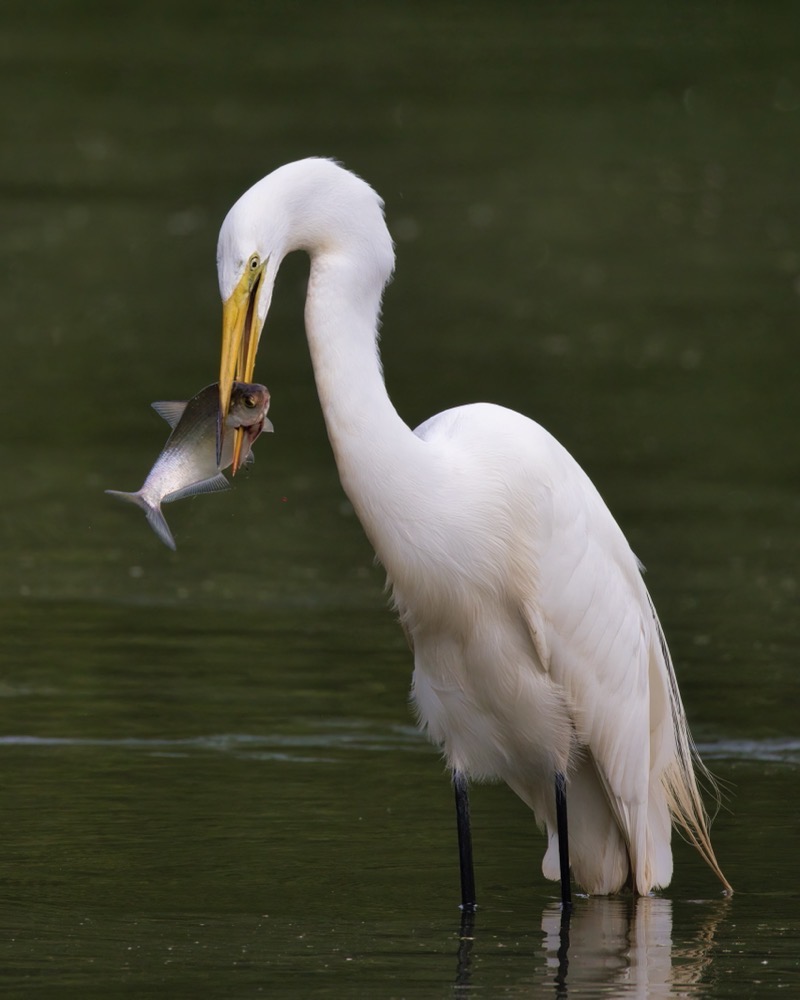
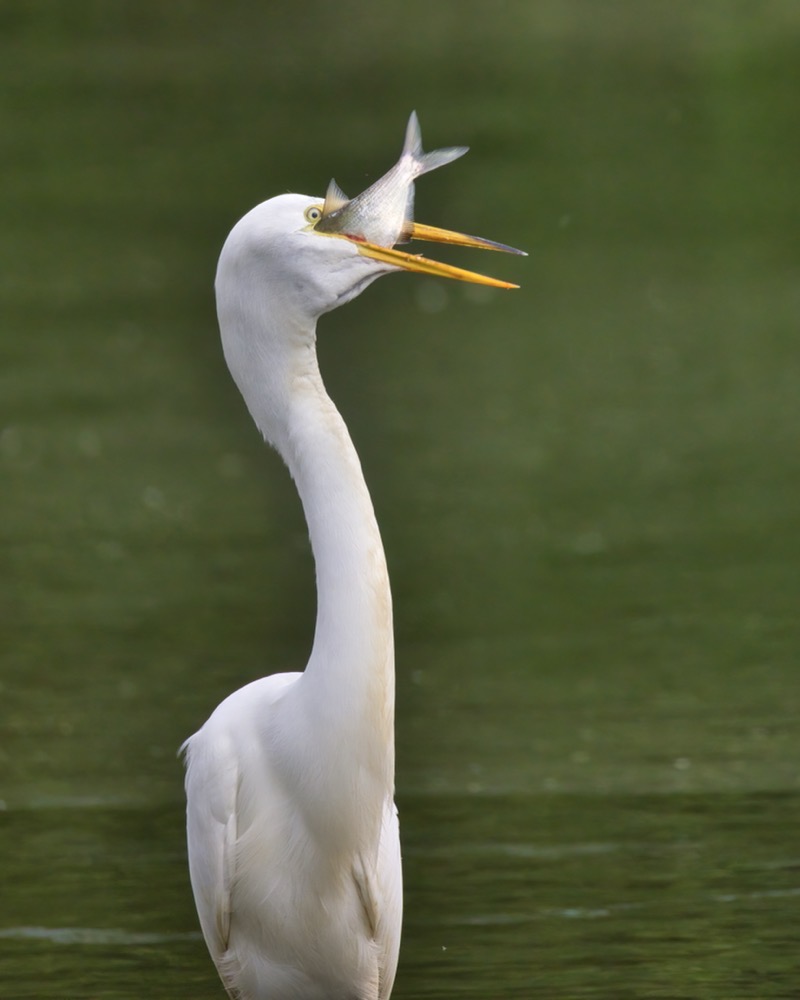
Wildlife Notes: Great Egret Hunting Shad
Great Egrets are large, all-white wading birds with long yellow-orange bills and black legs. They are patient hunters. They stand still or wade very slowly, then strike fast when a fish gets close.
Shad are a common target in areas like Sequoyah NWR, where the refuge pools and wetlands along the Arkansas River hold good numbers of baitfish, especially in late spring and early summer. By late June, egrets are often post-breeding and spending more time foraging to rebuild energy reserves.
This bird landed right next to a Great Blue Heron I was already photographing. That heron had a fishing lure stuck in its foot, which I covered in a separate post: Heron Eating Well With An Injury. The egret didn’t seem bothered by the heron at all and went straight to work.
Photography Notes: Gear and Setup
I was sitting in a folding chair that I keep in my pickup for long sessions. I parked near the bridge close to the entrance to the auto tour road, which is a reliable spot for wading birds in the morning.
My camera and lens were resting on a bean bag draped over the guard rail. That setup keeps things steady without a tripod, and it puts me at a low angle that works well for water-level shots.
Camera Settings
- Camera: Canon EOS R5
- Lens: Canon EF 800mm f/11
- Date and Time: June 24, 2021, 8:04 a.m.
- Aperture: f/11
- Shutter Speed: 1/1250 sec
- ISO: 1600 (Auto)
- Exposure Compensation: -1
- Focal Length: 800mm
The 800mm gave me plenty of reach from the bridge area without moving closer and flushing the birds. The 1/1250 shutter was fast enough to freeze the strike and the fish in the egret’s bill cleanly. I dialed in -1 exposure compensation to protect the white feathers from blowing out in the morning light.
This was one of those mornings where staying in one spot paid off. I went out to photograph one bird and ended up with a great egret catching shad right in front of me. Sequoyah NWR consistently delivers that kind of overlap, especially along the auto tour road near the entrance. If you have not been out there for the early summer shorebird and wading bird activity, it’s worth the trip.