Few wildlife moments happen as quickly as a successful hunt. One spring morning at Sequoyah National Wildlife Refuge, I watched a Great Egret catch a crayfish, toss it into the air, and swallow it whole. It was one of those encounters that reminded me why I return to this refuge every year.
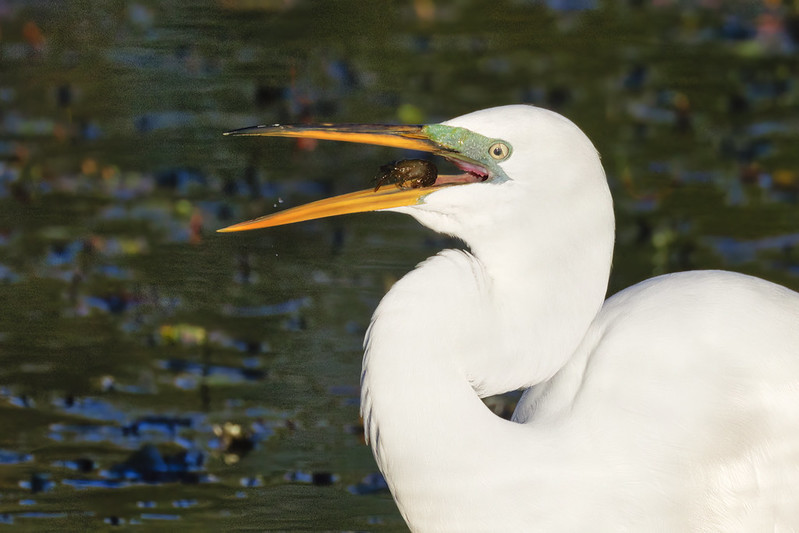
Great Egret Crayfish Hunt in the Shallows
This photograph was taken at Miner’s Cove inside Sequoyah National Wildlife Refuge in eastern Oklahoma. The shallow water here supports a healthy crayfish population, making it one of the best places to watch hunting wading birds during spring.
Great Egrets move through the shallows with remarkable patience. They take slow, deliberate steps while watching the water below them. When they spot movement, they strike with incredible speed. In this case, the egret grabbed a large crayfish, tossed it into position, and swallowed it headfirst.
Crayfish are an important food source for many species in the refuge. Throughout spring, the increased activity of crayfish attracts Great Egrets, Great Blue Herons, Barred Owls, and many other predators. Watching these interactions gives me a better appreciation for how connected the wetland ecosystem really is.
Photographing an Egret at Miner’s Cove
Miner’s Cove has become one of my favorite wildlife photography locations. The cove faces west, but the calm morning light before sunrise often creates beautiful conditions for photographing white birds.
I usually arrive before daylight and stay inside my pickup truck. Using the vehicle as a blind allows the birds to behave naturally while I photograph them without causing unnecessary disturbance. My camera rests on a beanbag placed over the open window, giving me a stable platform while still allowing quick movement if the bird changes direction.
Photographing a bright white bird requires careful exposure. As the sun climbs higher, it’s easy to lose detail in the feathers. I continually watch the histogram and make small exposure compensation adjustments to preserve detail throughout the bird’s plumage.
Why Spring Is the Best Time to Watch Great Egrets
Spring is one of the most rewarding seasons to visit Sequoyah National Wildlife Refuge. Wildlife activity increases as temperatures warm, and food sources become more abundant.
Every visit offers something different. Some mornings I photograph Great Egrets catching fish or frogs. Other days, like this one, a crayfish becomes the center of an unforgettable wildlife encounter.
Moments like these are impossible to predict, but patience and spending time in the field often lead to photographs that tell a much bigger story than a single frame can capture.